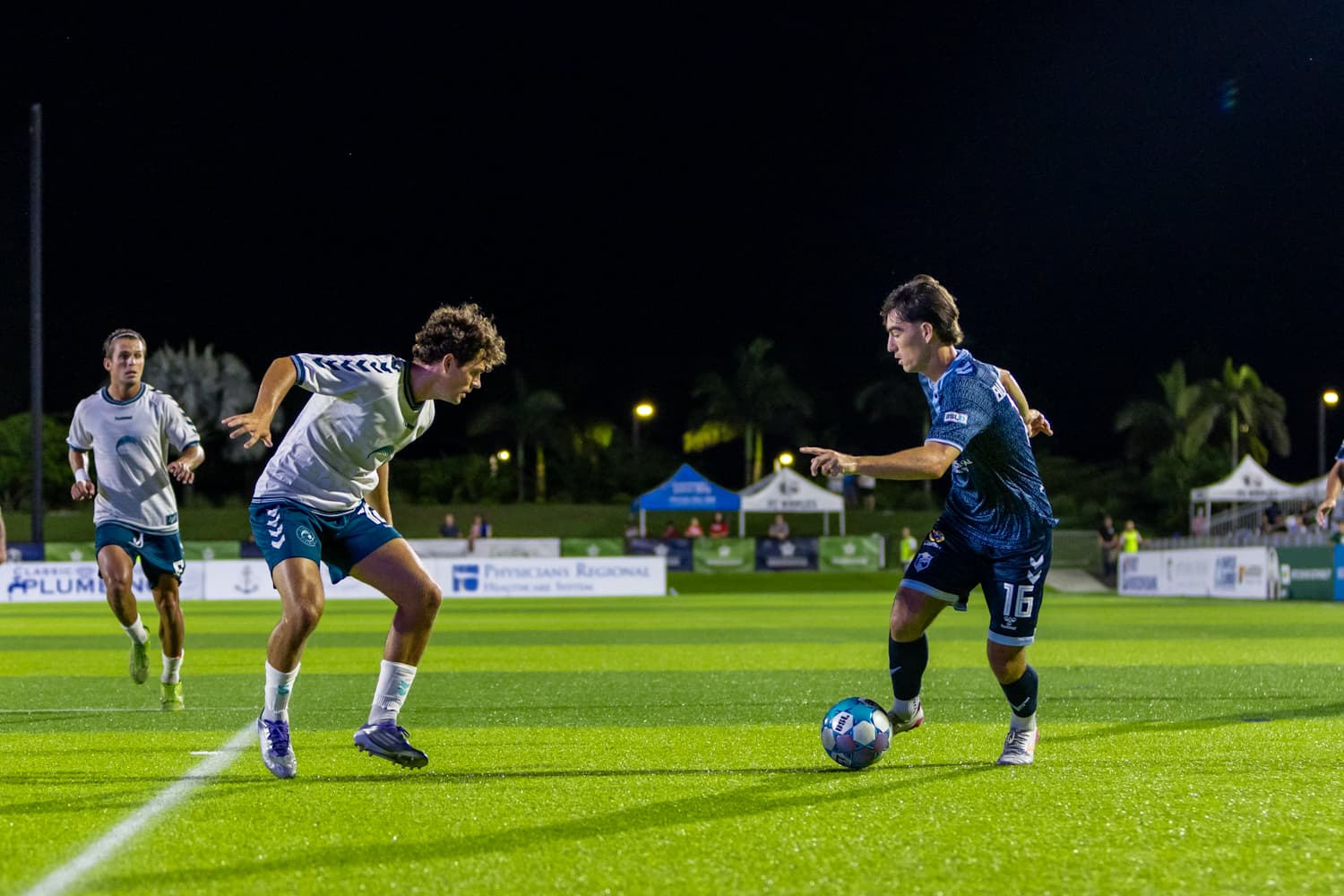
Sarasota Paradise Defeats Naples 2–0 in USL League One Clash
Under the Florida night lights at Paradise Coast Sports Complex, this USL League One Cup Group 7 clash closed with a stark scoreboard: Naples 0–2 Sarasota Paradise. Following this result, the group table underlines how fine the margins have been. Naples sit 5th with 2 points and a goal difference of -3, while Sarasota climb to 4th on 3 points and a goal difference of -2. Both sides have been living on the edge in this cup, and this fixture distilled their seasonal identities into 90 tense minutes.
For Naples, the campaign has been defined by volatility. Overall they have played 3 matches, winning 1 and losing 2, with 3 goals scored and 7 conceded. At home they have split their 2 outings: 1 win, 1 defeat, scoring 2 and conceding 3. The numbers sketch a team that can punch, but is just as likely to be punched back harder. Sarasota, by contrast, have built their narrative on narrow margins and defensive discipline. Overall they have 1 win and 2 losses from 3 matches, with only 2 goals scored and 4 conceded. On their travels they have 1 win and 1 loss from 2 away fixtures, scoring 2 and conceding 2. They do not blow teams away; they suffocate them.
Tactical Overview
Tactically, both lineups hinted at caution and compactness rather than expansive chaos. Matthew Poland’s Naples selection leaned into physical presence and direct running. The front end of the side was built around J. Grant (shirt 99) and G. Miglietti (9), supported by the energy of J. Osorio (8) and the wide work of C. Garcia (11). Behind them, figures like J. Cisneros (3), M. Torrellas (21) and I. Cerro (30) formed the defensive spine, with H. Gay (12) and J. Yoder (22) asked to knit lines together.
On the opposite touchline, Mika Elovaara’s Sarasota Paradise offered a more balanced, almost modular structure. The back line, anchored by R. Burlew (2), D. Watters (4) and R. Valentine (3), was clearly set up to protect a side that had previously conceded 4 goals overall but only 2 on their travels. In front of them, A. Rodriguez (16) and H. Backstrand (22) provided the screen, with the creative and transitional burden falling on E. Bryant (7), M. Tainio (20) and J. Bender (9). Up front, S. Karani (11) was the outlet, the runner meant to stretch a Naples defence that has been conceding an overall average of 2.3 goals per match.
Match Dynamics
The tactical voids in this contest were less about missing personnel and more about structural weaknesses. Naples’ season-long struggle to keep clean sheets — none in total so far, home or away — again framed the narrative. Their defensive record at home, conceding an average of 1.5 goals per game, met a Sarasota attack that does not create in volume but is efficient away, averaging 1.0 goal on their travels. The 0–2 full-time scoreline fit those patterns neatly: Naples’ back line once more cracked, Sarasota again found just enough incision on the road.
Discipline played a subtle but important role. Naples’ card profile this season is front‑loaded into the middle of games: 40.00% of their yellow cards arrive between 46–60 minutes, with additional spikes at 31–45 (20.00%) and 76–90 (20.00%). They have also seen a red card in the 46–60 window. Sarasota, meanwhile, build their aggression into the closing stretch: 37.50% of their yellows come from 76–90 minutes, with meaningful contributions in 46–60 (25.00%) and scattered earlier bookings. In a tight group-stage match like this, that pattern translates into a clear tactical subtext: Naples risk losing control just after half-time, Sarasota risk chaos late on. That Sarasota managed to see out a 2–0 lead without a red speaks to their growing maturity.
Key Matchups
Within that framework, the “Hunter vs Shield” matchup tilted decisively toward the visitors. Naples’ attack, which at home averages 1.0 goal per match, ran into a Sarasota defence that, on their travels, concedes exactly 1.0 goal on average and had already produced one away clean sheet. The pairing of Burlew, Watters and Valentine in front of goalkeeper A. Sutton (1) as an option from the bench gave Elovaara the tools to lock the box, while the midfield legs of Rodriguez and Backstrand compressed the spaces where Osorio and Miglietti like to receive.
In the “Engine Room” duel, Sarasota’s trio of Bryant, Tainio and Bender outmanoeuvred their counterparts. Bryant, wearing 7, repeatedly offered the first outlet pass in transition, while Tainio’s positional discipline prevented Naples from attacking the half‑spaces with any consistency. For Naples, Osorio tried to dictate tempo, and Yoder and Gay worked to shuttle the ball between thirds, but they were often forced sideways rather than through the lines. Without a clear playmaker able to break Sarasota’s compact mid‑block, Naples’ front line became increasingly isolated.
Statistical Analysis
From a statistical prognosis standpoint, this result feels like a logical extension of the season’s underlying trends. Sarasota’s overall defensive average of 1.3 goals against per match, combined with their away record of 2 goals scored and 2 conceded, points toward low‑event, marginal games. Naples, by contrast, have been porous: 7 goals conceded overall from 3 matches, with heavy punishment on their travels but still a worrying leak at home. Even without explicit xG numbers, the shot and chance profiles implied by these records suggest Sarasota are better at turning few chances into decisive moments, while Naples need volume to overwhelm opponents — volume they never quite manufactured here.
Following this result, Naples must address their structural fragility: no clean sheets, a tendency to lose control in the early second half, and an attack that, while capable, is not yet sharp enough to rescue games from behind. Sarasota Paradise leave with a performance that fits their emerging identity: defensively organised, patient in transition, and ruthless enough to turn a tight group-stage night into three precious points.