Andoni Iraola's Vision for Liverpool: A High-Pressing Revolution
Andoni Iraola walks into Anfield with a promise and a warning: the volume is about to go back up.
Liverpool’s new manager has been hired to restore the chaos. Not the reckless kind, but the organised, suffocating, high-pressing storm that once made this stadium feel like it was leaning over visiting teams. His brand of “rock and roll” football is no marketing slogan; it is a demand for relentless running, risk at the back, and bravery on the ball.
This is not a gentle evolution from his predecessor. It’s a hard reset.
A new shape, a familiar tempo
Iraola is expected to lean on a 4-2-3-1, a system that suits the club’s desire to attack in waves but with a different balance to last season. The formation is only the frame. The real story is what happens inside it: a high defensive line, aggressive counter-pressing, and a front four asked to work as hard without the ball as they do with it.
Much of the current squad should slot naturally into that idea. They have lived versions of it before, even if the last few years have seen tweaks, compromises, and the occasional loss of intensity. Iraola’s task is to strip it all back and demand the old tempo again.
Defence on the edge
To play this way, the back line has to live dangerously.
Jeremy Jacquet, fast-tracked from Rennes, looks set to be thrown straight into that challenge. His athleticism and comfort defending big spaces are exactly what Iraola wants from a centre-back asked to hold a high line and defend forward rather than retreat. It is a bold move, but the new manager has never been shy about trusting youth if the profile fits.
Alongside him, the loan arrival of Ronald Araujo offers something very different: calm, experience, and the authority to marshal a defence that will often be standing on the halfway line. That blend of raw energy and seasoned nous is critical when the margins are so fine.
On the left, Milos Kerkez enters his second season at Anfield with the sense that this one really matters. He knows Iraola’s demands from their time together at Bournemouth, and that familiarity could turn into a springboard. If the full-back finds rhythm under a coach who has already unlocked his potential once, Liverpool suddenly gain a weapon on the overlap perfectly suited to this aggressive style.
Midfield as the engine room
If the defence provides the platform, the midfield and attack provide the roar.
Dominik Szoboszlai sits at the heart of Iraola’s blueprint. His pressing is not just enthusiastic; it is intelligent, timed, and ruthless. In this system, he becomes more than a creator. He becomes the trigger. When he steps, the line behind him follows. When he hunts, Liverpool move as a pack.
The Hungarian is expected to thrive in a role that lets him combine his running power with his vision, operating in pockets where he can snap into tackles one moment and thread passes the next.
Alongside him, Ryan Gravenberch offers legs, height, and the ability to carry the ball through pressure. In a double pivot, those qualities matter. One midfielder to break lines with his passing, another to glide past opponents and drag the press out of shape. It is the kind of pairing that can turn defence into attack in a heartbeat.
Further ahead, Florian Wirtz is primed to become the symbol of Iraola’s attacking idea. His work off the ball is as important as his creativity on it. Wirtz will be asked to press from the front, lock onto passing lanes, and then, once the ball is won, punish teams between the lines. His intensity matches the manager’s demands; his talent gives Liverpool a different kind of No.10, one who can knit everything together at speed.
Isak to lead the line
At the tip of it all stands Alexander Isak.
He is expected to spearhead the attack, not just as a finisher but as the first defender. Iraola wants his centre-forward to press with intelligence, to curve runs, to force mistakes rather than simply chase shadows. If Isak buys into that, the rewards could be huge.
This system should feed him chances. Quick regains high up the pitch, broken defensive structures, and space in the box. For a striker searching to rediscover his most clinical form, there are few better environments than a team built to win the ball back close to goal.
Width, youth and what might come next
The wide areas remain a live storyline.
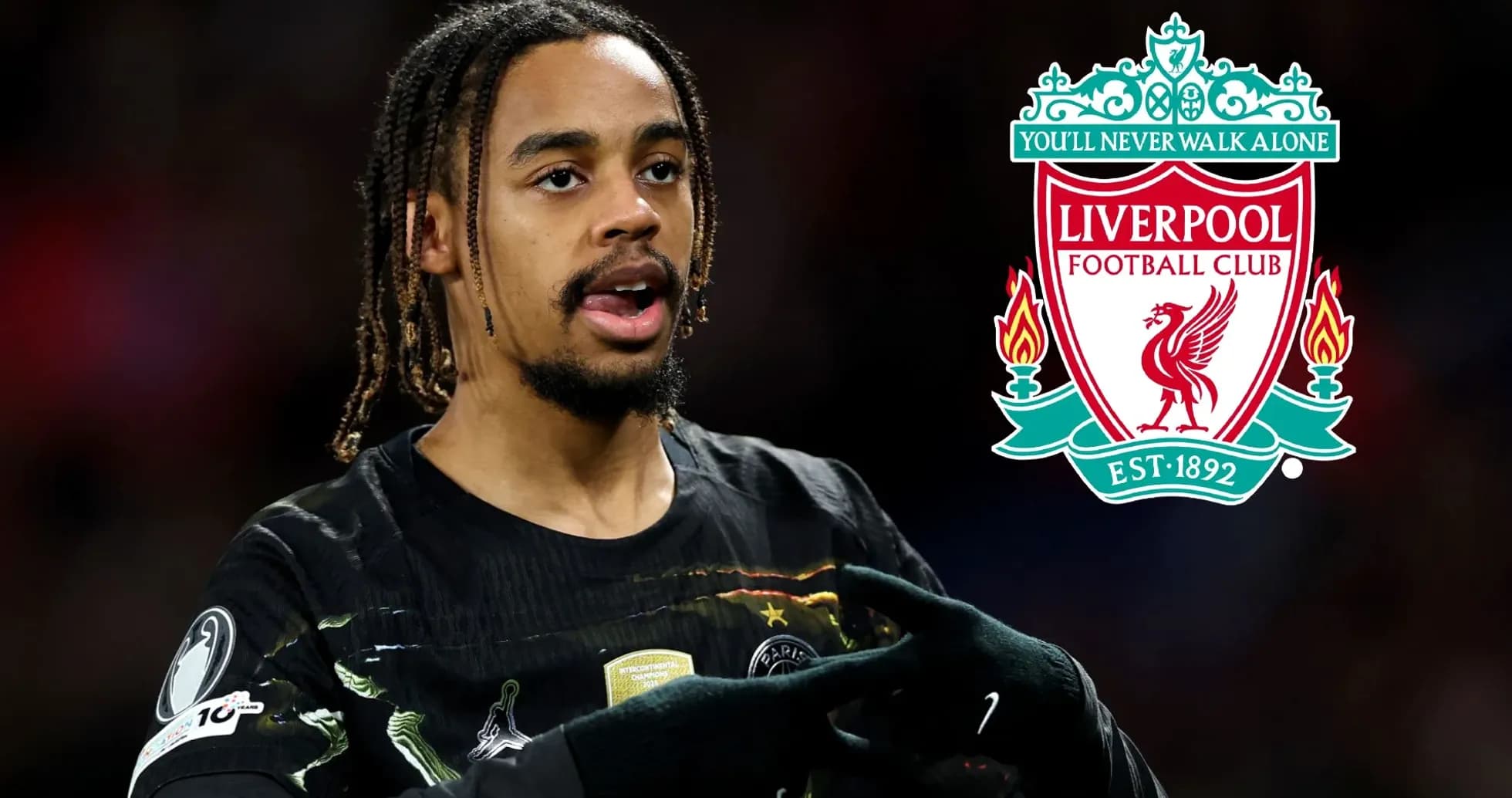
Liverpool continue to be heavily linked with PSG’s Bradley Barcola, a player whose profile fits the new project almost too neatly. Direct, dynamic, and comfortable working at high speed, he would represent a clear upgrade on the flank and add another pressing machine to Iraola’s front line.
If that deal happens, Barcola would likely slot straight into the starting XI on the wing, giving Liverpool a front four of Wirtz, Rio Ngumoha and Barcola behind Isak. That mix of established quality and raw potential is exactly the kind of balance the new coach seems determined to strike.
Ngumoha, in particular, embodies the future-facing side of this rebuild. Still young, still learning, but already trusted enough to be part of the conversation around the first team. Iraola’s willingness to nurture that kind of talent while competing at the highest level will define not just this season, but the next era at Anfield.
The XI taking shape
Piece by piece, the picture forms.
Alisson remains the foundation in goal, asked to sweep behind that daring defensive line and start attacks with his distribution. In front of him, Guela Doue, Jacquet, Virgil van Dijk and Kerkez form a back four built for speed, aggression and front-foot defending.
Gravenberch and Szoboszlai sit as the double pivot, engines and brains in equal measure. Ahead of them, Wirtz pulls strings, Ngumoha offers youthful spark, and Barcola — if secured — brings power and incision from the flank. Isak leads the line.
It is a 4-2-3-1 on paper. In reality, it is a promise: Liverpool will run, press, and play on the edge again.
The question now is not whether Iraola can change the way this team looks. It is how quickly Anfield can once more become the place where opponents feel the walls closing in.