AS Roma vs Inter: A Tactical Showdown in Serie A
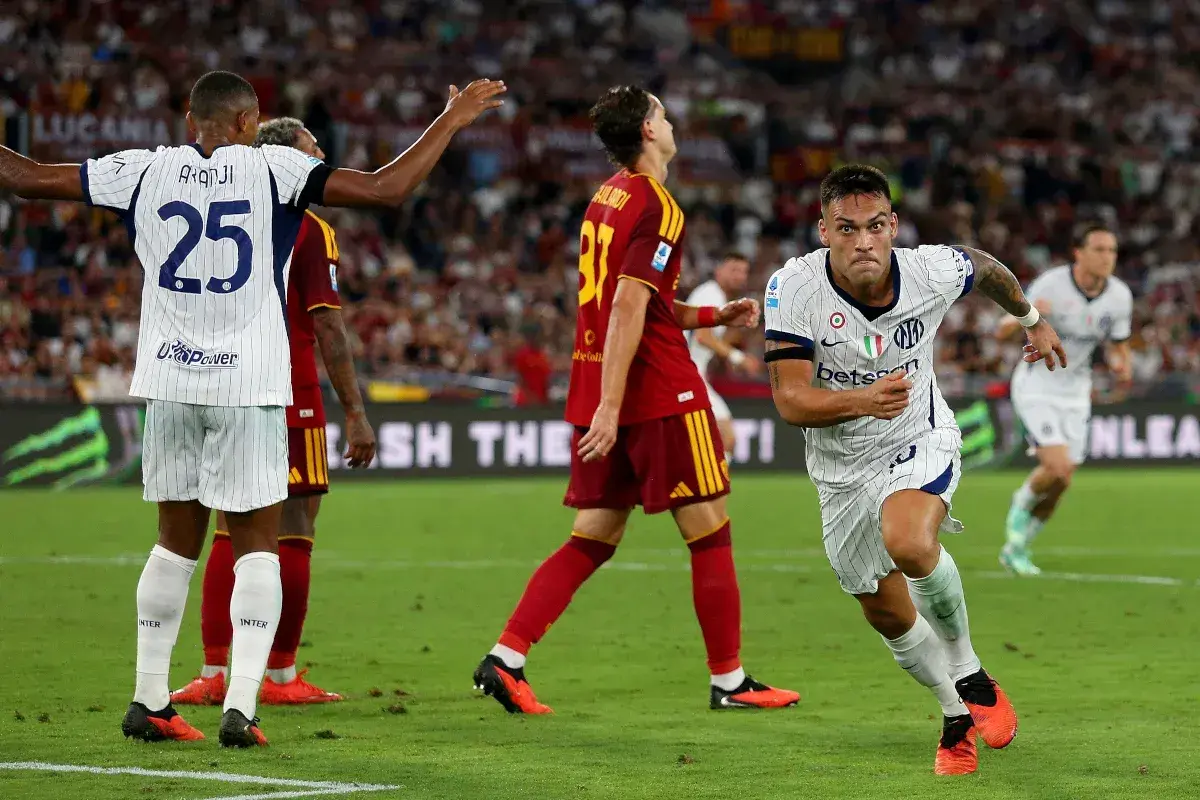
Under the Rome dusk at Stadio Olimpico, two unbeaten sides at the summit of Serie A met and refused to yield. AS Roma and Inter came in as mirror images in the table – both on 13 points from 5 matches, both unbeaten, both carrying the swagger of early-season form – and walked away locked in a 2-2 draw that felt less like dropped points and more like a statement of parity.
Heading into this game, Roma’s seasonal profile was that of a controlled juggernaut. Overall they had scored 14 and conceded just 3 in 5 matches, a goal difference of +11 built on the most efficient attack in the league and the tightest defence. At home they had averaged 2.7 goals scored and 1.0 conceded, with two wins and one draw in three outings at the Olimpico. Inter arrived as the more volatile attacking force: 15 goals scored and 8 conceded overall, a goal difference of +7, underpinned by a devastating 4.0 goals per game at home but a more measured 1.5 on their travels. Away from San Siro they had still not lost, with one win and one draw, but had shown more vulnerability at the back with 1.0 goal conceded per away match.
I. Tactical shapes and seasonal DNA
Piero Gasperini Gian doubled down on Roma’s emerging identity by rolling out the 3-4-2-1 that has been their primary structure this season. M. Svilar sat behind a back three of G. Mancini, L. Balerdi and M. Hermoso, with the latter two entrusted to defend big spaces and step into midfield. The wing corridors belonged to N. Molina and Wesley Franca, asked to provide both width and counter-pressing. Inside, B. Cristante and M. Kone formed the double pivot, tasked with screening Inter’s breaks and feeding the creative box of P. Dybala and M. Soule behind lone striker D. Malen.
Cristian Chivu’s Inter answered with a 3-1-4-2, a subtle but telling tweak from their more common 3-5-2. J. Martinez was protected by a back three of Y. Bisseck, M. Akanji and A. Bastoni, with P. Zielinski operating as the deep connector ahead of them. The wide lanes were given to F. Dimarco on the left and A. Diouf pushing high on the right, while N. Barella and C. Jones patrolled the central band. Up front, the familiar partnership of L. Martinez and M. Thuram promised depth runs and constant movement between Roma’s wide centre-backs.
The absence of M. Bah for Roma, and of H. Calhanoglu, D. Spence and J. Stones for Inter, subtly reshaped the tactical voids. Roma lost an extra athletic option in rotation, while Inter were without their primary midfield metronome and an experienced ball-playing defender, nudging Chivu towards a more vertical, wing-driven approach.
II. Tactical voids and discipline
Both sides arrived with clean disciplinary slates in terms of reds this season, but their yellow-card patterns told different stories. Roma’s cautions were concentrated late: 37.50% of their yellows had come between 61-75 minutes and 25.00% between 76-90, a clear sign of a team that defends leads with aggression and accepts the cost. Inter, by contrast, spiked in the 46-60 minute window, where 50.00% of their yellows had been shown, reflecting an intense post-interval press and a willingness to disrupt rhythm early in second halves.
On an individual level, M. Hermoso and M. Akanji both entered as high-card defenders, each already on two yellows in the campaign. Their duels were always likely to define the edge of acceptable risk: Hermoso, with 13 tackles, 2 blocks and 16 interceptions overall, and Akanji, with 9 tackles, 2 blocks and 8 interceptions, represent aggressive front-foot defending that can tilt either towards control or chaos.
III. Key matchups – Hunter vs Shield, Engine Room
The “Hunter vs Shield” battle was almost theatrical. D. Malen, Serie A’s leading scorer with 6 goals in 5 appearances, carried Roma’s cutting edge. His 16 shots (10 on target) and 15 dribble attempts, 10 successful, mark him as a constant one-v-one threat. Inter’s response was a back line anchored by Akanji, whose 94% pass accuracy and 25 duels won from 34 underline both composure and physical dominance. How well Inter’s central trio tracked Malen’s movements into channels between Bisseck and Akanji, and between Akanji and Bastoni, was always going to dictate Roma’s shot quality.
Behind Malen, the creative axis of Dybala and Soule formed Roma’s “engine room” in the final third. Dybala, leading the league in assists with 4 and producing 23 key passes in 5 matches, is the orchestrator who bends the tempo. Soule, with 2 goals, 1 assist and 8 successful dribbles from 13 attempts, is the destabiliser, drawing defenders out of shape. Their duel was against Inter’s central shield of Barella, Jones and the deeper-lying Zielinski. Barella’s energy and Jones’ box-to-box running had to compress Roma’s spaces between the lines, while Zielinski’s task was to break Roma’s press with vertical passes into L. Martinez and Thuram.
On the other side, Inter’s own hunters were just as sharp. L. Martinez came in with 4 goals from 16 shots and a relentless duel volume (34 contested, 15 won), while Thuram had added 2 goals and 2 assists, winning 19 of 32 duels and offering a constant aerial and transitional outlet. They were testing a Roma back three that, overall, had conceded only 0.6 goals per game and kept 3 clean sheets in 5 matches. Hermoso’s reading of depth runs and Mancini’s leadership in stepping out to meet dropping forwards were central to Roma’s plan to keep Inter’s front two from turning.
IV. Statistical prognosis and tactical verdict
On their travels this season, Inter’s attack had been less explosive than at San Siro – 1.5 goals scored per away match compared to 4.0 at home – and Roma’s home defence, conceding 1.0 per game, had been robust. Conversely, Roma’s attack at the Olimpico, averaging 2.7 goals, was facing an Inter away defence that had allowed 1.0 per match. The numbers pointed to a narrow, high-level contest rather than a rout: Roma marginally favoured by their defensive solidity, Inter banking on superior firepower and transition quality.
The 2-2 full-time scoreline ultimately mirrored that statistical equilibrium. Roma’s structure and creativity, with Dybala threading and Malen and Soule attacking spaces, was enough to punch through an Inter back line that can be opened when pushed wide and forced to defend crosses and cut-backs. Inter, in turn, leaned on the relentless movement of L. Martinez and Thuram, and on the progressive surges of Diouf and Dimarco, to stretch Roma’s back three and exploit moments when the wing-backs were pinned deep.
Following this result, both teams remain unbeaten and their early-season identities feel confirmed rather than challenged. Roma still look like the league’s most balanced unit, with a blend of structure, creativity and defensive control. Inter still feel like the side with the highest attacking ceiling, particularly when their wide players and forwards sync in transition. Over a long campaign, such fine margins – a late yellow, a line broken by a single Dybala pass, a duel won by Hermoso or Akanji – will decide who finishes above whom. Here, in 90 fiercely contested minutes in Rome, those margins produced a draw that felt like a preview of a title race rather than the conclusion of a matchday.