Rhode Island Dominates Westchester SC in USL League One Cup
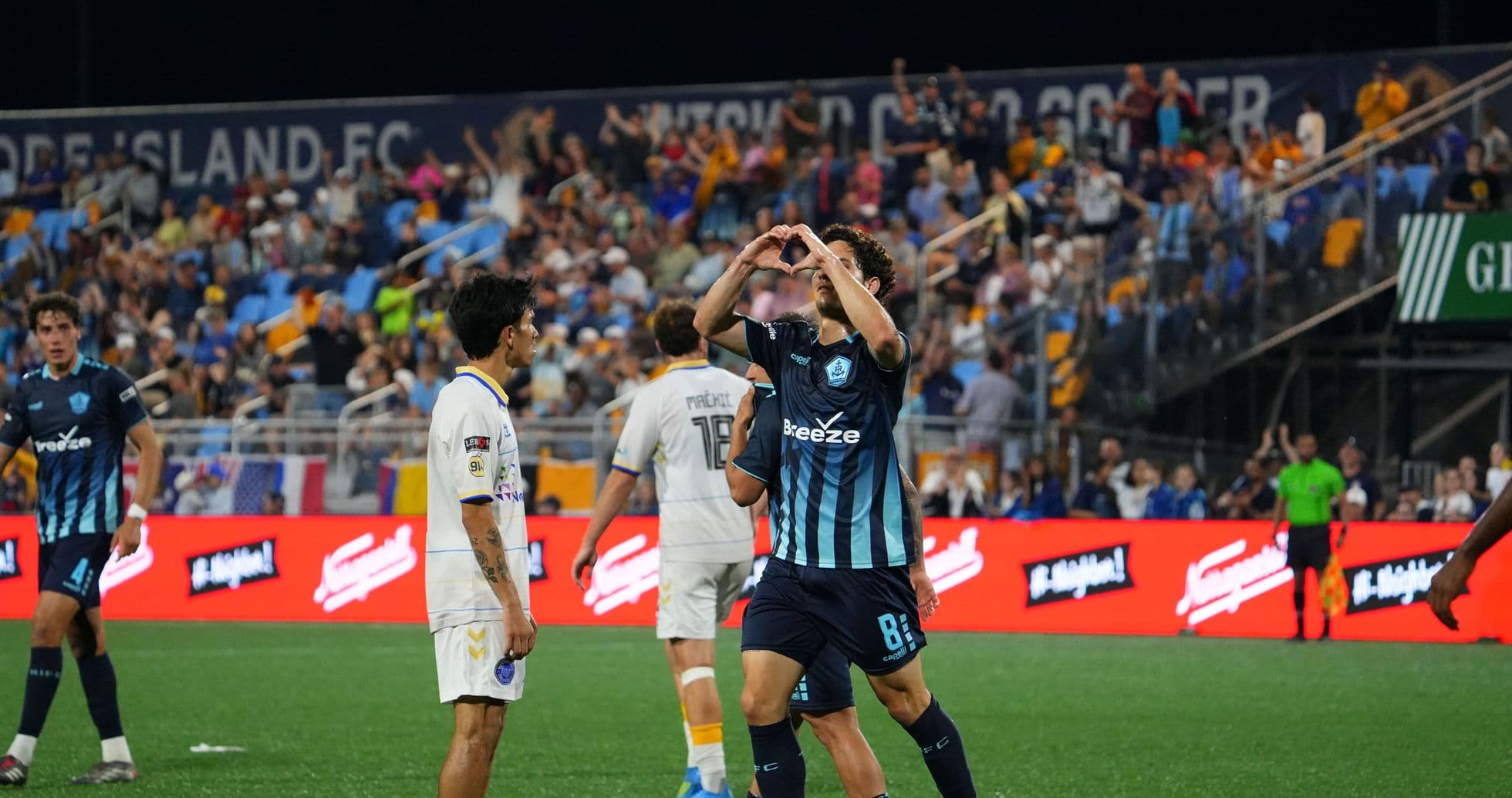
The lights had barely settled over Centreville Bank Stadium when Rhode Island delivered their most complete performance of the USL League One Cup group stage, a 3–0 dismantling of Westchester SC that crystallized the identities of both sides.
I. The Big Picture – Group 5 identities taking shape
Following this result, Rhode Island sit 3rd in Group 5 on 5 points, with a goal difference of 3 built on 8 goals for and 5 against overall. The numbers match the eye test: this is an assertive, front-foot side. Across the campaign they have played 3 matches, winning 1 at home and 1 on their travels, losing only once away. At home, they have been ruthless: 1 match, 1 win, 3 goals scored, none conceded.
Westchester SC, by contrast, are chasing stability. They are 6th in the same group with 2 points and a goal difference of -3, having scored 9 and conceded 12 overall. Their record over 3 games – 1 win and 2 defeats – tells of volatility. At home they have split their two matches with 1 win and 1 loss, scoring 5 and conceding 5. On their travels, the story is stark: 1 away match, 1 defeat, 0 goals scored and 3 conceded – that 3–0 away loss coming here in Rhode Island.
Statistically, Rhode Island’s season-long profile is that of a balanced, upward-trending side. Overall, they average 1.7 goals for and 0.7 against per game, with a clean sheet in both their home fixture and one of their away outings. They have yet to fail to score in any match. Westchester’s numbers sketch a far more fragile frame: overall they average 1.7 goals for but 2.7 against per game, and they are still searching for their first clean sheet. On their travels, their attacking average is 0.0 goals for and 3.0 against, underlining how exposed they become once they leave home comforts.
II. Tactical Voids and Discipline – where control was won
With no official absences listed, both coaches – Khano Smith for Rhode Island and George Gjokaj for Westchester SC – were able to lean on their core groups. That continuity showed most clearly in Rhode Island’s structure and collective understanding.
Rhode Island’s disciplinary profile this campaign hints at controlled aggression. Their yellow cards have been split evenly between the 46–60' window and the 91–105' stretch, each accounting for 50.00% of their cautions. That suggests a side that ramps up intensity just after half-time and again in stoppage time, but without tipping into chaos. Crucially, they have avoided red cards entirely.
Westchester’s yellow-card pattern is more telling. Fully 50.00% of their cautions arrive between 31–45', and another 50.00% in the 76–90' window. This early-and-late spike indicates a squad that loses composure under pressure: first as matches heat up before the break, then again as they chase or defend results in the closing stages. While they too have avoided reds, those late cards often correlate with tactical disarray – exactly what Rhode Island exploited as they saw out this 3–0 win.
III. Key Matchups – Hunter vs Shield, Engine Room vs Enforcer
Without individual scoring charts, the “Hunter vs Shield” duel in this fixture is best understood through collective units.
On one side, Rhode Island’s attack at home: 3 goals in their single home match, with an overall average of 3.0 goals for at Centreville Bank Stadium. On the other, Westchester’s away defending: 3 goals conceded in their only away outing, with an away average of 3.0 goals against. The numbers intersect perfectly – Rhode Island’s home attacking peak landing squarely on Westchester’s defensive weakness on their travels. The 3–0 scoreline simply confirmed what the data foreshadowed.
The Rhode Island front line, led by J. Williams as the nominal spearhead and supported by the creativity of A. Rodriguez and the energy of N. Fuson and C. Holstad, functioned as a rotating strike force rather than a single talisman. Their movement pulled at the seams of a Westchester back line anchored by C. Dickerson and T. Timchenko, with full-back duties shared by M. Jennings and J. Jimenez. That quartet has already conceded 8 goals overall this campaign, and in Rhode Island they were repeatedly stretched beyond their comfort zone.
The “Engine Room” duel was equally decisive. Rhode Island’s midfield trio – with H. Bacharach Capdevila and A. Shapiro-Thompson knitting play and offering balance – dictated tempo and transitions. Their ability to protect the back line of K. Yao, F. Nodarse and A. Sanchez allowed the side to maintain a high line and compress the pitch, suffocating Westchester’s attempts to build through the middle.
Across from them, Westchester’s central axis featuring S. Powder, A. Armas and B. Vasquez never quite established a foothold. This is a team that can score – 5 home goals in 2 matches, with a home attacking average of 2.5 – but on the road their attacking structure breaks down. With L. Marinelli isolated up front and wide runners like M. Diaz and K. Evans forced deeper to help defensively, Westchester’s “engine room” spent more time firefighting than launching counters.
IV. Statistical Prognosis – what this result tells us going forward
Following this result, the underlying numbers point toward diverging trajectories.
Rhode Island’s overall goal difference of 3 (8 scored, 5 conceded) reflects a side that is not only dangerous but increasingly secure. Their combination of a 1.7 goals-for average and 0.7 goals-against average overall, plus 2 clean sheets in 3 games, suggests an xG profile tilted in their favor: they are consistently creating more than they concede, and they are efficient enough in both boxes to turn that edge into results.
Westchester, with a goal difference of -3 (9 scored, 12 conceded), profile as a high-variance outfit whose defensive xG allowed is likely too high to sustain any attacking flourish. Conceding an average of 2.7 goals per match overall, and 3.0 away, hints at structural issues rather than mere bad luck. Their single successful penalty this campaign underlines that they can be dangerous in isolated moments, but without a stable defensive platform those moments are drowned out.
In narrative terms, this 3–0 at Centreville Bank Stadium felt less like a one-off and more like a crystallization. Rhode Island look every inch a Group 5 contender: tactically coherent, disciplined at key moments, and with enough attacking depth through starters like Williams, Rodriguez and Fuson and bench options such as Leo Afonso and Z. Herivaux to change the rhythm of games.
Westchester, meanwhile, remain a puzzle: flashes of attacking talent in home fixtures, but a defensive structure that unravels under sustained pressure away. Until Gjokaj can tighten the lines in front of Marinelli and give his midfield a platform to compete, the data – and nights like this – will continue to tilt against them.