Rangers' Disappointing Europa League Exit: McInnes Under Pressure
The boos at Ibrox started early. The walkouts followed soon after.
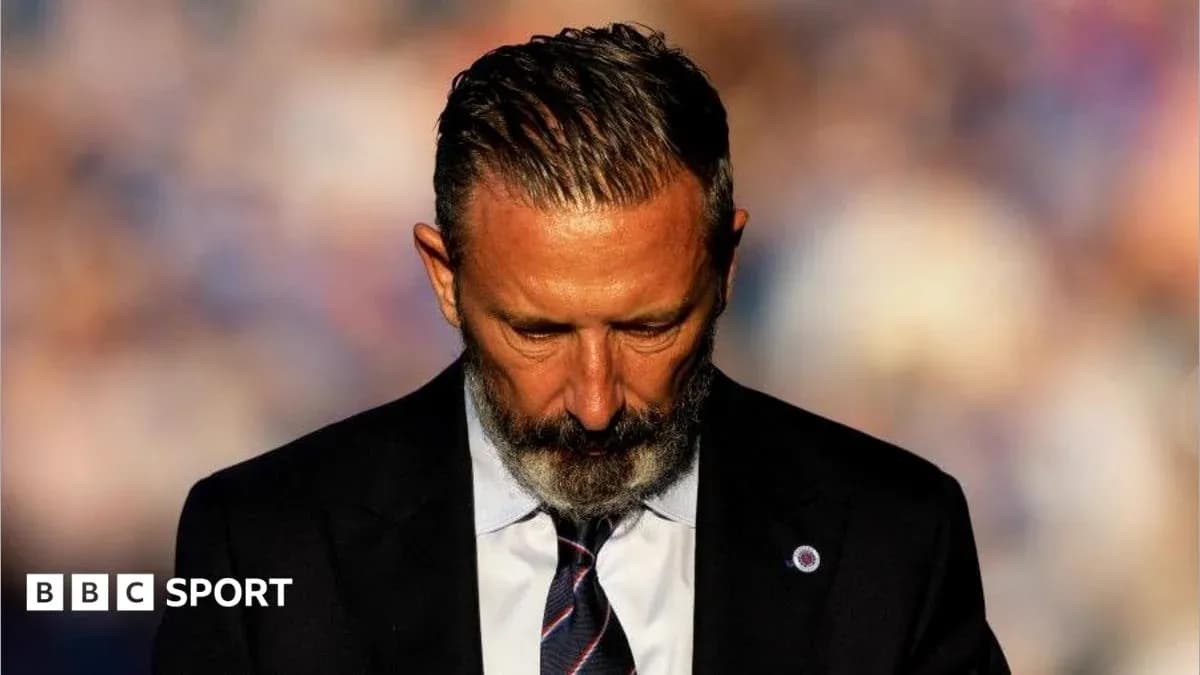
By the time the final whistle went on Rangers’ 1-1 draw with Jagiellonia Bialystok – a result that sealed a 3-2 aggregate exit from the Europa League – Derek McInnes’ already grim start had sunk to a new low. Four games into his reign, and barring caretakers, no Rangers manager has begun worse.
This club is built to live on European nights. On Thursday, it looked miles off it.
A manager already on the defensive
Last season, Rangers stumbled under Russell Martin and never recovered, the board swinging the axe in early October. McInnes was meant to be the reset, the steady hand, the man to drag a fractured squad back to standards.
Instead, he walked into the press room and delivered a brutal verdict on his own team.
"The club is built for the Champions League and Europa League, but I don't think the team is ready for it and it pains me to say it," he admitted. He talked about missing quality, missing confidence, missing the basic tools to compete at the level the support demands.
He reminded everyone why he was hired in the first place: Rangers finishing third last season, standards on the floor, a fanbase furious at what had been served up. "We have to get things moving in the right way quickly," he said.
Quickly. That word now hangs over him.
McInnes did not hide behind the opposition. "Jagiellonia are a decent team with some good players and I think they're well coached, but Rangers at their best should be winning this." That was the crux. This wasn’t about being outclassed by a heavyweight. It was about Rangers failing to hit even their own minimum level.
Forty-five minutes of promise, forty-five of chaos
McInnes believes this is a continuation of last season’s rot – an inability to piece together a full, coherent 90 minutes. The evidence on Thursday backed him up.
There were flashes in the first half: tempo, aggression, wingers driving at full-backs. Enough to keep the crowd engaged, if not convinced. Then the second half arrived and the whole thing unravelled.
Asked about the team being booed off, McInnes didn’t bristle. He agreed. "I think it was justified, to be honest. What we served up in the second half was not good enough."
Four games in, he sees only fragments. "In the four games we've had, there's been some good moments, but it's not been good enough and certainly not a strong enough 90-minute performance."
Then came the line that will chill Rangers supporters as much as the result: "It is not great to watch. My team go from some good highs in the first half to being as poor as we were in the second half and you have to say we didn't do enough."
The turning point, in his eyes, came with his own change.
The switch that broke Rangers’ grip
At the break, McInnes took off Thelo Aasgaard, brought on full-back Ross McCrorie and shifted from a back three to a back four. The idea was clear enough: Aasgaard, he felt, "was not getting involved enough" and the tweak in shape, he argued, would drag his wingers higher, get them "more involved higher up the pitch".
On paper, it sounded logical. On the pitch, it fell apart.
Former Rangers midfielder Andy Halliday, watching for BBC Radio Scotland's Sportsound, didn’t mince his words. "The reasoning makes sense, but it didn't work, it's as simple as that."
Halliday’s main gripe? The very players McInnes wanted to free up – Djeidi Gassama and Daisuke Yokota – were already seeing enough of the ball. "The only thing I would challenge about that is I thought Gassama and Yokota got loads of the ball relatively high up in the first half," he said.
Once the extra midfielder disappeared, so did Rangers’ control. "They lost all control without that extra body in midfield."
The second half became a mess: stretched, disjointed, a team without a structure trying to chase a tie it never truly had in its grasp.
Injuries, imbalance and a frantic window
As if the European exit wasn’t damaging enough, it landed on the back of a major blow. Youssef Chermiti, the 22-year-old forward Rangers had just knocked back a big-money offer for, was ruled out with a long-term knee injury.
That single twist has reshaped their transfer priorities. McInnes had already been hunting wingers and defenders. Now he needs a striker too. He insists the club are "working so hard to get the necessary type of players", with PSV Eindhoven winger Couhaib Driouech expected to be the next through the door.
But the squad, nine signings deep and still clearly incomplete, is drawing criticism from those who know the club well. Halliday says it simply shouldn’t look like this in mid-August. He calls it "imbalanced" and reels off the shopping list: "three centre-halves, one left-back, two, arguably, three wingers".
And yet, his patience has limits. "The current squad that's available should be enough to beat Dundee United, it should be enough to beat Hibs and, to be honest, it should be enough to beat Jagiellonia Bialystok."
That is the accusation McInnes cannot dodge. Recruitment is ongoing, but the players already here are underperforming badly.
Shankland and the weight of the armband
Rangers tried to lean on a familiar partnership to steady things. Reuniting McInnes with Lawrence Shankland – after the pair had pushed Celtic so hard in the title race with Hearts last season – was supposed to bring goals, leadership, and a sense of certainty in the final third.
So far, it has brought something else: scrutiny.
Former Rangers striker Steven Thompson believes Shankland is discovering what many before him have felt – that playing for Rangers, never mind captaining them, is a different world.
"It's the weight of playing for Rangers, the weight of not having the start that he wanted, and the weight of taking a bad touch," Thompson said.
At previous clubs, a loose touch or a poor decision earns a few shouts and it’s forgotten. Not here. "Here tonight, when Lawrence Shankland's link-up play wasn't that good or he should've had a shot when he didn't, they are on you and it is going to take him a bit to get used to that I think. It's not physical, it's mental."
Shankland’s adaptation curve is steep. Rangers don’t have the luxury of time while he climbs it.
A support split between fury and fear
Outside the dressing room, the noise is growing louder. The fan reaction is already turning toxic for some, conflicted for others.
Simon has seen enough. "I wanted to give a manager time, but I'd cut my losses and get rid of McInnes now. Never thought he was the man for this job - and he's proving me right, big time. Spending a fortune and making us much worse."
Alan is just as blunt: "No more excuses. McInnes is proving that he is not up to the job."
Kris poses a damning question of his own: "Has McInnes had a match for Rangers yet where his side haven't been booed off the park?"
Others urge restraint. Jonny looks at the squad and points the finger there. "Folk saying McInnes should be sacked need to calm down. Look at the squad. Who would do well with it? Give the man time. He'll sort us in time."
Yet the overall mood is dark. Alex peers ahead and doesn’t like what he sees. "I foresee another trophyless season ahead for Rangers - no cohesion, no fight, no skill, nothing. Rangers are woeful."
Kevin goes even further back for his comparison. "Rangers look as a bad as they did under Mark Warburton in the Championship. In fact, that team would thump this one."
When supporters are reaching for those kinds of references, the alarm bells inside a club usually aren’t far behind.
Where does this go next?
Rangers now drop into a Conference League play-off against Jablonec of the Czech Republic, a step down in competition that feels like a step back in status. Domestically, Dundee United and Hibs have already exposed the same flaws that Jagiellonia punished in Europe.
McInnes says the team aren’t ready for the level the club expects. The question now is brutal in its simplicity: how long will Rangers give him to fix that before they decide he isn’t either?