Rabiot Critiques World Cup Pitch After France's Victory Over Senegal
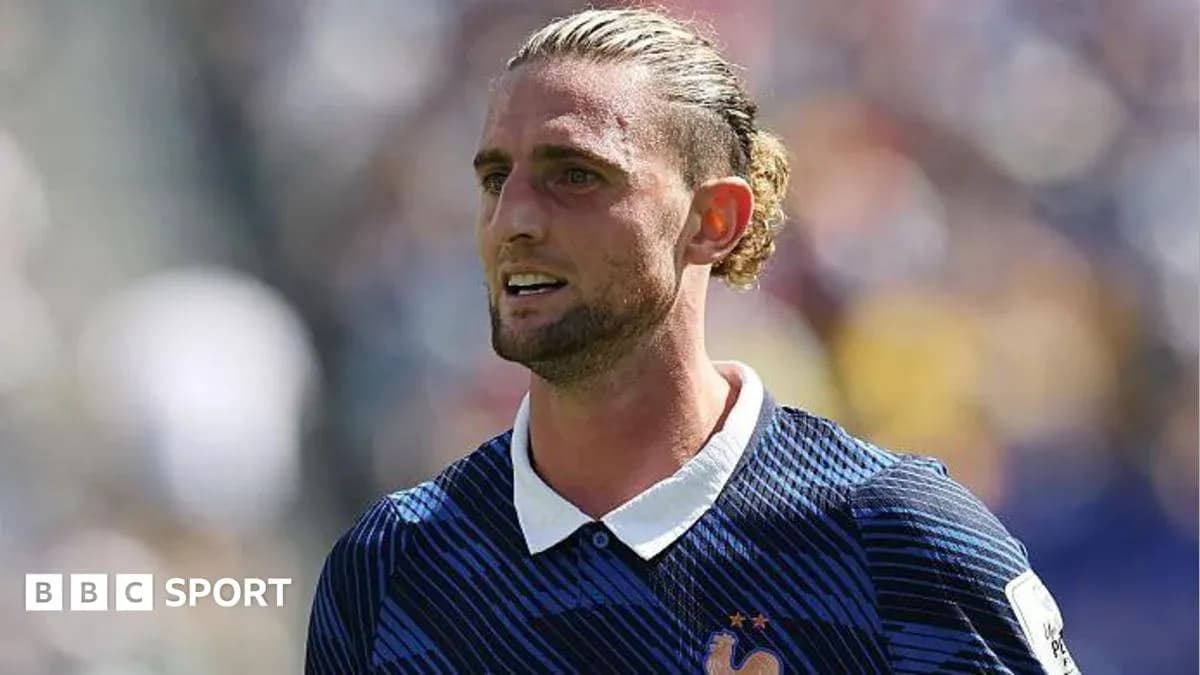
Adrien Rabiot walked off with a win, but not with much praise for the stage it was played on.
France opened their World Cup campaign with a 3-1 victory over Senegal at the New York New Jersey Stadium on Tuesday, yet the post-match conversation quickly veered away from Bradley Barcola’s sharp finish or the defending champions’ control. It went straight underfoot.
“I don’t even know if you can call it a pitch”
Rabiot, 31, started and finished the game, setting up Barcola for France’s second goal. Once the job was done, he turned his attention to the surface at the venue more commonly known as MetLife Stadium, home to the NFL’s New York Giants and New York Jets.
“The pitch... I don’t even know if you can call it that. It felt more like an artificial surface – quite hard and quite rigid,” he said, laying bare his frustration with a field that is supposed to be World Cup standard.
This is no minor gripe. MetLife is due to host England’s final group game against Panama on 27 June and, more significantly, the World Cup final on 19 July. The world’s biggest match, on a pitch already being questioned by one of the tournament favourites.
Echoes of Vinicius and a sluggish spectacle
Rabiot is not alone. Brazil forward Vinicius Junior raised similar concerns after his side’s 1-1 draw with Morocco in their opening fixture, also pointing the finger at the conditions.
“In the second half, with the heat, the pitch dries out very quickly. The game becomes very sluggish and we can’t get into our rhythm,” Vinicius said.
That word – sluggish – cuts to the heart of the issue. These are teams built on tempo, on quick combinations and sharp changes of direction. A dry, rigid surface blunts all of that, turning high-speed chess into something far more laboured.
Temporary grass, permanent questions
The 78,576-capacity arena has had a temporary grass pitch laid over its usual artificial turf for the World Cup. On paper, it ticks the box. In reality, players are already sounding the alarm.
MetLife’s synthetic surface has long carried a grim reputation in the NFL. The so‑called “MetLife curse” has seen a string of serious injuries over the years, with New York Giants wide receiver Malik Nabers tearing his anterior cruciate ligament there in September, the latest high-profile casualty.
That history is precisely why organisers opted for a temporary natural surface. Yet the complaints from Rabiot and Vinicius suggest the fix is far from perfect: a hybrid of old problems and new expectations, under the glare of a global tournament.
A busy, uneasy stage
The schedule offers no respite. Senegal are back at the venue on 22 June to face Norway, with the same pitch expected to host another high-intensity group game. Every minute played will test the durability of the temporary turf and the patience of the players.
MetLife is not alone in this experiment. A total of eight temporary grass pitches have been installed across 16 World Cup host venues, including Boston Stadium, where Scotland opened their campaign with a 1-0 win over Haiti last week. Steve Clarke’s side return there for their second Group C match against Morocco on Friday (23:00 BST), another test case in this tournament-long trial of pop-up playing surfaces.
The football so far has delivered goals, narratives and early drama. The question now is whether the pitches, hastily laid and heavily used, can keep pace with the demands of a World Cup that expects perfection underfoot as much as it does brilliance on the ball.