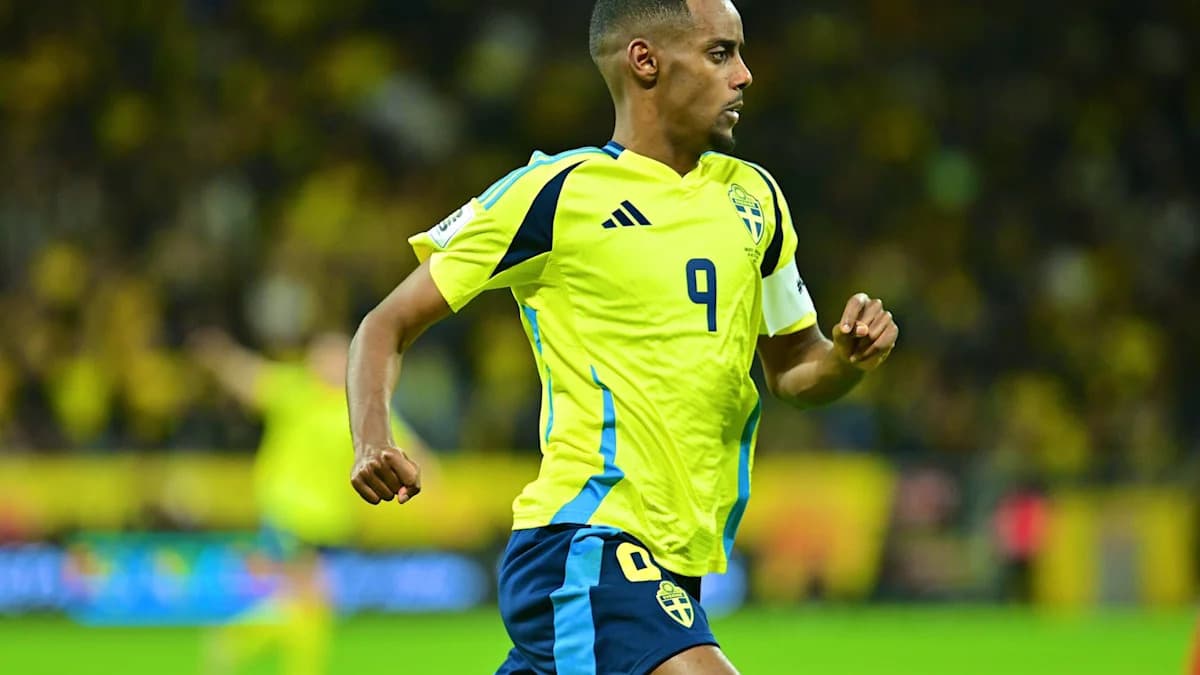
Premier League 2026/27: A New Era Without Guardiola
The Premier League is back this weekend, and it returns with something it hasn’t had for a while: uncertainty at the very top.
Chelsea, Liverpool and Manchester City all walk into 2026/27 with new head coaches, three different ideas of how football should be played, and one shared obsession – pressing, control, domination. It feels less like the start of a season and more like the opening scene of a tactical experiment.
And for the first time in a decade, it begins without Pep Guardiola.
Life After Pep
Ten years on from that remarkable summer of 2016 – Guardiola to City, Jose Mourinho to Manchester United, Antonio Conte to Chelsea – the league stands at another crossroads.
Guardiola leaves behind a staggering legacy. Six Premier League titles in 10 attempts. A 60% win rate. Four championships in a row between 2021 and 2024, a run English football had never seen. For seven years, he turned the title race into a question with only one likely answer.
Now he’s gone. Rival clubs will not pretend to be sad about it.
His departure blows the title race wide open. No more looming superstructure of a City side that knew exactly what to do in every phase of play. Instead, Enzo Maresca inherits the champions and tries to keep them on top while imposing his own positional play.
The rest of the elite smell opportunity.
Arsenal: The Team to Beat – With a Catch
On paper, Mikel Arteta’s Arsenal start as favourites. They are defending champions. Their squad is settled. Their tactical framework is drilled and familiar while others are just learning their new shapes and triggers.
Their 3-0 dismantling of Maresca’s City in the Community Shield underlined that. Arsenal barely had to stretch to brush aside last season’s runners-up. It looked routine. That, in itself, was a statement.
But the picture is not entirely clean.
The 2026 World Cup has left scars. William Saliba and Jurrien Timber are already ruled out of the start of the campaign. Several others return from the tournament with extra minutes in their legs and reduced margins for error in terms of fitness. Across a long season, that matters.
Squad depth could be tested quickly, and Arteta has another obsession to juggle. Arsenal came within a penalty shootout of winning the UEFA Champions League last season, only to fall to PSG in brutal fashion. That kind of defeat lingers.
If the league starts to bite and the injuries stack up, does Arteta lean harder into Europe? Does the quest to finally become European champions for the first time in the club’s history begin to outweigh the grind of domestic dominance?
The title race may hinge on that choice.
The “No Europe” Wildcards
Lurking in the background are two clubs with a different kind of advantage: empty midweeks.
Xabi Alonso at Chelsea and Roberto De Zerbi at Tottenham enter the season without European football. For two managers so wedded to detailed, philosophical work on the training ground, that is pure gold.
Chelsea, in particular, know this script. The last time they won the league was 2016/17 under Antonio Conte. They had just finished 10th. No European distractions. One game a week. A new coach with a clear idea.
They finished 10th again last season. They have another new coach with a defined style and time to coach it. The parallels are obvious, and inside Stamford Bridge they will not be shy about pointing them out.
If Alonso hits the right notes quickly, Chelsea could jump the queue faster than the rest of the “transition clubs” expect.
Tottenham, under De Zerbi, are in a similar boat. No long flights. No Thursday-Sunday rhythm. Just repetition, patterns, and time to drill the aggressive, brave football he demands. For projects like theirs, that kind of schedule can act like a fast-forward button.
A League Shifting Its Shape
The intrigue this season is not just about who stands in which technical area. The league itself is changing.
Look back at 2025/26 and a clear picture emerges: direct football, set-piece firepower and man-oriented pressing defined the campaign.
Teams stopped obsessing over building from the back at all costs. Many became comfortable skipping the first line of pressure altogether. Long goal kicks replaced elaborate short routines. Centre-backs found themselves in more aerial duels. Managers were happy to trade a share of the ball for territory and chaos.
The data told the same story. The Premier League averaged around 713 completed passes per match last season, a drop of 4.68% from 2024/25 and 8.59% from the record high two years earlier. Possession was no longer about volume. It was about efficiency.
Man-oriented pressing had a lot to do with that. When every short pass from the goalkeeper invited a swarm, simply going over the press became the simplest solution. The long ball was no longer an admission of inferiority. It was a deliberate tactic.
The Return of the Classic No. 9
All of that dragged the traditional centre-forward back into the spotlight.
Erling Haaland remained the reference point, but he was not alone. Igor Thiago, Dominic Calvert-Lewin, Danny Welbeck and others enjoyed strong seasons in more orthodox striker roles.
Their value went beyond goals. They became targets to hit when goalkeepers went long. They pinned centre-backs. They filled the box. They turned set pieces into genuine siege weapons.
For a stretch of the season, the league was on course for a record proportion of headed goals. After 11 matchweeks, 21.3% of all goals came from headers, up from 15.6% the previous year. Crosses and long diagonals were no longer low-percentage gambles. With the right striker, they were calculated strikes.
Set Pieces as Designed Attacks
Then came the dead-ball revolution.
Corners, free kicks, long throws, deep throw-ins – teams started treating them as fully scripted attacking phases, not mere restarts. The shift had been building, but by 2025/26 it was impossible to ignore.
Long throws became a weapon of choice. Opta recorded 14 goals from long throws in 2024/25, the highest total on record. That number lit a fuse. By the start of 2025/26, Premier League sides were averaging 3.03 long throws into the opposition box per game, almost double the highest rate from any season in the previous decade.
Defending a throw-in near your own corner flag suddenly felt like defending a corner. One lapse in concentration, one lost duel, and the ball was in the net.
The Next Tactical Battle
So the question heading into 2026/27 is not whether these trends survive. They will. Direct football, man-oriented pressing, and set-piece supremacy are now embedded in the league’s DNA.
The real question is: who solves them first?
Which coach finds the structure that can resist man-oriented pressing without simply lumping the ball long? Who designs the defensive schemes that finally blunt the long throw and the choreographed corner? Who brings back controlled possession without inviting chaos?
For a decade, Guardiola often provided the answers. His City sides forced everyone else to react. Now he is gone, and a new cast steps forward: Alonso at Chelsea, Maresca at City, Andoni Iraola at Bournemouth, De Zerbi at Spurs, Arteta at Arsenal and the rest of the new generation.
They are not just fighting for points. They are fighting to define what the Premier League will look like for the next five years.
By the time this season ends, we may know which vision wins.