Parma vs Sassuolo: Final Serie A Showdown
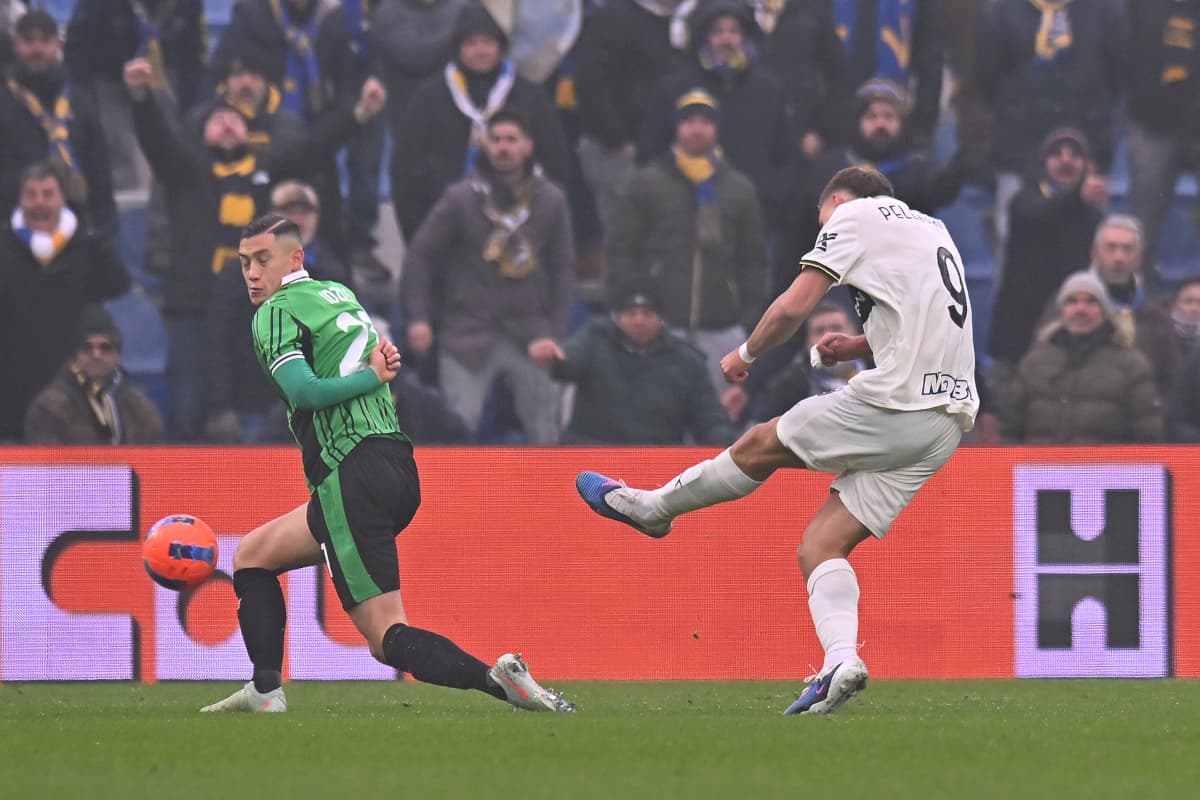
Parma host Sassuolo at Stadio Ennio Tardini in the final Serie A round in 2026, a mid-table closer where the primary stakes are positional: Parma start the day 13th on 42 points and Sassuolo 11th on 49 points in the league phase, so the result will decide whether Parma can climb towards the upper mid-table or risk slipping closer to the lower pack, while Sassuolo are playing to consolidate or slightly improve their top-half credentials rather than chasing Europe or fighting relegation.
Head-to-Head Tactical Summary
The most recent Serie A meeting came on 3 January 2026 at MAPEI Stadium - Città del Tricolore, where Sassuolo and Parma drew 1-1 (1-1 at HT). That game underlined a balanced contest, with Parma able to take something away from Reggio Emilia. Before that, the sides met in a club friendly at Stadio Ennio Tardini on 2 August 2023, where Parma won 1-0 after a 0-0 first half, showing they can edge tight, low-scoring matches at home. Another friendly at the same venue on 1 August 2021 ended with Sassuolo winning 3-0, highlighting their capacity to punish Parma when space opens up. The last Serie A clash at Tardini was on 16 May 2021, with Sassuolo winning 3-1 after a 1-1 first half, while the reverse league fixture that season on 17 January 2021 finished 1-1 at MAPEI Stadium - Città del Tricolore (0-1 at HT), confirming that draws have been a recurring outcome when Parma manage to protect a lead or stay compact away.
Global Season Picture
- League Phase Performance: In the league phase, Parma sit 13th with 42 points from 37 matches, scoring 27 and conceding 46 (goal difference -19). Sassuolo are 11th with 49 points from 37 games, with 46 goals scored and 49 conceded (goal difference -3). Parma’s profile is low-scoring and defensively vulnerable (27 for, 46 against), while Sassuolo are more expansive at both ends (46 for, 49 against).
- Season Metrics: In the league phase, Parma’s statistics confirm a conservative attacking output and a defense that is regularly tested. They have 27 goals for and 46 against across 37 games, averaging 0.7 scored and 1.2 conceded per match, with 12 clean sheets and 16 matches where they failed to score. Their most used shapes are three-at-the-back variants (3-5-2 in 18 games, 3-4-2-1 and 3-1-4-2 also present), pointing to a structure-first approach and reliance on compactness rather than volume of chances. The card profile shows sustained yellow-card activity across all periods, with notable spikes between 46-60 and 76-90 minutes, indicating late-game physicality and pressure management issues. In the league phase, Sassuolo’s metrics show a more open game model: 46 goals for and 49 against, averaging 1.2 scored and 1.3 conceded per match. They have 8 clean sheets and failed to score 11 times, suggesting a more consistent attacking threat than Parma but with defensive exposure. Tactically, they are heavily committed to a 4-3-3 (35 matches), which supports wide attacking play and higher tempo. Their yellow cards are concentrated late (especially 76-90 minutes), consistent with a team that defends large spaces and often has to make recovery fouls as games stretch.
- Form Trajectory: In the league phase, Parma’s recent form string “LLLWW” shows a late upswing: three consecutive defeats followed by back-to-back wins. That pattern suggests a team that has recently corrected course and carries some momentum into this final round, despite an overall modest season. Sassuolo’s “LLWDW” indicates a more mixed but still positive short-term trend: two losses, a win, a draw, then another win. They are not in sustained top form but remain capable of reacting and picking up results, especially when their attack clicks.
Tactical Efficiency
Across the league phase, Parma’s efficiency profile is that of a low-margin side. With only 27 goals from 37 matches and 16 games without scoring, their attack is low-volume and often reliant on set pieces or isolated transitions. Their use of three centre-backs and multiple defensive-leaning formations underlines a priority on structure over risk. Defensively, 46 goals conceded at 1.2 per game is not catastrophic, but combined with such a limited attack it leaves almost no buffer for errors; when they concede first, their probability of recovery drops sharply.
Sassuolo’s numbers point to higher attacking efficiency but also greater volatility. Scoring 46 and conceding 49 in 37 games, with a 4-3-3 as the dominant shape, suggests a team willing to commit numbers forward and accept defensive trade-offs. Their clean-sheet count (8) and 11 games without scoring show that when their front line is contained, the structure behind can be exposed. In comparative terms, Sassuolo’s attack is significantly more productive than Parma’s, while the defensive gap between them is much smaller (49 vs 46 conceded). Any pre-calculated Attack/Defense Index would therefore rate Sassuolo’s attacking contribution clearly higher, with both sides clustered closer on the defensive axis.
For this specific match, that contrast implies that Parma’s path to efficiency lies in suppressing game tempo, leveraging their three-at-the-back stability and aiming for a low-scoring contest, whereas Sassuolo’s best route is to raise the number of attacking sequences and force Parma out of their comfort zone, trusting that their superior scoring rate over the season will translate into chances and goals.
The Verdict: Seasonal Impact
In the league phase, the result primarily reshapes mid-table ordering rather than defining the title, European spots, or relegation. Parma, on 42 points with a -19 goal difference, are clear of the drop but still carrying the profile of a low-scoring side. A win here would likely secure a more respectable final position, validate their recent “LLLWW” uptick, and provide a platform to sell internal progress: proof that the structural, defense-first approach can be refined rather than overhauled in 2026. Dropped points, especially at home, would reinforce the narrative of an attack that needs significant reinforcement and tactical rebalancing.
For Sassuolo, starting from 49 points and a -3 goal difference, a victory would consolidate their status as the more progressive, attack-oriented mid-table side and could nudge them closer to the top half, strengthening arguments to keep faith with the 4-3-3 and its attacking core. A draw would be consistent with their season-long volatility: respectable but short of European contention, underlining the need for defensive tightening if they are to move beyond mid-table in 2026. A defeat would not endanger safety but would highlight the fragility behind their open style and could push the club towards prioritising defensive recruitment and structural balance.
Overall, this match is a strategic pivot rather than a survival test: Parma are playing to turn late-season recovery into a credible step forward, while Sassuolo are trying to close an uneven but offensively promising year with a result that justifies an evolution, not a reset, of their game model going into the next Serie A campaign.