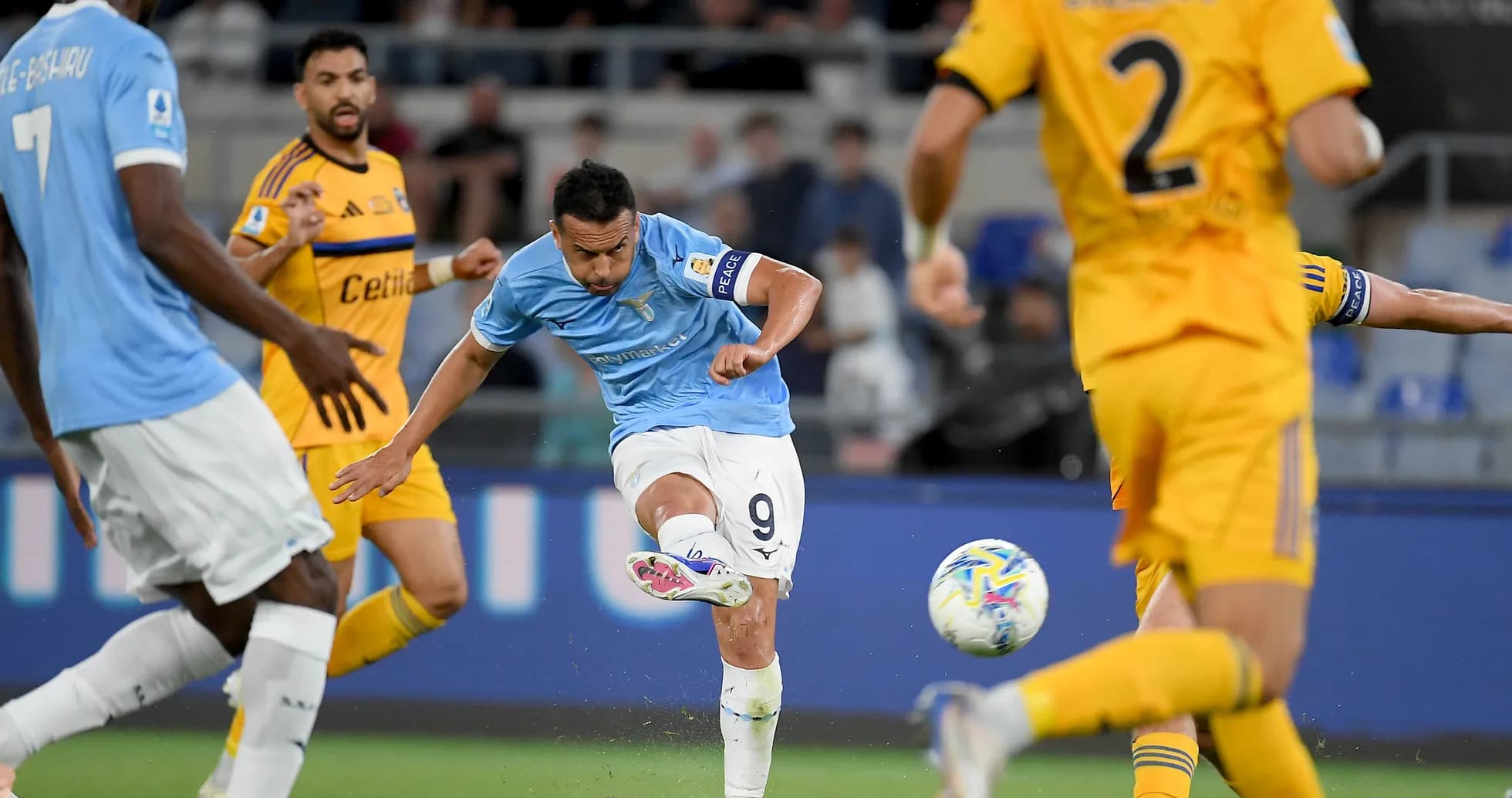
Lazio Edges Pisa 2-1 in Season Finale
The season closed under the Roman lights with a scoreline that mirrored the wider story of both clubs. At Stadio Olimpico, Lazio edged Pisa 2–1, a result that crystallised their contrasting campaigns in Serie A’s 2025 season.
Following this result, Lazio’s table position at 9th with 54 points and a goal difference of 1 (41 scored, 40 conceded overall) feels like a fair reflection of a side that never fully broke free of inconsistency but still imposed a clear tactical identity. Pisa’s fate was far harsher: rock bottom in 20th on 18 points, with a brutal goal difference of -45 (26 for, 71 against overall), their relegation the inevitable outcome of structural frailty more than isolated bad days.
I. The Big Picture – Structures and Season DNA
Maurizio Sarri stayed loyal to his blueprint, sending Lazio out in a 4-3-3 that has been his default – they used this shape in 36 league games. The structure was familiar: A. Furlanetto behind a back four of A. Marusic, Mario Gila, A. Romagnoli and L. Pellegrini; a midfield trio of F. Dele-Bashiru, T. Basic and R. Belahyane; a fluid front three of M. Cancellieri, T. Noslin and Pedro.
This shape aligned perfectly with their season profile. Heading into this game, Lazio at home averaged 1.4 goals for and 1.3 goals against per match, a slight attacking edge but rarely full control. Clean sheets at home (6) and 6 home games without scoring underlined the streaky nature of their attack.
Oscar Hiljemark’s Pisa arrived in Rome with a 3-5-2, a system they had leaned on most of the year (21 matches in that shape). A. Semper was shielded by a back three of A. Calabresi, S. Canestrelli and R. Bozhinov; the wide lanes were entrusted to S. Angori and M. Leris, with a central trio of M. Aebischer, E. Akinsanmiro and I. Vural behind forwards S. Moreo and F. Stojilkovic.
The structure, however, could not disguise the numbers. On their travels, Pisa conceded an average of 2.4 goals per match while scoring only 0.9. Their overall defensive record – 71 goals conceded in 38 games – made them the league’s softest underbelly, and the 0 away wins across 19 games told of a team that rarely imposed itself outside Tuscany.
II. Tactical Voids – Absences and Discipline
Both managers had to navigate important absences. Lazio were without E. Motta and I. Provedel (injuries), removing their established first-choice goalkeeper and a depth option, which pushed Furlanetto into the spotlight. In midfield, N. Rovella’s suspension for a red card took away a key organiser, while N. Tavares and K. Taylor (both suspended for yellow-card accumulation) reduced defensive and rotational flexibility. The loss of M. Zaccagni to a knee injury removed one of their most incisive attackers – a player whose season included 3 goals, heavy involvement in duels and a red card that had already shaped his narrative.
Pisa’s list was just as telling. A. Caracciolo, one of Serie A’s most booked players with 10 yellows and a defensive pillar who blocked 24 shots this campaign, was suspended – a massive blow to a back line already leaking chances. F. Coppola, D. Denoon, M. Marin and M. Tramoni were all out injured, while Lorran was omitted by coach’s decision. The absence of Caracciolo in particular stripped Pisa of aerial presence, leadership and a defender who thrives in last-ditch scenarios.
Disciplinary trends across the season framed the match’s emotional tone. Lazio’s yellow-card distribution peaked late: 25.64% of their yellows came between 76–90 minutes, with a red-card spike in the same period (55.56% of their reds). Pisa mirrored that late volatility in yellows (also 25.64% between 76–90) but spread their reds more across the first hour. This was a fixture primed for a nervy, card-heavy finale, even if the final whistle at 90’ spared it additional stoppage-time drama.
III. Key Matchups – Hunter vs Shield, Engine Room
Without formal top-scorer data, the “Hunter vs Shield” battle had to be read through structural lenses. Lazio’s front three of Cancellieri, Noslin and Pedro faced a Pisa away defence that conceded 45 goals in 19 road games – an average of 2.4. Lazio’s home attack, at 1.4 goals per game, is not rampant, but against this level of resistance it was always likely to find joy. The 2–1 scoreline felt like the statistical midpoint between Lazio’s moderate attacking output and Pisa’s chronic defensive openness.
The “Shield” on Lazio’s side was the central pairing of Mario Gila and A. Romagnoli. Both arrive with strong defensive resumes: Mario Gila’s 31 appearances, 46 tackles, 17 successful blocks and 25 interceptions this season mark him as a proactive defender who steps into danger rather than waiting for it. Romagnoli, with 20 blocked shots and 32 interceptions, adds composure and distribution (2001 completed passes at 93% accuracy). Together, they faced a Pisa attack that scored only 26 goals overall – 0.7 per match – and failed to score in 21 games. Even conceding once, Lazio’s back line largely imposed its structure on a limited forward unit.
In the “Engine Room”, the contrast was sharper. Lazio’s midfield three were more functional than star-studded in this game, but Pisa’s central figure, M. Aebischer, carried an outsized creative and defensive load. Over the season he produced 1530 passes at 85% accuracy, 34 key passes and 65 tackles, with 8 yellow cards underscoring his willingness to foul to break rhythm. His duel with Lazio’s interior midfielders shaped Pisa’s ability to transition from their deep 5-3-2 defensive shell into anything resembling a counter-attacking threat.
IV. Statistical Prognosis – xG Logic and Defensive Reality
Even without explicit xG numbers, the expected pattern was clear heading into this fixture. Lazio’s overall scoring rate of 1.1 goals per game, combined with Pisa’s concession rate of 1.9, pointed towards a home side generating multiple high-quality chances. At the other end, Pisa’s anaemic 0.7 goals per game against a Lazio defence conceding 1.1 suggested that the visitors would need efficiency bordering on perfection to take anything.
Clean-sheet data reinforced the likely balance of chances. Lazio kept 15 clean sheets overall, with 9 on their travels but still 6 at home – evidence of a side capable of shutting games down when their structure clicks. Pisa, by contrast, failed to score in 21 matches and managed only 5 clean sheets overall. The probability matrix before kick-off pointed heavily towards a Lazio win with Pisa needing set pieces, penalties or defensive errors to stay alive.
In the end, the 2–1 scoreline was almost a narrative compromise: Lazio’s superiority expressed, Pisa’s spirit acknowledged. The Roman back line, anchored by Mario Gila and Romagnoli, did concede once but never truly ceded control. Pisa’s 3-5-2, shorn of Caracciolo and propped up by Aebischer’s industry, could not rewrite the season-long script.
Following this result, Lazio close the campaign as a mid-table side with a clear identity and a narrow positive goal difference of 1. Pisa depart Serie A with scars that are statistical as much as emotional – 71 goals conceded, 0 away wins, and a relegation that felt less like a twist and more like the final page of a story long in the writing.