One Knoxville Edges Chattanooga in Penalty Shootout
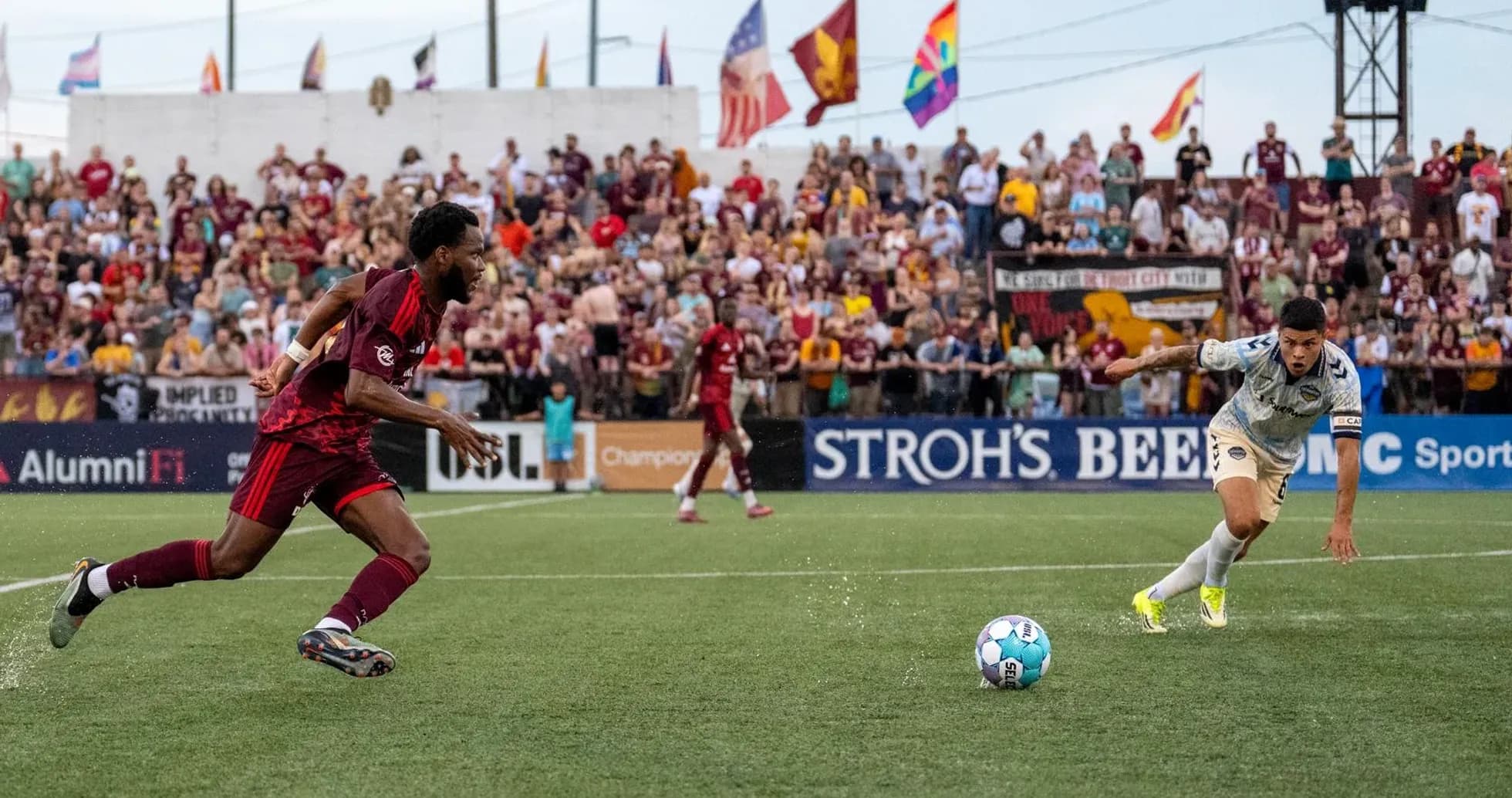
Under the lights at Regal Stadium, One Knoxville and Chattanooga Red Wolves dragged their Group 3 fate all the way to 120 minutes and beyond, before the hosts finally edged it 5–4 on penalties after a 1–1 draw. In a competition where margins are thin and form lines are still sketching themselves in, this felt less like a routine group game and more like a stress test of each squad’s identity.
I. The Big Picture – contrasting trajectories in Group 3
Heading into this game, the standings painted a clear contrast. One Knoxville sat 3rd in USL Cup 2026, Group 3 with 4 points and a goal difference of 1 (10 goals for, 9 against overall), a side that leans into chaos but usually comes out slightly ahead. Chattanooga, 6th with 2 points and a goal difference of -3 (8 scored, 11 conceded overall), arrived as a team still searching for a foothold in the group.
Season-long statistics sharpen that divide. One Knoxville’s campaign profile is of a proactive, front-foot outfit: in total this season they have scored 4 goals in 3 matches, with an average of 1.3 goals per game overall. At home they average 1.0 goal for and 1.0 against; on their travels they have been more expansive, averaging 2.0 goals for and 1.0 against. They have yet to keep a clean sheet in total and have failed to score only once, suggesting that their matches almost always open up.
Chattanooga’s season arc is more troubled. In total they have lost all 3 fixtures, scoring 2 and conceding 5, with a goals-for average of 0.7 and goals-against at 1.7 overall. At home they manage just 0.5 goals for and concede 1.5; away, they score 1.0 and ship 2.0 on average. No clean sheets, one game where they failed to score, and a biggest losing margin of 2–1 both home and away underline a side that is competitive but consistently on the wrong side of the details.
II. Tactical Voids and Disciplinary Undercurrents
There were no listed absentees, so both Ian Fuller and Scott MacKenzie could lean on full squads. That made the contest a purer reflection of tactical choices rather than enforced compromises.
The card data across the competition hints at how both teams manage game states. One Knoxville’s yellow-card profile is clustered late: 50.00% of their yellows arrive between 61–75 minutes, and another 50.00% between 91–105. That late-game surge in bookings speaks to a side that ramps up intensity as fatigue sets in, pressing and counter-pressing aggressively when matches tip into chaos.
Chattanooga’s discipline is more evenly scattered but still telling: 12.50% of their yellows come in the opening 0–15 minutes, then 25.00% between 31–45, 37.50% from 46–60, and another 25.00% in the 76–90 window. They tend to pick up cards in the middle third of the match, especially just after half-time, which often coincides with tactical adjustments and higher pressing. It suggests a team that tries to reset the tone after the break but can drift into rashness under pressure.
III. Key Matchups – Hunter vs Shield, Engine Room vs Enforcer
Even without explicit goals and assist tables, the lineups hint at where the battle lines were drawn.
For One Knoxville, the attacking trident of K. Linhares (11), B. Diene (7), and M. Goling (17) forms the natural “Hunter” axis. With the team’s overall attacking numbers strong and their biggest wins showing they can score twice both home and away, this front line is built to stretch defensive structures. Diene’s presence wide and Linhares’ ability to drift into pockets would have targeted Chattanooga’s central pairing of C. Engmann (40) and E. Kinzner (22), with Y. Lelin (23) often forced into emergency cover.
Chattanooga’s “Shield” has struggled all season. In total, they concede 1.7 goals per game, and on their travels that rises to 2.0. That puts enormous pressure on Engmann and Kinzner to win first contacts and on Lelin to track runners from deep. Against a One Knoxville side that averages 2.0 goals for away and is comfortable in transition, every misstep in the Red Wolves’ back line threatened to be fatal.
In midfield, the “Engine Room” duel revolved around J. J. Murphy (8), H. Cordova (18), and D. Williams (23) for One Knoxville against the Chattanooga trio of A. Kelly-Rosales (35), M. Acosta (21), and A. Lombardi (30). Murphy’s role as tempo-setter and link between lines is crucial for a side that doesn’t mind open games but must still manage risk. Cordova’s shuttle work and Williams’ ability to step into higher zones offered verticality.
Kelly-Rosales and Acosta, on the other hand, were tasked with being both metronomes and enforcers. For a team that has yet to win and bleeds goals, their job is to slow transitions, foul smartly rather than recklessly, and keep Chattanooga from being stretched into a back-pedalling 4 or 5. The card distribution – with so many yellows in the 46–60 band – suggests that this is where Chattanooga often tries to reassert control and where this match likely turned into a series of duels and tactical fouls.
The benches added a late-game twist. One Knoxville could inject S. Zarokostas (21), N. Rosamilia (77), and D. Krioutchenkov (9), all capable of fresh running and direct play. Chattanooga’s response options in G. Mercer (9), R. Mensah (20), and W. Wessels (6) offered energy but came from a side already conditioned to chase games rather than protect them.
IV. Statistical Prognosis and What the Shootout Revealed
From a statistical lens, One Knoxville’s edge in attacking output and Chattanooga’s porous defensive record made a home win the rational expectation. One Knoxville’s overall balance of 4 goals for and 3 against, combined with no penalties taken or missed in total, points to a team that trusts open play rather than set-piece lifelines.
Chattanooga’s profile – 2 goals for, 5 against in total, no wins, and a longest losing streak of 3 – framed them as underdogs whose best path lay in dragging the game into narrow margins and hoping variance would finally tilt their way.
That the tie finished 1–1 after 120 minutes and went to penalties suggests Chattanooga succeeded in compressing the game, but the shootout outcome reaffirmed the underlying trends. One Knoxville, with the more robust season structure and sharper attacking identity, had just enough composure to survive the knife-edge of spot kicks.
Following this result, the narrative of both squads crystallises: One Knoxville as a high-intensity, late-surging side whose depth and attacking patterns can carry them through tense nights; Chattanooga as a team still wrestling with its defensive frailties and disciplinary timing, competitive in moments but yet to translate effort into control. The numbers said the hosts should edge it; the drama of 120 minutes and a 5–4 shootout only confirmed what the data had already whispered.