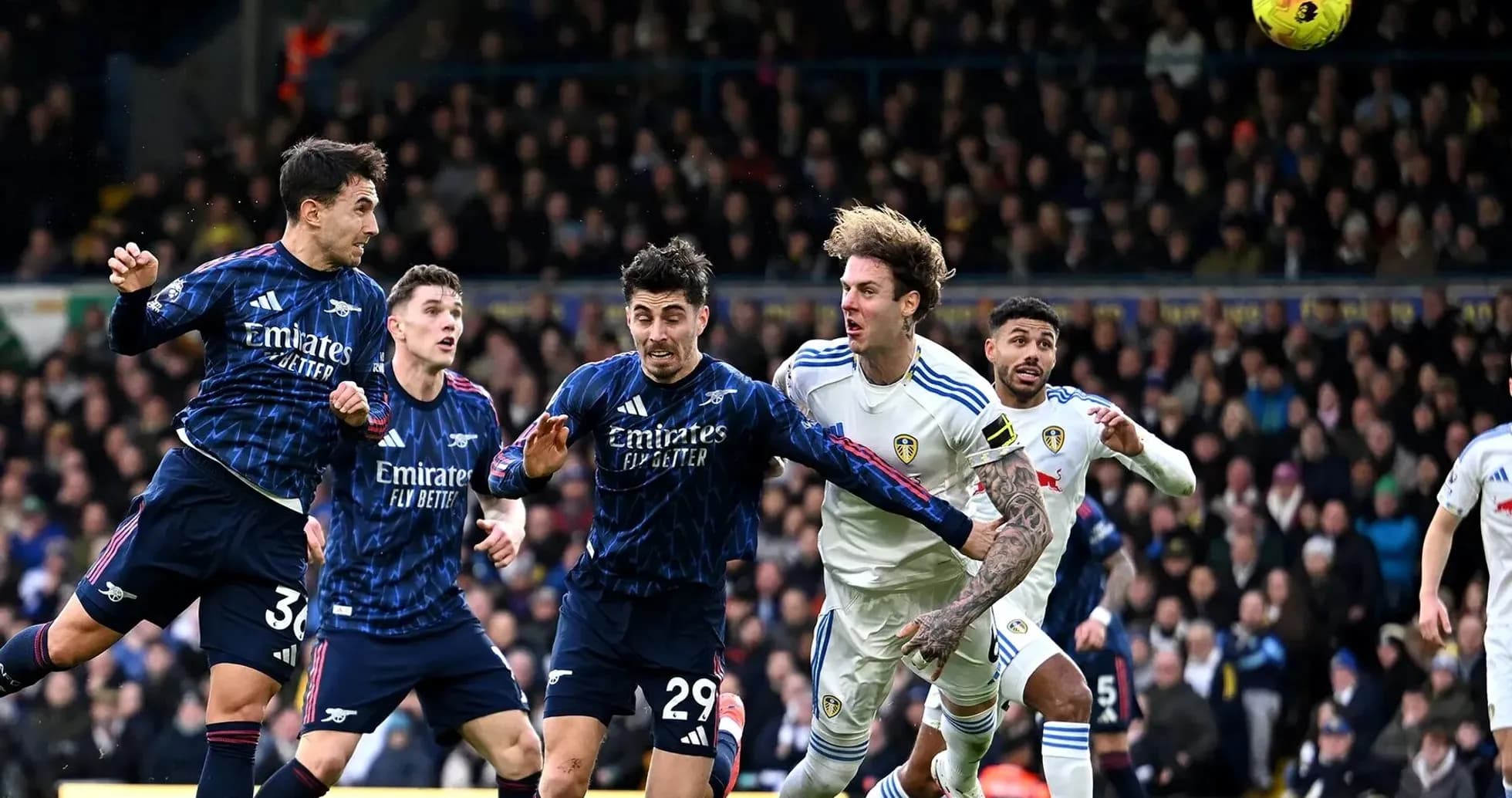
Newcastle Dominates West Ham in 3-1 Victory at St. James' Park
Newcastle’s 3-1 win over West Ham at St. James' Park was underpinned by a clear structural superiority and sharper execution in both boxes. In a Premier League match where the shot count finished level at 15-15, Eddie Howe’s side controlled territory and tempo, turning their 56% possession and 497 passes into sustained pressure, while West Ham’s 3-4-2-1 struggled to cope with Newcastle’s fluid 4-2-3-1, especially down the flanks and in the half-spaces.
Executive Summary
Newcastle built a decisive 2-0 lead by half-time and managed the game intelligently thereafter, despite a brief West Ham resurgence. The hosts’ attacking quartet, led by W. Osula and N. Woltemade, consistently disrupted West Ham’s back three, while Bruno Guimaraes and S. Tonali controlled central zones. West Ham created enough volume to stay competitive (8 shots on goal to Newcastle’s 7) but lacked control in midfield and were overly reliant on transitional moments and direct play into C. Wilson and later T. Castellanos. The result reflected Newcastle’s superior structure and use of possession rather than a sheer chance-creation gulf.
Scoring Sequence & Disciplinary Log
The opener on 15' set the tactical tone: N. Woltemade (Newcastle) — assisted by H. Barnes — finished a move that exposed West Ham’s wing-back positioning, with Barnes exploiting space wide and Woltemade arriving between the lines. Four minutes later on 19', Newcastle doubled their lead when W. Osula (Newcastle) — assisted by J. Ramsey — converted after Ramsey found a pocket behind West Ham’s midfield line, punishing a slow reset in the visitors’ 3-4-2-1.
West Ham reacted with an early defensive reshuffle: at 26', T. Castellanos (IN) came on for J. Todibo (OUT), a clear shift towards more attacking threat at the cost of a centre-back, effectively morphing the visitors into a more aggressive shape.
Newcastle’s control was reinforced after the break. On 53', J. Willock (IN) came on for S. Tonali (OUT), adding more vertical running from midfield. The first card arrived on 59': Tomáš Souček (West Ham) — Argument — signalling growing West Ham frustration as they struggled to break Newcastle’s press.
At 63', West Ham made a double change: Pablo (IN) came on for A. Wan-Bissaka (OUT), and Mohamadou Kanté (IN) came on for T. Soucek (OUT), pushing extra energy and mobility into midfield and the right flank. The changes were immediately tested: on 65', W. Osula (Newcastle) struck again — assisted by J. Willock — finishing a move that showcased Newcastle’s capacity to break lines centrally and attack the space behind the now looser West Ham midfield.
West Ham’s best moment came on 69', when T. Castellanos (West Ham) — assisted by M. Hermansen — scored. The assist from the goalkeeper underlines a direct, vertical route: Hermansen’s distribution bypassed Newcastle’s midfield, allowing Castellanos to exploit space behind the defence.
Discipline then became a subplot to Newcastle’s game management. On 67', El Hadji Malick Diouf (West Ham) — Foul — was booked, reflecting late challenges as West Ham tried to disrupt Newcastle’s rhythm. On 75', Newcastle refreshed their wide lanes: D. Burn (IN) came on for N. Woltemade (OUT), and J. Murphy (IN) came on for H. Barnes (OUT), moves aimed at defensive solidity and fresh legs in wide areas.
On 80', Mohamadou Kanté (West Ham) — Argument — received a yellow card, another sign of emotional rather than tactical control for the visitors. Newcastle’s only booking came at 83': Lewis Hall (Newcastle) — Foul — after a defensive action on the flank as West Ham chased the game.
Late, Howe locked down the result: at 85', Y. Wissa (IN) came on for W. Osula (OUT), and A. Elanga (IN) came on for K. Trippier (OUT), preserving energy and adding counter-attacking pace to see out the 3-1 scoreline.
Card totals: Newcastle 1 yellow, West Ham 3 yellows, Total 4.
Tactical Breakdown & Personnel
Newcastle’s 4-2-3-1 functioned as a dynamic 2-3-5 in possession. K. Trippier and Lewis Hall pushed high, while S. Botman and M. Thiaw formed a stable rest-defence pairing against West Ham’s central forward. Bruno Guimaraes and S. Tonali provided a double pivot that alternated: one dropping to assist build-up, the other stepping beyond West Ham’s first line. This structure underpinned Newcastle’s 56% possession and 497 passes (408 accurate, 82%), enabling them to pin West Ham back and create 9 shots inside the box.
The three behind Osula — Barnes, Woltemade, and Ramsey — were key to stretching West Ham’s 3-4-2-1. Barnes held width and attacked A. Wan-Bissaka’s channel, Woltemade drifted between the lines, and Ramsey made vertical runs from the left half-space. Their rotations disorganized West Ham’s midfield box of Soucek and M. Fernandes, forcing the back three to step out and opening gaps for Osula. The first two goals came directly from these positional overloads and timing of runs.
Defensively, Newcastle’s 4-4-2 pressing shape, with Woltemade stepping alongside Osula, limited West Ham’s build-up and forced long passes towards C. Wilson. Despite conceding 8 shots on goal, N. Pope’s 7 saves highlight that Newcastle occasionally allowed West Ham to reach finishing positions, but their overall Defensive Index remained strong: they limited xG against to 0.88, indicating most efforts were of moderate quality. The negative goals prevented figure (-0.84) suggests Pope conceded slightly more than the shot quality model expected, but the game state (two-goal cushion early) allowed Newcastle to accept some risk.
West Ham’s 3-4-2-1 never fully stabilized. The back three of A. Disasi, K. Mavropanos, and Todibo (later restructured after his withdrawal) were repeatedly drawn wide by Newcastle’s wingers, leaving central lanes exposed. Wing-backs Wan-Bissaka and M. Diouf were pinned deep by Barnes and Ramsey, meaning West Ham’s counters often started from low positions. In possession, Soucek and Fernandes were outnumbered by Newcastle’s double pivot plus the dropping No.10, making it difficult to progress centrally. Consequently, West Ham leaned on direct play from Hermansen and early balls into the channels, as exemplified by Hermansen’s assist to Castellanos.
Nuno Espirito Santo’s in-game adjustments — introducing Castellanos, Pablo, and Kanté — shifted West Ham towards a more open, transition-heavy game. While this produced their goal and maintained parity in total shots (15-15) and a near-equal passing efficiency (401 passes, 332 accurate, 83%), it also left them vulnerable to Newcastle’s counter-attacks and central overloads, particularly around the 65' goal.
The Statistical Verdict
From a statistical perspective, Newcastle’s 3-1 scoreline aligned well with the underlying numbers. Their xG of 1.7 versus West Ham’s 0.88 underscores a clear edge in chance quality, even if not an overwhelming gulf. Newcastle’s 7 shots on goal from 15 total, combined with 9 shots inside the box and 9 corner kicks, reflect sustained territorial pressure and intelligent occupation of attacking zones. Their passing volume and accuracy, alongside 56% possession, paint a picture of a side in control of rhythm and space.
West Ham’s 8 shots on goal and identical total shot count suggest they were not outclassed in pure volume, but their lower xG and mere 1 corner kick highlight the scarcity of prolonged pressure. The visitors’ 11 fouls and 3 yellow cards — two for Argument, one for Foul — reveal a team often reacting rather than dictating. Newcastle, with only 8 fouls and 1 yellow, managed the game with greater composure.
Goalkeeper metrics add nuance. Newcastle’s goals prevented figure of -0.84 indicates that, on another day, they might have conceded fewer, yet their defensive structure kept West Ham’s most dangerous moments relatively limited. Conversely, West Ham’s identical -0.84 goals prevented suggests Hermansen also underperformed the model slightly, but he was far more exposed by his defensive unit, facing 7 shots on goal amid constant pressure.
In synthesis, the match outcome reflects Newcastle’s superior structural coherence and efficiency in exploiting West Ham’s systemic weaknesses, rather than mere variance in finishing.