Neco Williams’ Disallowed Goal: New Footage Sparks Debate
New footage has finally settled one argument around Neco Williams’ disallowed goal against Tottenham – and ignited another.
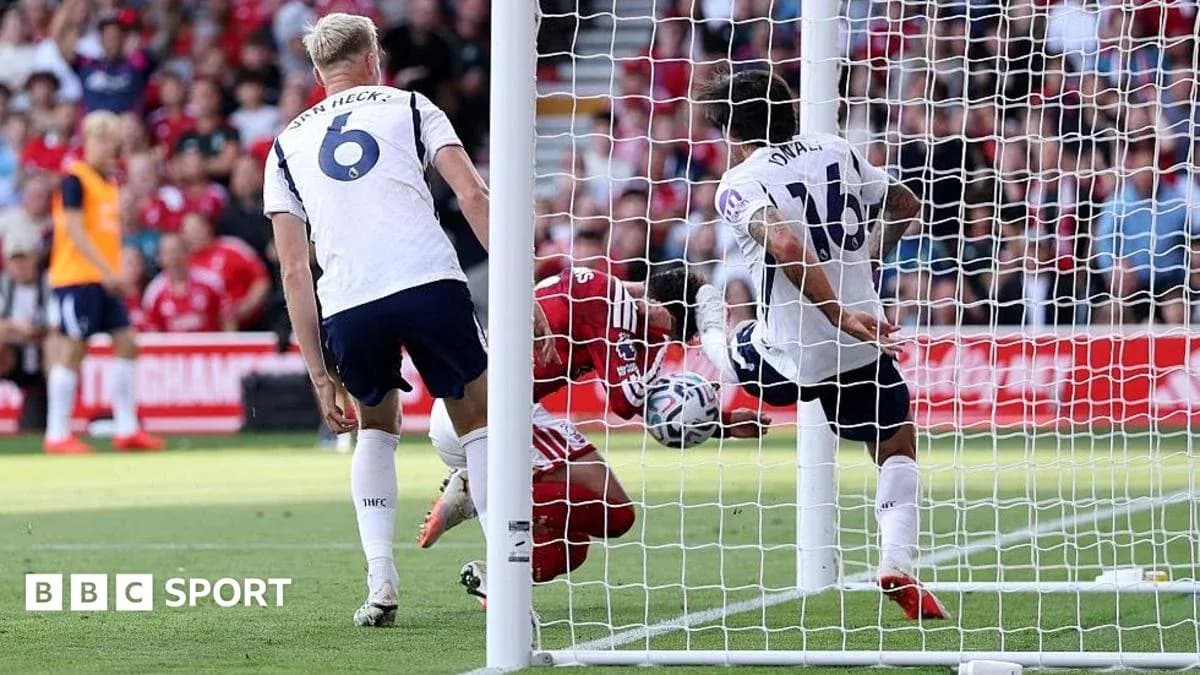
The Nottingham Forest defender thought he had grabbed a 67th-minute winner in the 0-0 draw, bundling the ball over the line before VAR Peter Bankes stepped in and ruled it out for accidental handball. Williams was furious. Oliver Glasner was certain. Both insisted there was no proof the ball had struck an arm.
Now there is.
New angle, old anger
Fresh video, released after the game, clearly shows the ball brushing Williams’ left arm and then his right forearm before crossing the line. On that evidence, the VAR call looks spot on. Bankes, who was adamant in real time that he had seen enough to rule the goal out, will feel justified.
But there’s a twist that keeps the controversy alive.
The crucial camera angle was not available to Bankes during the match. The VAR hub only has access to the broadcast feed, and this particular camera is one of several that do not transmit as part of the live coverage. So while the new footage backs up his decision, it also underlines why Forest fans are still raging: the evidence that now makes it “obvious” wasn’t part of the original toolkit.
On the angles he did have, Bankes believed the telltale sign was the ripple of Williams’ shirt as the ball clipped his right forearm. Many watching at home did not see it that way.
Former midfielder Danny Murphy summed up that doubt on Match of the Day. He accepted there might have been contact, but questioned whether it met the threshold to overturn the goal. “Maybe it could be a tiny bit on his sleeve or right forearm. But is it clear and obvious? No. That’s the answer.”
Pro Ref stands firm
Inside Pro Ref – the new name for the refereeing body previously known as Professional Game Match Officials – there is no such hesitation. BBC Sport understands the organisation is completely satisfied with the decision to disallow the goal.
Behind the scenes, there is also irritation at how the story has snowballed, fuelled in part by Williams’ absolute certainty in his post-match comments.
“I’ve seen the images and the replays and at not one moment did I think I handballed it,” he told Sky Sports. “I have seen all the images and at not one moment can you tell that has clearly hit my arms, because it never. I knew straight away I’ve headed it down in between my arms. It didn’t hit my arm.”
The new footage cuts through that. It shows the ball does not touch his head at all, only his arms, even if the contact happens in a split second and it is plausible he did not feel it clearly in the moment.
Inside Pro Ref, the feeling is simple: had Williams not been so emphatic, the backlash would not have been as fierce. Nottingham Forest have been approached for comment.
‘Clear and obvious’? Not this time
Much of the debate has revolved around the phrase that now defines VAR culture: “clear and obvious error”. Glasner referenced it. Williams posted about it on X. Many Forest supporters have latched onto it as the core of their grievance.
But that phrase does not apply to every VAR intervention.
“Clear and obvious” is reserved for subjective calls – penalties, red cards, incidents where the on-field referee is sent to the pitchside monitor to review their own decision. Handball in the attacking phase before a goal sits in a different category.
Those are treated as factual checks. The VAR looks for evidence that an offence occurred. If they believe they have proof, they act. No “clear and obvious” threshold. No monitor. Just a yes-or-no judgement.
That is what happened here. Bankes believed he had seen the ball strike Williams’ arm. Many viewers disagreed. The new footage backs his view.
Yet even this “factual” process exposes VAR’s biggest flaw: nothing is ever entirely factual when a human is interpreting pictures. Even with slow motion and multiple angles, it still comes down to one person’s conviction.
A law under pressure
There is precedent for a different outcome. Last season, Benjamin Sesko scored for Manchester United against Liverpool with a goal that appeared to show the ball brushing his fingertips before crossing the line. VAR Stuart Attwell checked the replays but decided he could not be certain and allowed the goal to stand.
Referees’ chief Howard Webb later admitted the ball “probably does hit the hand” but stressed that “the VARs need to see that conclusively”. Attwell didn’t feel he had enough. Bankes did.
This inconsistency is exactly why Webb wants the law changed.
During pre-season briefings, he highlighted attacking handball as a law he would rewrite, a tweak that would mean goals like Williams’ would not be ruled out on the kind of evidence originally available.
“The problem is the law forces VARs on every goal to look at what body part the ball went in off,” Webb said. If only deliberate handball or an attacker making themselves “unjustifiably big” were penalised, he argued, VARs could stop the forensic hunt for tiny, accidental contacts and “check complete” far more quickly.
Webb has made it clear: Pro Ref and the Premier League intend to lobby for that change.
VAR’s lighter touch, heavy fallout
This season, VAR is officially being operated with a lighter touch. The numbers back that up: just two subjective interventions so far, at a rate of 0.06 per game, down from 0.15 last season.
Yet the mood around VAR has rarely felt darker. Every high-profile call lands in the middle of a tribal storm, every disallowed goal or overturned penalty framed as part of a wider narrative of bias, incompetence or overreach.
Williams’ goal sits right in that storm. The new footage shows the handball and vindicates the decision. It also exposes the limits of the system, the gaps in the technology, and the way one frame, from one unseen camera, can rewrite the story days later.
The law might change. The angles might improve. But as long as one official in a booth has to make the final call, how many of these flashpoints are really going away?