Musiala's Health Scare Overshadows Bayern's Victory
For a few long seconds in Heidenheim, football stopped.
Vincent Kompany had just turned to his bench, sending Jamal Musiala on in the 61st minute for new signing Ismael Saibari. A routine pre-season change, nothing more. Six minutes later, alarm.
Musiala went down in midfield, the scene chillingly similar to his collapse against RB Leipzig days earlier. Jonathan Tah and Harry Kane sprinted towards him, arms waving urgently. Players from both sides quickly formed a protective circle as emergency doctors rushed onto the pitch. The Voith-Arena fell into that uneasy silence fans now recognise too well.
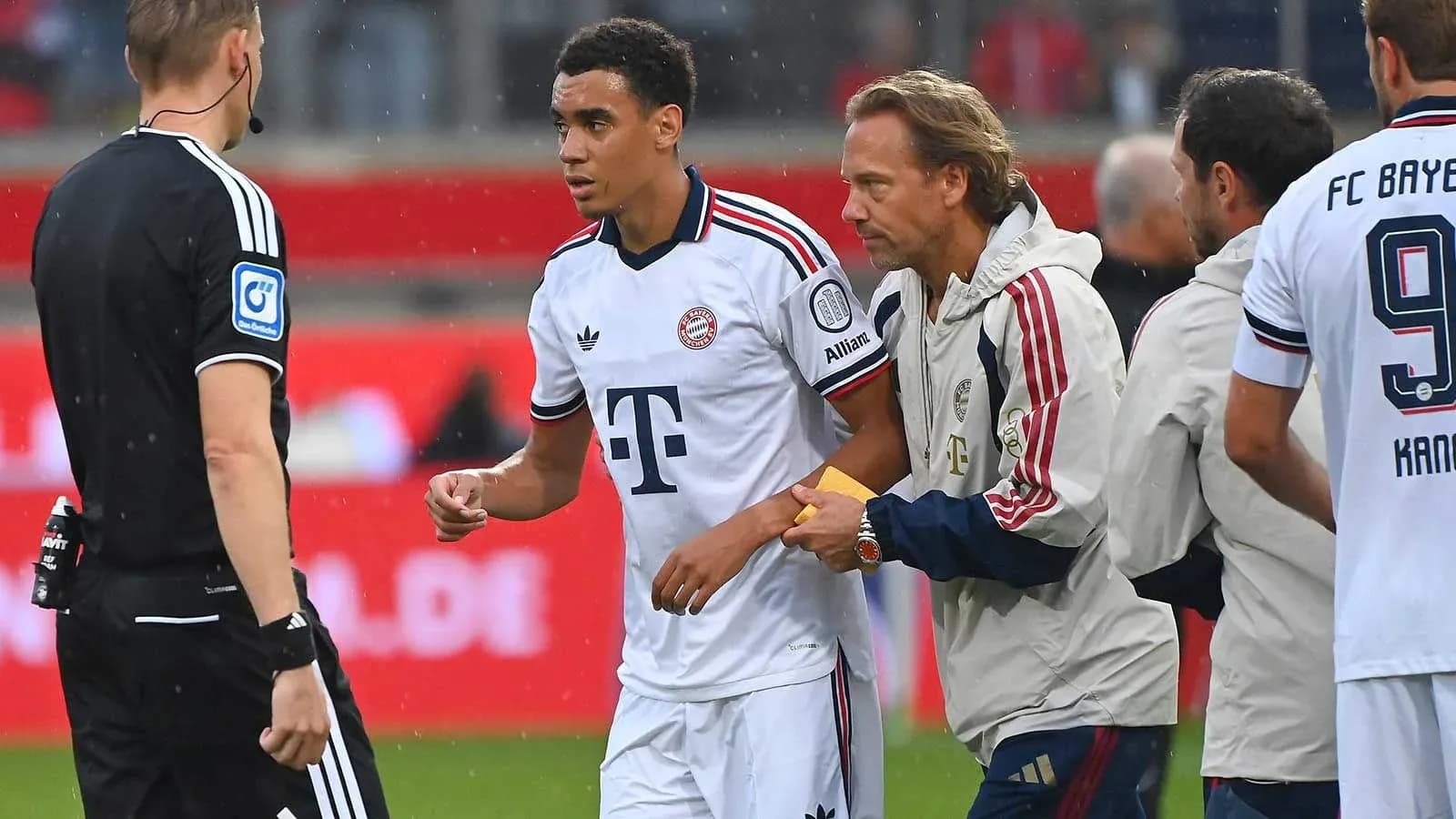
After brief treatment, Musiala slowly got to his feet. Supported by a member of staff, he staggered towards the touchline, clearly disorientated. Then, after a few unsteady metres, he turned away and disappeared down the tunnel on the opposite side of the pitch. His name rolled around the stands as fans tried to lift him. When the stadium announcer confirmed he was being replaced by Cassiano Kiala, the applause was loud, relieved, and anxious all at once.
“First things first – I’m fine”
In the mixed zone after Bayern’s 4-2 win, board member for sport Max Eberl chose his words carefully. Asked about Musiala’s condition, he said: “Jamal will speak about it himself in the foreseeable future. We knew and know about it.” And his state in that moment? “He’s in the dressing room, he’s getting changed, he’s having a shower.”
Minutes later, Musiala did exactly what Eberl had trailed. He took control of the story himself.
“First things first – I’m fine,” he wrote in a long Instagram post, addressing the concern that had spread far beyond Heidenheim. “I understand that many of you are worried. I would like to take that worry away from you today and explain it to you: I have been diagnosed with temporary, briefly occurring but easily treatable absences, which are due to a neurological dysfunction.”
He did not downplay how it looks from the outside. “These can lead to the moments that have happened recently, like against Leipzig or now here in Heidenheim. I know that at first glance they look scary – but for me they are currently part of everyday life. I am receiving the best possible medical treatment for this and am very optimistic.” According to his statement, there is “no further health risk beyond that”.
Medically, absences are short, sudden lapses of consciousness, usually classified as a form of epileptic seizure. They tend to last only around five to 15 seconds. During that window, those affected stare ahead and do not react, then recover quickly but remember nothing of the episode. The condition can be treated and, in many cases, cured with medication.
A friendly that stopped feeling friendly
On paper, this was another encouraging Kompany step. Bayern beat Heidenheim 4-2 in a lively test, with Felipe Chavez, Arijon Ibrahimovic, Luis Diaz and new signing Nathaniel Brown all on the scoresheet. The attack clicked often enough, the new ideas were visible, the goals flowed.
But once Musiala went down, the football slipped into the background. Bayern’s win became a side note.
The incident did not come out of nowhere. Musiala had already collapsed shortly before the end of Saturday’s friendly against RB Leipzig (3-1). He then missed the team presentation at the Campus on Monday, working only individually instead. In that light, his appearance in Heidenheim was already something of a surprise.
Now, Bayern face a different kind of calculation. On Saturday they travel to Borussia Dortmund for the Supercup, a fixture that usually sets an early tone for the season. The question is no longer just who starts in attacking midfield, but how carefully they must manage one of their most gifted players.
A body that has been through a lot
This is not the first time Musiala’s health has dominated the conversation around him. More than a year ago, at the Club World Cup, he broke his fibula and suffered severe damage to his ankle joint. He only returned in January and has been chasing his old explosiveness ever since.
Straight after his disappointing World Cup, he also had a metal plate removed from his left foot. Setback after setback, surgery after surgery – and now a neurological issue that has suddenly become visible to millions.
The diagnosis brings clarity, and his own words brought calm. But as Bayern move towards the serious business of the season, one thought lingers: how do club and country protect a talent like this while still letting him be the fearless, instinctive footballer that made everyone fall in love with him in the first place?