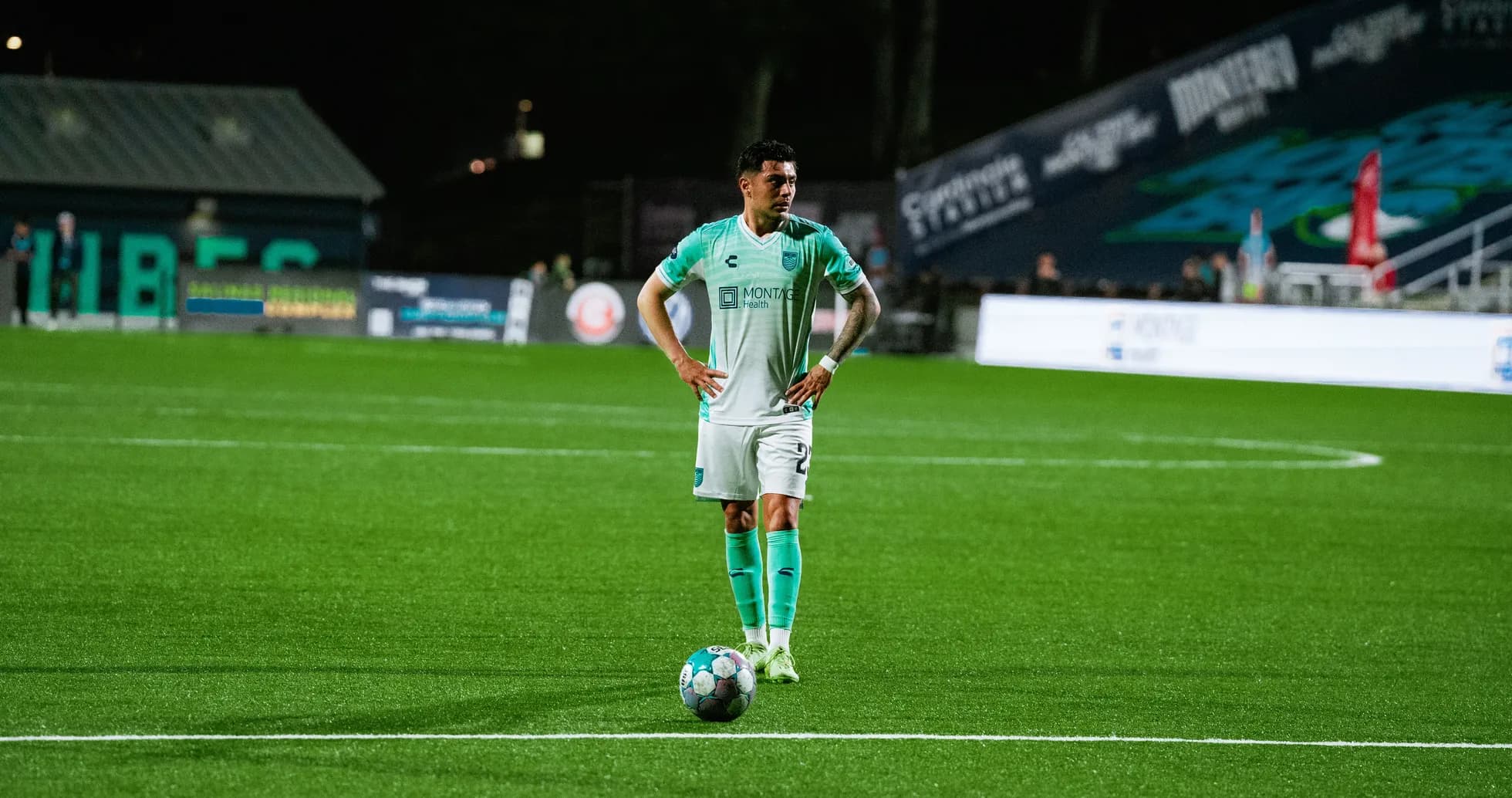
Monterey Bay's Statement Win Over El Paso Locomotive
Under the lights at Cardinale Stadium, Monterey Bay’s 1–0 win over El Paso Locomotive felt less like a routine group-stage fixture and more like a statement of identity from a side still sculpting its 2026 USL Championship season. Heading into this game, the table painted a stark contrast: Monterey Bay sat 12th in USL 1 with 14 points and a goal difference of -8, while El Paso occupied 9th with 16 points and a perfectly balanced goal difference of 0. One looked fragile but improving; the other, more potent but wobbling.
Yet over 90 minutes, Monterey Bay leaned into the one thing the numbers said they could trust: Cardinale Stadium itself. At home this season they had played 8, winning 4, drawing 1 and losing 3, with 10 goals for and only 8 against. The same team that struggled on their travels, with 0 away wins and 14 goals conceded in 6 road matches, had quietly built a stubborn home persona, conceding just 1.0 goal per game at Cardinale and keeping 3 clean sheets. This match would add another.
Alex Covelo’s starting XI underlined that intent. With J. Jackson anchoring from the back in the no. 98 shirt and a defensive core of N. Gordon, Z. Farnsworth and O. Glasgow, Monterey Bay were set up to protect their penalty area first and worry about aesthetics later. The double presence of R. Nakamura and N. Ross offered ballast and ball-winning, while the technical axis of W. Leggett and S. Lletget hinted at a more nuanced route forward, supported by the running of J. Garcia and the work rate of I. Paul.
Across from them, Junior Gonzalez’s El Paso came in as one of the more dangerous attacking outfits in the conference. Overall this campaign they had scored 23 and conceded 23 in 13 matches, averaging 1.8 goals for and 1.8 against. On their travels, though, they were a different animal: 7 away matches, 3 wins, 2 draws and just 2 defeats, with 13 goals scored and only 7 conceded. An away average of 1.9 goals for and 1.0 against suggested a side comfortable absorbing pressure and punishing mistakes in transition.
The tactical clash was therefore clear: Monterey Bay’s emerging home fortress against an El Paso team that travels well and strikes with efficiency.
Without explicit formation data, the structure had to be read from roles. For Monterey Bay, Jackson’s presence as the high-numbered last line hinted at a goalkeeper happy to command his box and launch counters quickly. In front of him, Gordon and Farnsworth looked like the primary stoppers, with Glasgow offering flexibility in the back line or wide channels. The midfield blend of Nakamura and Ross was designed to compress central spaces, deny passing lanes into El Paso’s creative core and keep the game in controllable pockets.
Further forward, Leggett and Lletget became the creative levers. Lletget, wearing 88, naturally gravitates toward pockets between the lines, linking back to front and dictating tempo. Leggett’s inclusion alongside him suggested a desire to alternate between vertical surges and short combinational play, especially when supported by Garcia’s width and Paul’s willingness to stretch the back line.
El Paso’s XI, however, carried its own narrative. S. Mora-Mora in goal fronted a unit that, away from home, had allowed only 7 goals in 7 matches. A. Quezada, N. Cardona and K. Twumasi formed a back line reinforced by the experience of Tony Alfaro, whose presence at 93 signaled leadership and aerial dominance. In midfield, the likes of Gabriel Torres, A. Mendez and E. Calvillo offered technical security, while R. Coronado and R. Avila could shuttle between lines. Up front, R. Rubin was the reference point, a forward expected to convert the 1.9 away goals per game that defined El Paso’s attacking profile.
The “Hunter vs Shield” dynamic was embodied in Rubin’s battle with Monterey Bay’s back unit. El Paso’s overall 23 goals for suggested they would eventually carve out chances; Monterey Bay’s 22 goals against in total, and 2.3 conceded on their travels, spoke to systemic fragility away from home but a tighter, more disciplined shape at Cardinale. At home they conceded just 8 in 8, and this night that resilience held.
In the “Engine Room,” Calvillo and Mendez sought to dictate rhythm for El Paso, but they were met by Nakamura’s industry and Ross’s screening. Monterey Bay’s yellow-card profile this season shows a pronounced spike between 61–75 minutes at 28.21% and another late surge between 76–90 at 23.08%, evidence of a side that grows increasingly combative as matches tighten. El Paso, meanwhile, carry their own disciplinary volatility, with red cards scattered early in games and a concentration of yellow cards between 31–75 minutes. This was always likely to become a midfield war of attrition.
The benches underscored the tactical levers available. For Monterey Bay, A. Rebollar and J. Belmar offered fresh legs and directness in wide or forward zones, while C. Dalton and G. Lomtadze gave Covelo options to either lock down a lead or reconfigure the midfield. For El Paso, A. Romero and D. Abitia represented attacking alternatives, with G. Diaz and D. Gomez providing flexibility in the defensive and wide roles if Gonzalez wanted to tilt the shape more aggressively.
Following this result, the numbers tell a subtle story. Monterey Bay’s overall goal difference of -8 still reflects a side in repair, but their home profile continues to harden: 10 goals scored and 8 conceded at Cardinale, an average of 1.3 scored and 1.0 conceded per home match. El Paso’s previously strong away record absorbs a rare blank, their overall 23 goals for and 23 against now framed by a night in which they were shut out by a team that has kept 3 clean sheets this season.
From an xG and defensive-solidity perspective, Monterey Bay’s trend line at home suggests a side increasingly comfortable winning by fine margins, leaning on structure, discipline and a late-game edge reflected in their card distribution. El Paso remain a dangerous, high-variance outfit whose attacking averages will continue to trouble most opponents, but this fixture exposed the thin line their 1.8 goals against per match walks.
In narrative terms, this was Monterey Bay discovering that they can win ugly and win on their terms. For El Paso, it was a reminder that even a strong traveling side can be ground down when the opponent’s stadium becomes more than just a venue—it becomes a shield.