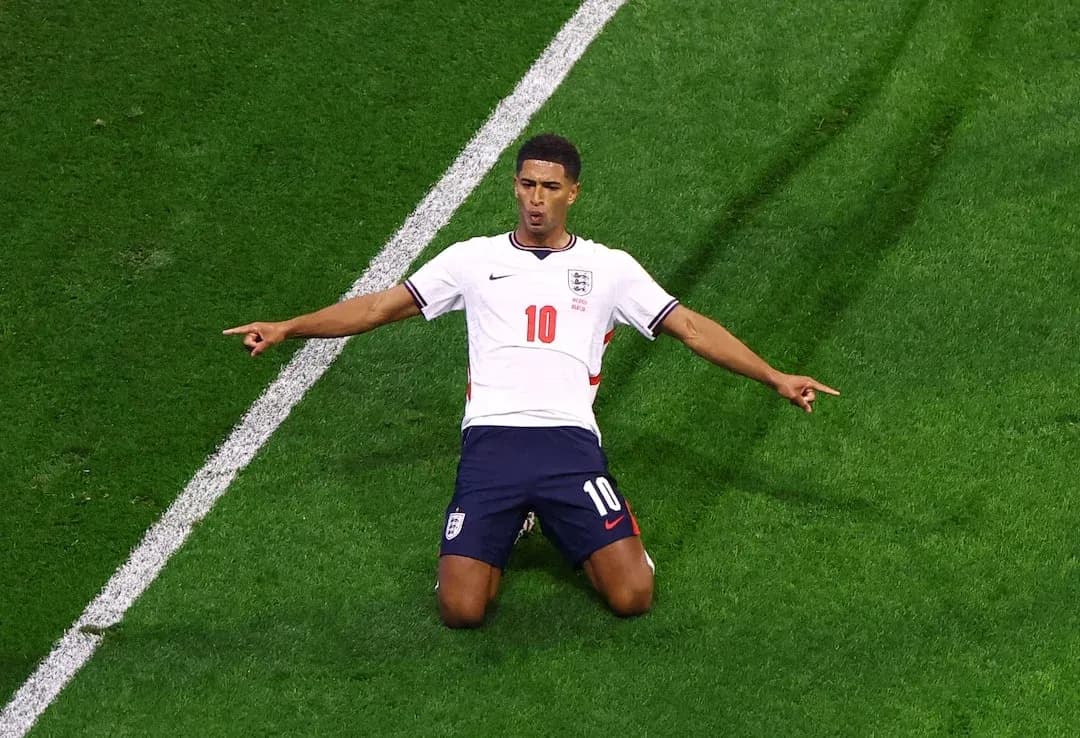
Mexico vs England: A Clash of World Cup Titans
Estadio Banorte, draped in green and white under the Mexico City night, hosted a Round of 16 that felt more like a collision of identities than a simple knockout tie. Mexico arrived as the World Cup’s early juggernaut: 1st in Group A, nine points from nine, a goal difference of 6 built on six goals scored and none conceded in the group stage. England mirrored that authority in their own way, topping Group L with seven points, six goals for and two against, their own goal difference a tidy 4.
Final Score: Mexico 2–3 England
By full time, the scoreboard read Mexico 2–3 England, a narrow defeat that snapped Mexico’s perfect defensive record in the tournament and underlined the razor-thin margins between two sides built for deep runs.
I. The Big Picture: Two Blueprints, One Knife-Edge
Heading into this game, Mexico’s season profile told a story of controlled aggression. Across all venues they had played 5 matches, winning 4 and losing just 1, scoring 10 goals overall at an average of 2.0 per match. At home, they had been particularly efficient: 4 fixtures, 3 wins, 1 loss, 7 goals for at 1.8 per game and only 3 conceded at 0.8 per game. Four clean sheets overall and zero games without scoring spoke to a side that rarely lost control at either end.
England’s numbers were those of a heavyweight that expects chaos and backs its talent to win it. Over 5 matches overall they were unbeaten, with 4 wins and 1 draw, 11 goals scored at 2.2 per game and 5 conceded at 1.0 per match. On their travels, they had played 2, winning both, scoring 5 at 2.5 per game and conceding 2 at 1.0 per match. They had only 2 clean sheets overall, but their attacking ceiling was clear.
Those statistical fingerprints were reflected in the lineups. Javier Aguirre’s Mexico leaned into their trusted 4-3-3, the formation they had used in 4 of their 5 tournament matches. R. Rangel in goal sat behind a back four of J. Gallardo, J. Vasquez, C. Montes and J. Sanchez. In midfield, the trio of L. Romo, E. Lira and G. Mora offered a blend of industry and progression. Ahead of them, the front three of J. Quiñones, R. Jimenez and R. Alvarado was as close to a statement of intent as Aguirre could make.
Thomas Tuchel answered with England’s now-familiar 4-2-3-1, a shape they had deployed in 4 of their 5 games. J. Pickford marshalled a back line of N. O’Reilly, M. Guehi, E. Konsa and J. Quansah. D. Rice and E. Anderson formed the double pivot, releasing a high-talent band of three – A. Gordon, J. Bellingham and B. Saka – behind H. Kane as the lone striker.
II. Tactical Voids and Discipline: Where the Edges Frayed
Neither side came in burdened by explicit injury absences in the data, but disciplinary trends hung over the tie like storm clouds.
Mexico’s season card profile hinted at a team whose aggression spikes as matches become stretched. Overall, 25.00% of their yellow cards arrived between 16–30 minutes, but the real hot zone was 61–75 minutes, where 50.00% of their cautions clustered. Add in a red card between 91–105 minutes in previous matches and you see a side that can drift into reckless territory as the stakes rise late.
England’s caution map was more evenly spread but no less significant. They had yellow cards in every 15-minute segment up to 75 minutes, with a peak of 28.57% between 61–75 minutes. Crucially, they had already seen a red card in the 46–60 minute window. That dismissal belonged to J. Quansah, who, across his 2 appearances, had already collected 1 yellow and 1 straight red. Starting him again at right-back in this knockout felt like a calculated gamble on his physicality and aerial strength.
On Mexico’s side, C. Montes carried his own disciplinary shadow. He had already been sent off once in the tournament, even if he had not accumulated yellows beforehand. His presence at the heart of the defence brought leadership and composure on the ball – 176 passes at 90% accuracy – but also the risk of a high-stakes intervention going wrong.
D. Rice, England’s midfield metronome, entered with 2 yellow cards in 4 appearances. His role as the screen in front of the back four made him both essential and exposed. Against a Mexico side that never failed to score in any of their 5 matches, his timing in duels and tactical fouls would be decisive.
III. Key Matchups: Hunter vs Shield, Engine vs Engine
The headline duel was almost too neat: H. Kane versus Mexico’s previously unbreached tournament defence. Kane arrived as one of the World Cup’s most ruthless finishers, with 6 goals and 1 assist in 5 appearances, averaging a goal every 74 minutes. Fifteen shots, 10 on target, and 2 penalties scored from 2 attempts underlined his reliability. Mexico, by contrast, had conceded only 3 goals overall this campaign – all at home – at an overall rate of 0.6 per match. Before this 3–2 defeat, they had produced 4 clean sheets in 5 games.
C. Montes and J. Vasquez were tasked with containing Kane’s movement between the lines. Montes’ aerial presence and reading of the game, reflected in 2 tackles, 1 blocked shot and 2 interceptions, made him the natural first responder. But Kane’s ability to drop off and combine with J. Bellingham and B. Saka threatened to drag Mexico’s centre-backs into uncomfortable zones.
If Kane was the hunter, Bellingham was the conductor. With 4 goals and 1 assist in 5 games, plus 161 passes at 81% accuracy and 8 key passes, he was England’s all-phase midfielder. His duel numbers – 58 contested, 30 won – spoke to a player who thrives in traffic. Opposite him, Mexico’s midfield three had to split responsibilities: L. Romo to contest second balls, E. Lira to shield the back four, and G. Mora to connect with the front line.
On the flanks, the creative battle was just as compelling. B. Saka, with 3 assists in just 192 minutes, had been England’s most efficient provider. His 8 dribble attempts with 4 successes and 18 duels won from 28 made him a constant threat to isolate and beat his full-back. Mexico’s answer lay in the two-way work of R. Alvarado. He matched Saka’s assist tally with 3 of his own, but added 191 passes at 83% accuracy, 13 key passes and 7 successful dribbles from 8 attempts. His willingness to track back also helped J. Sanchez manage England’s right-sided overloads.
Then there was J. Quiñones, Mexico’s own game-breaker. Four goals and 1 assist in 5 appearances, 11 shots with 6 on target, 9 dribbles attempted with 6 completed – his profile screamed “big-moment player.” Up against N. O’Reilly on England’s left, Quiñones’ direct running threatened to expose any hesitation in England’s defensive rotations, particularly when Kane and Bellingham left Rice and Anderson temporarily outnumbered.
Up front, R. Jimenez provided the penalty-box edge for Mexico, with 3 goals from 14 shots and 7 on target, plus a successful penalty. His duel numbers – 36 contested, 18 won – highlighted his role as a target man who could pin centre-backs and create pockets for Quiñones and Alvarado to attack.
IV. Statistical Prognosis and What the 3–2 Tells Us
From a probabilistic lens, this tie always leaned toward goals. Mexico’s overall attacking average of 2.0 goals per match, combined with England’s 2.2, pointed toward a high-scoring encounter. Defensively, Mexico’s 0.6 goals conceded per game met England’s 1.0, suggesting that if anyone was going to crack, it would be the side more comfortable in chaos – England – but only if Mexico could impose their structure.
Instead, the 3–2 scoreline suggested that England’s attacking ceiling, powered by Kane’s finishing and Bellingham’s all-round influence, edged Mexico’s collective solidity. England’s penalty record – 2 scored from 2 overall – also underscored their ruthlessness in decisive moments, while Mexico’s single penalty of the campaign had been converted, maintaining their own composure from the spot.
Discipline, too, played its part in shaping the risk landscape. With both teams prone to picking up yellows in the 61–75 minute window, this was always likely to be a match decided in the period when legs tire and spaces open. Mexico’s previous red in extra time and England’s earlier dismissal in the 46–60 band served as warnings that a single mistimed challenge could tilt the contest.
Following this result, Mexico exit with their identity intact: proactive, technically sharp, and statistically one of the most balanced sides in the tournament. England move on with their blueprint confirmed – a high-talent attack, underpinned by Kane’s clinical edge and Bellingham’s authority, capable of outscoring even the most organised opponents when the margins tighten under knockout pressure.