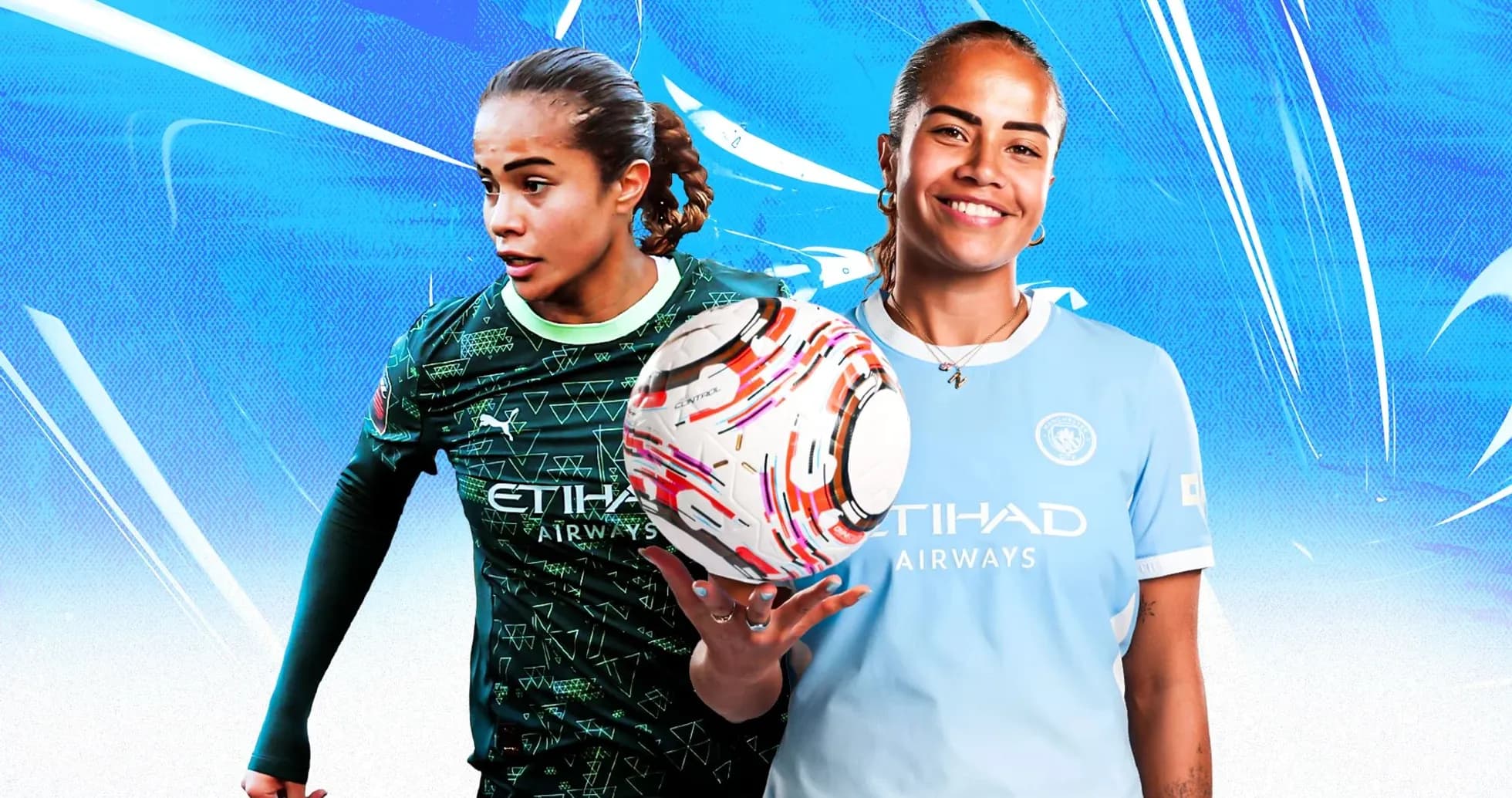
Mary Fowler's Journey: From Injury to Empowerment
Mary Fowler’s 10-month injury lay-off should have broken her rhythm, maybe even her spirit. Instead, it rewired the way she sees football – and herself.
She calls the diagnosis “devastating”. The “fear of the unknown” made her “a bit anxious and a bit sad”. Ten thousand miles from home in Australia, stripped of her routine and her independence, she suddenly had to lean on others for almost everything.
“I am someone that's quite independent and I like having my routine and my freedoms and stuff,” she says. “Being injured kind of took that away because I needed to rely on people.”
That loss forced a realisation. Football, she discovered, was not the entire foundation of who she is.
“Once I figured that out, I was like, 'Oh, I've actually never been someone where football is everything'. It's never been the only thing that I want to do,” Fowler explains. “So I was able to quite quickly shift my perspective and see that I'd actually, weirdly, been gifted a lot of time to do other things and I feel like I really made the most of that time.”
Discovering Mary without the boots
She did not waste those months. She wrote her book. She stepped onto the catwalk at Paris Fashion Week. She dived back into art. Each project pulled her a little further away from the narrow identity of “footballer” and closer to simply being Mary.
She even started with the small, almost trivial details of daily life.
“Normally, I would just be coming to work so I wouldn't really dress up or anything,” she says. “Whereas when I was injured, I was like, 'Okay, I have rehab but I need to pick myself up a bit more and have confidence in other areas', so I was getting so much more into dressing up and I really found another joy in doing that.
“It's such a little thing, but I think it was all part of me exploring who Mary was without having football there as the main pillar of confidence for me in my life. That was nice.”
The off-field growth ran alongside a rehab programme that she describes as “so enjoyable”, a rare phrase for any player talking about recovery work. Fowler credits Manchester City’s staff, their “energy” and “professionalism”, for turning the grind into something she could look forward to.
“They celebrated my progress,” she says. “It always felt like I had something good going for me.”
It helped that she was rehabbing inside a winning machine. City surged towards the WSL title, transforming the training ground into a happy, buzzing place. Even when she could not play, Fowler enjoyed being in the building, watching a team she believed in finally begin to match its potential.
From Etihad roar to Asian Cup slog
Her return came with a roar. Late on in City’s 5-1 demolition of Chelsea at the Etihad Stadium in early February – a result that all but killed the title race – Fowler stepped back onto the pitch. A cameo, yes, but a symbolic one.
The real test arrived a month later at the Asian Cup. Australia pushed through to the final. Fowler started five games in 17 days, a brutal schedule for any player, let alone one just coming back from a long lay-off.
“It was a bit of an odd tournament for me,” she admits. “From a performance standpoint, I was like, 'I want to do the best I can', but from a physical standpoint, I was like, 'I've only just come back’.”
She made sure she checked herself before the first ball was kicked.
“It was nice to reflect on that before I even started the tournament so that I didn't go in with my expectations so high.”
Even at something less than full tilt, she delivered. A goal against Iran. Key assists against China and South Korea. Yet the internal battle was constant.
“I felt like, in moments, I was the player that I was before I got injured, but then in other moments I was like, 'Oh my gosh'. My head was telling me to do something but my legs weren't moving,” she says. “Those were the moments where I was like, 'Okay, just have a bit of patience. It'll come back'.”
That patience now fuels a bigger target: next summer’s World Cup. Australia, semi-finalists in 2023, are already qualified. Fowler left the Asian Cup proud, but not satisfied.
“It did feel very rewarding after the Asian Cup to get to where we got to and, on an individual level, to do what I did,” she says. “But at the same time, I was very hungry to get to the next thing because, inside, I just knew I could do so much more, but I just wasn't quite there yet.”
City’s game-changer returns
This season is her chance to show exactly what “so much more” looks like.
Her strike against Chelsea in the FA Cup semi-final was a reminder of the damage she can do in big moments. It was also a timely contribution in a campaign that ended with City ending a decade-long wait for another WSL title and lifting the FA Cup for the first time in six years.
“For me personally, I want to feel like I've contributed in some way,” Fowler says. “I think you can, as a team-mate, contribute a lot off the field, but I think there's always that desire to be someone that's actually played a part on the field as well.”
She did. City finally shook off the scars of title races that had slipped away and collected their first trophies since she arrived in 2022.
“It was so special,” she says. “Even not being on the field, it was nice to feel how special that was because I have been here for some years now and we have come close to winning trophies and we've just fallen short right at the end.
“I've said since the start, this group of girls is so special. It’s always felt like a group that deserves to win something, but we never quite got there. So it was just really rewarding to finally see the girls put in all that hard work throughout the season and then earn that trophy at the end.”
Now the dynamic flips. City are no longer the hunters. They are the team everyone wants to drag down.
From hunters to hunted
Head coach Robert Vilahamn Jeglertz has already seen how his squad have reacted to that shift.
“I've seen it already in the players,” he told GOAL. “They already have a confidence that is great, that is calm, but curious about how we take the next step. What do we do to become a little bit better? I already see it and that's something that we need to keep for the whole year.”
Fowler feels the same current running through the dressing room.
“I feel like we're not really an ego-driven kind of team. I don't think we have arrogant players, but I do think we have players who expect high standards and that really works for us because I think that drives our performances week in, week out,” she says. “I think that's one of the reasons we really gel. Everyone actually wants to have high levels of football and that's where we find joy in being out on the field.
"I think in previous seasons, maybe we fell short because there was a bit of a lack of a mindset where we felt we were really capable of winning. But I think now that we've done it, it feels like, 'You are very capable and you can do that again'.”
Beth Mead arrives with European titles and a Champions League crown from her time with England and Arsenal. Niamh Charles brings the know-how of Chelsea’s serial-winning era and a Euros medal of her own. Those signings sharpen the edge of a squad that already believes.
“I think the club does really well to sign players that really fit in with our team environment,” Fowler says.
And then there is Fowler herself, finally back to full fitness, no longer measuring every stride or wondering if the next sprint will bite.
She handled 10 months on the sidelines with unusual clarity, but she never lost sight of the end point.
“I couldn’t wait to get back to kind of make that moment happen, as the end point of all the work that everyone had put in to get me back out there.”
That moment has come and gone. The circle has closed. Now the question hangs over the new season: with a fully fit, fully formed Mary Fowler back in City blue and eyeing a World Cup on the horizon, just how high can she push the ceiling?