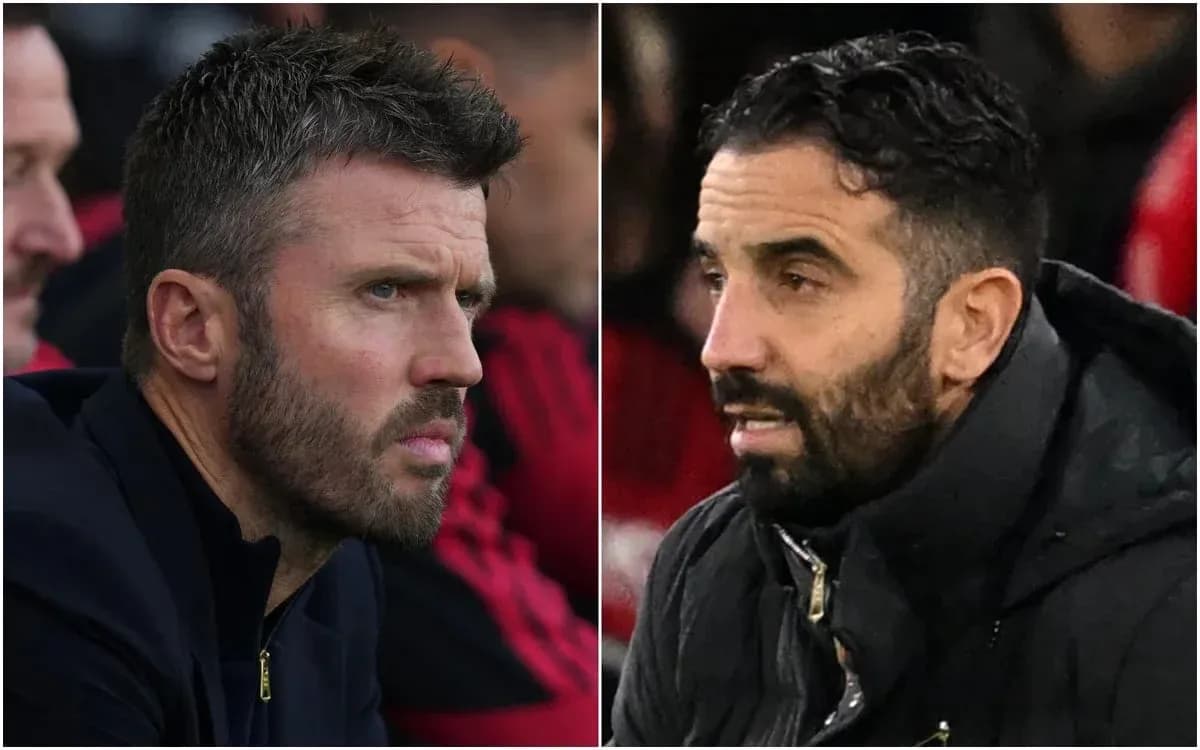
Manchester United's Struggles: Same Stumble, Different Manager
The mood around Manchester United was supposed to be different this year.
Michael Carrick’s cool-headed rescue act last season – more points than anyone in the Premier League from January onwards, a late surge to third – had reset expectations. This was meant to be the proper launch, the first full campaign under a manager who looked like he understood the club and the squad.
Seven games in, that glow has gone. What’s left looks uncomfortably familiar.
Results: Same Stumble, Different Manager
Strip it back to the basics and the numbers are stark.
After seven matches of his first full season, Carrick has two wins and three defeats. That is exactly the same record Ruben Amorim posted at the same stage last year, before his reign unravelled.
You can argue the details. Amorim’s early run included a penalty shoot-out exit to Grimsby in the Carabao Cup in 2025-26, which many fans mentally filed under “another defeat” even if it went down as a draw after 90 minutes. Carrick’s side have already repeated the early cup disappointment anyway, going out of the Carabao Cup to Brighton last week.
The league table is no kinder. United sit 12th, with just five points from their first five Premier League games. That matches their joint-lowest tally at this stage of a Premier League season, level with the 2014/15 start under Louis van Gaal.
Only newly promoted Ipswich have been beaten by United in the league so far. Everyone else has taken something off them.
Amorim’s opening stretch last season offers no comfort. Six of his first seven games were in the league; United were 14th at that point, their only wins coming at home to Burnley and Chelsea. It felt bad then. It doesn’t feel much better now.
Data Tells a Familiar Story
Beneath the table, the underlying numbers paint almost the same picture as a year ago.
Twelve months back, United sat 14th in the real league but fourth in the expected points standings. They were, statistically, playing like a top-four side and collecting mid-table results.
Fast-forward to this season and the pattern repeats. Carrick’s team are 12th in reality, but sixth on the xPts table. Once again, the performances on paper look stronger than the points in the bank.
The main driver is clear: United are creating more than they are finishing.
Under Amorim at this stage last season, United had scored seven league goals from an expected-goals total of 12.04. A huge gap. This season, the difference is smaller but still significant – eight goals from an xG of 10.59.
They are carving out chances. They are not putting enough of them away.
You can take that as a sign of hope. Last season, the finishing eventually caught up: United ended the campaign with an expected-goals figure only a little over three higher than their actual goals scored. The wastefulness eased.
Or you can look at the same numbers and conclude something harsher: this squad still lacks reliable, ruthless finishers.
Perception, Pressure and Two Very Different Reigns
Where things do diverge from a year ago is in the mood around the club.
Carrick, after that surge to third, has credit in the bank. He walked into this season with trust, not suspicion. The tone around him is one of frustration and concern, not yet outright revolt.
Amorim never had that luxury. After seven games of 2025-26, the knives were already being sharpened. He had collected only 34 points from 33 league matches in charge and had failed to win back-to-back Premier League games. For a club of United’s size, that record is unforgivable.
There was also a clear tactical scapegoat. Amorim’s insistence on his wing-back system became a weekly talking point. Critics lined up to argue that a back four would suit the squad better; he refused to bend. The formation became the symbol of his stubbornness and, eventually, of his downfall.
Carrick has not yet been boxed into that kind of tactical caricature. His critics are focusing on something else entirely.
After Sunday’s flat draw with a struggling Fulham side, the loudest complaints were about effort without the ball. Running, pressing, intensity – or the lack of it. The data backed up what supporters saw: United did not work hard enough off the ball.
The narrative around Amorim was about shape and structure. With Carrick, it is about desire and application. Both are damning in their own way.
The Shadow of Amorim and What Comes Next
Amorim tried to project calm as the walls closed in. “I am never concerned about my job,” he said after United’s seventh game of last season, a 3-1 defeat at Brentford.
The results never truly turned. He clung on until January, and even then might have survived longer had he not publicly challenged the board and raised the stakes himself. United were sixth when he finally went. He is now at AC Milan, unbeaten and two points off the top in Serie A, his reputation quietly rebuilding away from Old Trafford.
Carrick is nowhere near that brink yet. He was only confirmed as permanent manager in May on a two-year deal, and the early goodwill from last season’s revival still cushions him.
But that cushion is not bottomless.
Gary Neville’s warning after the Fulham game cut through the noise: “If those types of performances continue, he will find himself in a lot of trouble.”
The data says United should be higher. The table says they are not. The fanbase remembers how quickly patience snapped with Amorim.
If the results don’t start to match the numbers – and soon – how long before Carrick’s credit runs out in exactly the same way?