Madjo's Journey: From Enfield to Aston Villa's No.9
Enfield-born, raised on the pitches of France, polished in Luxembourg, and now dropped into the glare of the Premier League. Madjo’s route to Aston Villa has been anything but straightforward.
The tall, rangy forward came through the system at Metz, where he made his senior breakthrough before being sent “home” in January 2026 – home in the legal sense, at least. Villa saw enough in the teenager to put down €12 million (£10m/$14m) on potential rather than proof, betting big on a player still very much in development.
That bet almost never made it onto the pitch.
A Transfer That Needed a Courtroom
World football’s rules are clear: no international transfers for players under 18. On paper, Madjo was exactly that case – a teenager with three caps for Luxembourg. FIFA viewed him as an international transfer. Villa disagreed.
Their argument was simple: he was born in London. That, they insisted, changed the picture. The dispute escalated all the way to the Court of Arbitration for Sport (CAS), where Villa fought for the right to use the striker they had already paid for.
They won. The green light arrived, and Madjo was finally allowed to step into Unai Emery’s first-team plans.
A Statement on a European Stage
He did not tiptoe in.
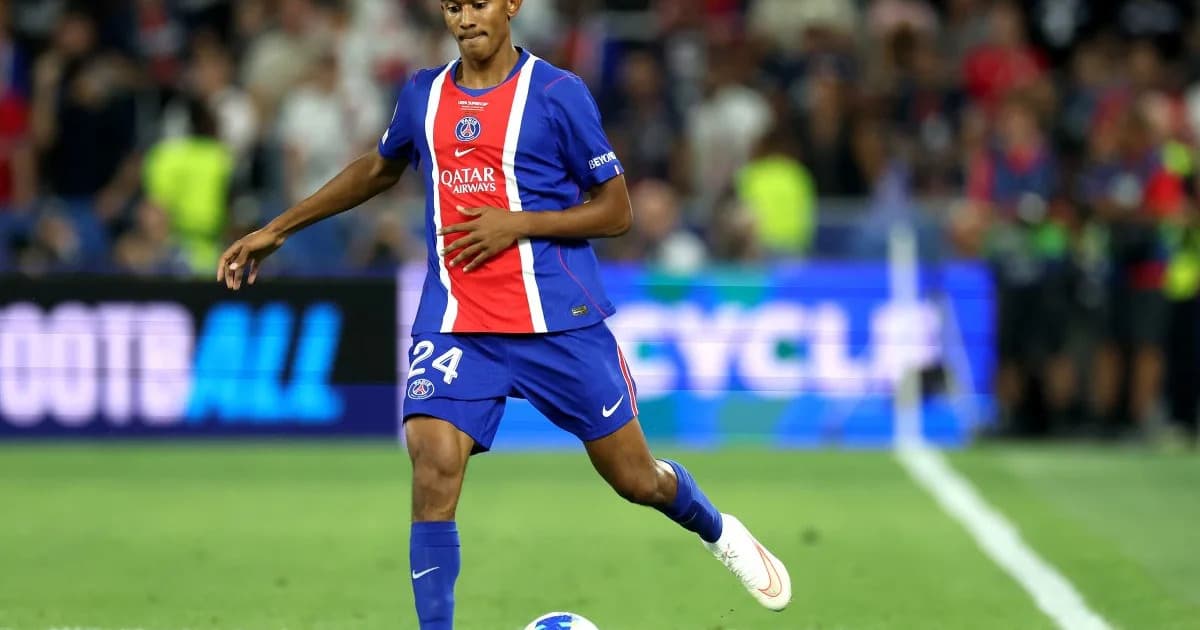
Thrown into pre-season, Madjo quickly showed why Villa had gone through the legal wrangle. Then came the moment that really turned heads: the UEFA Super Cup against Champions League winners Paris Saint-Germain.
On one of European football’s grandest stages, the teenager scored and wrote his name into the record books as the youngest player ever to find the net in that fixture. It was raw, it was fearless, and it was a glimpse of what might be coming.
He could have had more. As Emile Heskey later pointed out, the chances were there.
Heskey Sees a Haaland Blueprint
At 6ft 4in, with the frame of a classic centre-forward but the mobility of a modern one, comparisons are inevitable. Asked whether Madjo should be studying Erling Haaland, former Aston Villa and England striker Heskey did not hesitate.
“Yeah, I think so. You know what you can see from him, he's trying little things,” Heskey told GOAL, speaking in association with Premier League betting site BetWright.
“His hold-up play is not great, but he's actually trying it. He's actually seeing things. It doesn't always come off. But one thing I will say, he can get in positions, because he could have had four in the Super Cup final. And yeah, I think he's got a lot more to come. Because for 6 foot 4, he's very mobile as well.”
It is a striking endorsement from a man who made a career out of bullying centre-backs and sacrificing himself for the team. Heskey knows what a Premier League No.9 needs to look like. In Madjo, he sees the outline.
Villa’s Future – and England’s Problem
For now, an untimely injury has delayed Madjo’s Premier League debut. The door is not closed; if anything, it might soon be flung wide open.
Ollie Watkins is pushing for a move, with Saudi Pro League side Al-Hilal circling. Should that transfer happen, Villa will need a new focal point. They would love the answer to come from within.
Madjo’s profile makes him a natural candidate: tall, powerful, able to handle the physicality of the league, yet mobile enough to fit Emery’s fluid attacking patterns. Villa are not just hoping he becomes useful. They want a leading man.
England, quietly, are watching for the same reason.
Harry Kane, record goalscorer and current spearhead for Bayern Munich and the national team, is still operating at an elite level and is strongly fancied to land the Ballon d’Or in 2026. But he is 33. Another full World Cup cycle? That is far from guaranteed.
Somebody will have to step into that space.
A Vanishing Breed
When asked if Madjo could eventually be that man, Heskey’s answer cut to a deeper issue.
“It's an interesting one, because forwards are very difficult to find now. Everyone wants to be a winger. We've got an abundance of wingers and right-backs. Whereas forwards now, we struggle to find,” he said.
“He came through in France. So why are England not producing forwards? We used to produce a lot of forwards. Is it the systems we play? Is it that the forward role is no longer attractive? We've got to figure that out, especially for international level.”
Those questions hang over St. George’s Park. The country that once churned out No.9s now searches for them. Madjo, shaped by French coaching and capped by Luxembourg, might end up as part of that answer.
The Next Step
For all the long-term talk, his immediate task is far simpler and far more brutal: get fit, get sharp, and convince Emery he belongs under the brightest lights in English football.
The Super Cup showed he can handle the stage. The CAS ruling showed how much Villa wanted him. The praise from Heskey shows the industry is paying attention.
Now comes the hard part: turning potential into presence, and presence into goals, in a league that does not wait for anyone.
If England really are searching for the heir to Kane’s No.9, how long before they decide Madjo is worth a serious look?