
Luca Zidane: A New Journey for Algeria at the World Cup
The name on the back of the green jersey did the rest.
Zidane.
For a split second, as Algeria lined up against Argentina in their opening World Cup match, time folded in on itself. Television cameras zoomed in. Social media lit up. Memories of Paris in 1998, Berlin in 2006, the bald head, the elegance, the chaos, all came rushing back.
But this was not Zinedine.
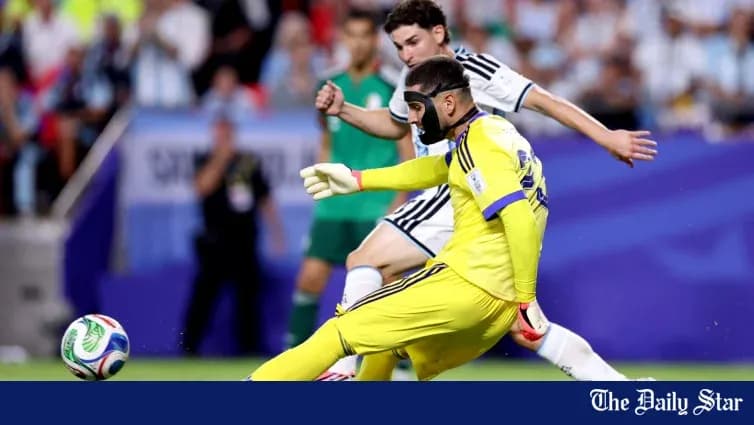
This was Luca Zidane, his son, standing in goal for Algeria, face partly hidden behind a black protective mask, carrying a different story and a different flag into football’s biggest arena.
A famous name, a different shirt
Born in France, shaped in Spain during his father’s years at Real Madrid, the 28-year-old had options. He chose Algeria, the country of his grandparents, the culture that filled the Zidane household long before he ever pulled on a pair of gloves.
“We’ve lived in an Algerian culture since we were small,” Luca said in an earlier interview. “It’s an honour to play for Algeria.”
That choice delivered the dream every professional chases: a World Cup appearance. It also delivered the hardest possible introduction. Across from him in the tunnel stood the defending champions, Argentina. And at the other end of the pitch, Lionel Messi.
The script wrote itself, and it was brutal. Messi scored a hat-trick. Argentina won 3-0. Luca’s first World Cup outing arrived under the full glare of the spotlight, with one of the greatest players in history twisting the knife.
Yet the story of the night was not just the scoreline.
The mask and the scars
The black mask covering half of Luca’s face turned him into an instantly striking figure. It wasn’t a fashion statement. It was a survival tool.
In April, playing for Granada in Spain, he suffered a heavy collision that left him with a fractured jaw, injuries to his chin and a severe concussion. For a while, his World Cup hopes looked broken along with his bones. Medical reports, recovery schedules, and the reality of head trauma all loomed larger than any dream of walking out on a global stage.
He made it back.
The mask, moulded to protect his face, became a symbol of that journey. Every dive, every punch clear, every shout to his back line carried the risk he had already accepted. Algeria didn’t just gain a goalkeeper; they gained a player who had fought to be there.
Recovered in time, he did more than just travel. He claimed the number one jersey for Algeria’s return to the World Cup, stepping into a role that carries weight in any country, but especially one that has long waited to see its colours back among the elite.
A surname with history
For many watching, the sight of “Zidane” at a World Cup triggered a flood of nostalgia. Zinedine Zidane lifted the trophy with France in 1998 and dragged them to another final in 2006. His name is stitched into the tournament’s mythology, for genius and infamy alike.
Two decades on, the name is back at the World Cup, but the context has flipped. No longer the playmaker dictating the rhythm of a game, but a goalkeeper trying to repel the world’s best. No longer in the blue of France, but in Algeria’s colours, honouring the roots that shaped the Zidane family long before the world knew the surname.
The echoes are impossible to ignore. The path, though, is Luca’s alone.
He stood there in the mask, in the glare, against Messi and the champions, carrying a legend’s name and a nation’s hopes. The result went as expected. The significance did not.
The next chapter for Luca Zidane and Algeria will not be written in comparison, but in what they do from here.





