Liverpool and Chelsea Battle to 1-1 Draw at Anfield
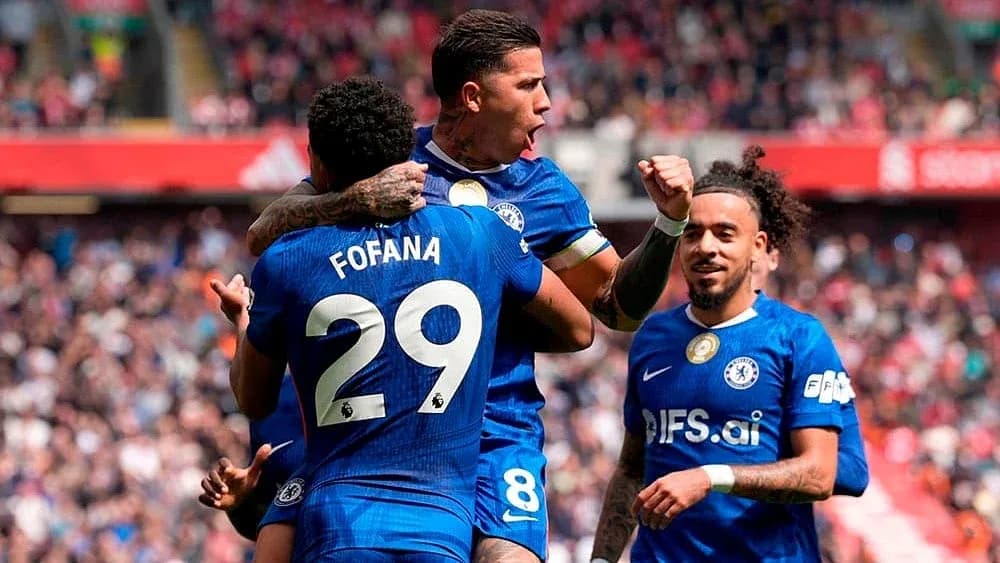
Anfield under a grey May sky felt like the right stage for a meeting of two imperfect heavyweights. Following this result, Liverpool remain a top‑four side with 59 points and a goal difference of 12 from 60 goals scored and 48 conceded overall, while Chelsea sit in mid‑table at ninth with 49 points and a goal difference of 6, having scored 55 and conceded 49 overall. A 1‑1 draw in the Premier League’s Round 36 did not settle the argument between them, but it did reveal plenty about where these squads stand and how they are evolving.
I. The Big Picture – Two Projects at Different Speeds
Liverpool’s seasonal profile is that of a volatile contender. Overall, they have 17 wins, 8 draws and 11 defeats from 36 league matches. At Anfield they remain formidable: 10 wins, 5 draws and only 3 losses at home, with 33 goals for and 19 against. An average of 1.8 goals scored at home against 1.1 conceded underlines why Anfield is still a fortress, even if the wider campaign has been streaky – five‑game winning runs offset by four‑game losing slides.
Chelsea’s numbers tell a different story: a team gradually stabilising away from the chaos of previous seasons, but still prone to collapse. Overall, they have 13 wins, 10 draws and 13 losses. On their travels they are quietly efficient: 7 away wins, 5 draws and 6 defeats, scoring 31 and conceding 25. That away average of 1.7 goals scored and 1.4 conceded suggests a side comfortable trading punches on hostile turf.
The 1‑1 at Anfield felt like an intersection of those identities: Liverpool’s home authority checked by Chelsea’s capacity to counter and survive.
II. Tactical Voids – Absences That Reshaped the Game
The team sheets confirmed how much both squads are in flux. For Liverpool, the absentees list read like the spine of a previous era and the promise of a new one. Alisson’s muscle injury handed the gloves to Giorgi Mamardashvili, while Mohamed Salah’s thigh problem and the illness keeping Florian Wirtz out stripped Arne Slot of his most reliable goal threat and his most creative new signing. Wataru Endo, Hugo Ekitike, Stefan Bajcetic, Conor Bradley and G. Leoni were all missing, forcing Liverpool to lean heavily on Cody Gakpo, Dominik Szoboszlai and Alexis Mac Allister for end product and control.
For Chelsea, the absences were more about depth and dynamism in wide areas. J. Derry and Robert Sánchez were sidelined by concussion, while Mykhailo Mudryk was suspended. A. Garnacho and Pedro Neto were listed as inactive, robbing Calum McFarlane of explosive options on the flanks. J. Gittens was out with a muscle injury. The result was a more compact, central‑lane‑focused Chelsea, with João Pedro carrying the main scoring burden.
Disciplinary trends framed the tone. Heading into this game, Liverpool’s yellow card distribution showed a clear late‑game spike: 31.48% of their bookings came between 76‑90 minutes, with a further 16.67% in added time. Chelsea mirrored that late edge, with 23.60% of their yellows in the 76‑90 window and 14.61% between 91‑105. Both sides are used to frantic, edgy finishes – and this draw fit that script, even if the scoreline stayed level.
III. Key Matchups – Hunter vs Shield, and the Engine Room
Hunter vs Shield centred inevitably on João Pedro. Heading into this game, he was Chelsea’s leading scorer in the league with 15 goals and 5 assists, taking 50 shots with 28 on target and drawing 54 fouls. His duel against Liverpool’s defensive axis of Virgil van Dijk and Ibrahima Konaté was a pure test of timing and positioning. Van Dijk’s leadership and aerial command were crucial against a forward who thrives on clever movement and quick combinations rather than sheer physicality.
Liverpool’s “hunter” role was more distributed in Salah’s absence. Gakpo, with 7 goals and 5 assists this campaign and 52 shots (21 on target), became the reference point in the front line. His battle against Wesley Fofana and Levi Colwill was about occupying the half‑spaces, pulling Chelsea’s centre‑backs into zones where Jeremie Frimpong and Rio Ngumoha could attack the gaps.
The Engine Room duel was where the match truly lived. On one side, Szoboszlai and Mac Allister; on the other, Moisés Caicedo, Enzo Fernández and Andrey Santos. Szoboszlai’s season numbers – 6 goals, 5 assists, 2090 passes at 87% accuracy, plus 68 key passes – mark him as Liverpool’s tempo‑setter and primary progressive passer. He also carries a disciplinary edge: 8 yellow cards and 1 red this campaign, with one missed penalty on his ledger, a reminder that his aggression can cut both ways.
Caicedo, meanwhile, is Chelsea’s enforcer in the purest sense. He has 87 tackles, 14 blocks and 56 interceptions, and has committed 51 fouls, earning 11 yellow cards and 1 red. He is the league’s leading yellow‑card collector for a reason. His job at Anfield was to disrupt Liverpool’s rhythm, sit on Mac Allister’s first touch and close Szoboszlai’s passing lanes. Enzo, with 9 goals, 3 assists and 65 key passes, provided the creative counterweight, stepping forward whenever Caicedo anchored.
Marc Cucurella’s role from the left, listed as a midfielder, added another layer. With 4 assists and 39 key passes this season, plus 50 tackles and 8 blocked shots, he oscillated between full‑back and auxiliary playmaker, testing Jeremie Frimpong’s defensive concentration and forcing Curtis Jones and Miloš Kerkez into constant defensive decisions.
IV. Statistical Prognosis – Margins, xG Logic and What Comes Next
Even without explicit xG values, the underlying numbers sketch the balance of probabilities. Liverpool at home, averaging 1.8 goals scored and 1.1 conceded, usually tilt matches their way at Anfield. Chelsea away, with 1.7 scored and 1.4 conceded, are built for open, chance‑trading games rather than sterile draws. A 1‑1 outcome sits roughly where an Expected Goals model might have placed this: Liverpool slightly more dominant territorially, Chelsea always carrying a threat in transition through João Pedro and the late runs of Enzo.
Following this result, Liverpool’s top‑four push remains on track but fragile; the lack of Salah and Ekitike underlined how dependent they are on Szoboszlai’s creativity and Gakpo’s all‑round play. Chelsea, for their part, showed that with Caicedo anchoring, Enzo orchestrating and João Pedro finishing, they have a spine capable of competing away to elite sides.
Tactically, the next evolution for Liverpool will be adding more penalty‑box presence to convert their territorial control into higher‑value chances, while keeping Szoboszlai’s aggression on the right side of the disciplinary line. For Chelsea, reducing their late‑game card surge and finding a way to support João Pedro with an additional scorer will be key if they are to turn credible away draws like this into statement wins.