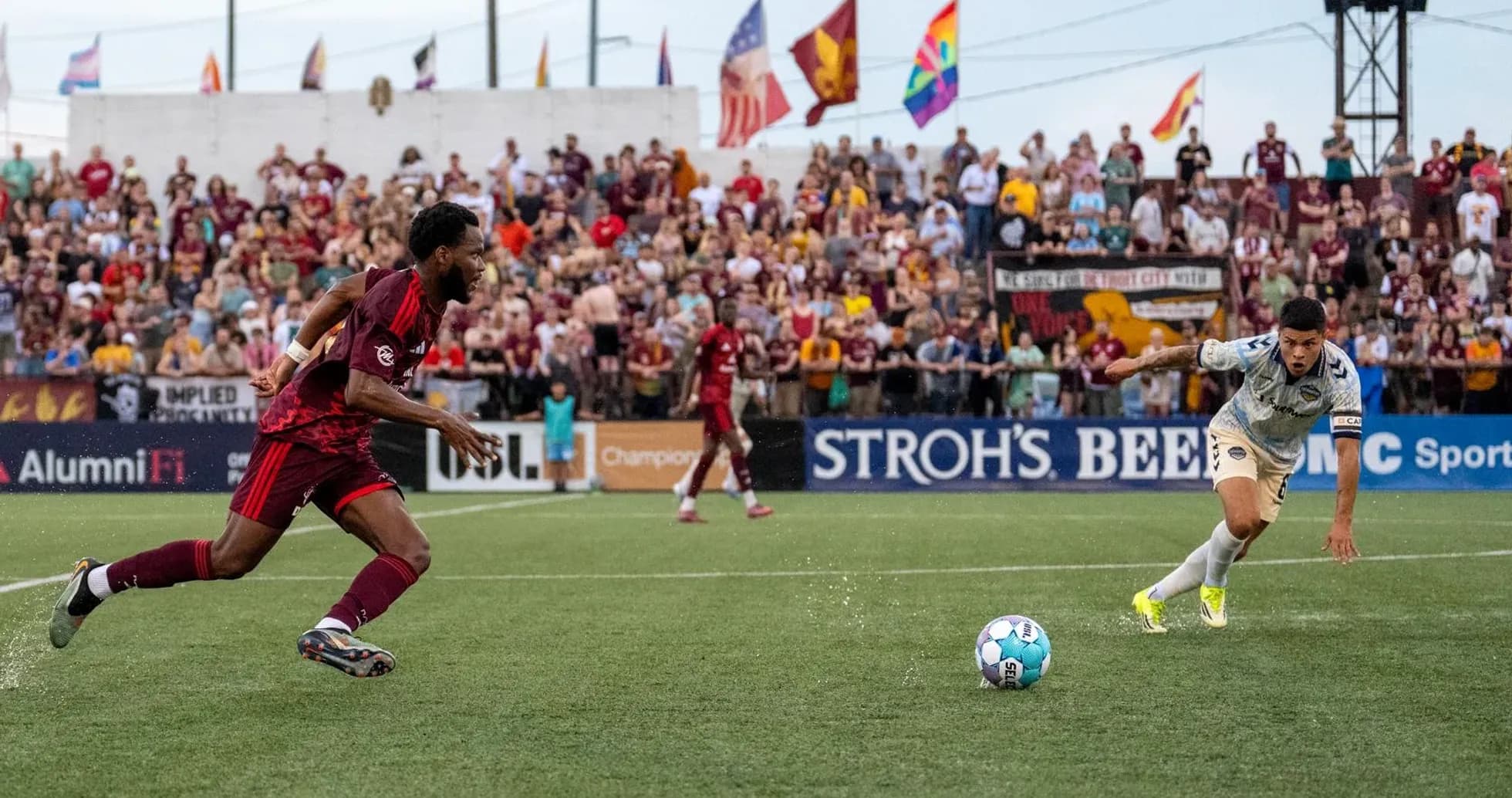
Las Vegas Lights vs Oakland Roots: A Study in Contrasting Identities
Under the desert lights of Cashman Field, Las Vegas Lights met Oakland Roots in a Group Stage tie that felt less like a mid-pool skirmish and more like a study in contrasting identities. By full time, the scoreboard read 0–2, a clean, clinical away win that reinforced Oakland’s emerging resilience and deepened Las Vegas’ early‑tournament crisis.
I. The Big Picture – contrasting trajectories in Group 1
Following this result, the table tells a stark story. Las Vegas sit 6th in USL Cup 2026, Group 1 with 1 point and a goal difference of -5, the product of 3 goals for and 8 against overall. Their season form line of “LLL” in the statistics block underlines a campaign that has yet to ignite: 3 matches played in total, 0 wins, 0 draws, 3 defeats.
At home, the numbers are unforgiving. Across 2 home fixtures this campaign, Las Vegas have scored just 1 goal and conceded 4, with a home goals-for average of 0.5 and a home goals-against average of 2.0. They have failed to score in 1 of those 2 home games and have yet to keep a clean sheet in any venue.
Oakland, by contrast, leave Nevada with a platform. In the standings snapshot, they occupy 4th place in Group 1 with 4 points and a neutral goal difference of 0, built from 6 goals for and 6 against overall across 3 games. Their season statistics show a side that has learned to travel: on their travels, Oakland have played 2, winning 1 and losing 1, scoring 3 and conceding 2. That away return translates to an away goals-for average of 1.5 and an away goals-against average of 1.0, with 1 away clean sheet already in the books.
II. Tactical Voids and Discipline – where control slipped
Neither side’s absences list is available, so the tactical voids must be read from the lineups and season trends. Devin Rensing’s Las Vegas XI was anchored by M. Stajduhar in goal, with a defensive core built around N. Sessock, B. Ofeimu, N. Jones and J. Forbes. Ahead of them, G. Probo and A. Okyere were tasked with giving structure, while P. Leal, C. Locker, B. Mines and N. Pickering formed the attacking band.
The structure, though, has not translated into stability. Overall, Las Vegas concede 1.7 goals per game in total, and the disciplinary profile hints at a team that increasingly defends reactively. Their yellow-card distribution this season is weighted towards the closing stages: 33.33% of their yellows arrive between 76–90 minutes, with additional spikes at 0–15 (16.67%), 16–30 (16.67%), 61–75 (16.67%) and 91–105 (16.67%). That late-game cluster suggests a side that chases games and arrives late into duels as fatigue and scoreboard pressure mount.
Oakland’s discipline chart is more controlled but still carries an edge. Their yellows are concentrated in the second half and stoppage time: 20.00% between 31–45 minutes, 20.00% between 46–60, 40.00% in the 76–90 window, and another 20.00% in 91–105. There is also a notable flashpoint: a red card in the 91–105 range at 100.00% of their reds, indicating that when they do lose control, it is often in the emotional, stretched final passages.
III. Key Matchups – Hunter vs Shield, Engine Room vs Enforcer
With no explicit top-scorer data, the “Hunter vs Shield” narrative emerges from roles and team tendencies. For Las Vegas, the attacking responsibility fell heavily on the front line of B. Mines and N. Pickering, supported by the creative movements of P. Leal and C. Locker. Yet heading into this game, the Lights had only 1 goal in total this campaign and an overall goals-for average of 0.3. That is a fragile attacking output, and the 0–2 scoreline confirms they again failed to find a cutting edge.
Their “Shield” was overworked. Stajduhar, behind a back line marshalled by Ofeimu and Jones, has faced a barrage this tournament, with 5 goals conceded in total across 3 matches in the statistics snapshot. Without data on blocked shots, we cannot quantify individual defensive interventions, but the macro trend is clear: Las Vegas’ defensive unit is conceding too often to sustain any attacking misfires.
On the Oakland side, the attacking “Hunter” profile is more balanced. D. Trejo led the line in Las Vegas, flanked and supported by W. Prentice and B. Jacquesson, with F. Valot and T. Lepley offering intelligence between the lines and B. Byaruhanga anchoring. Overall, Oakland average 1.0 goals for per game in total, but that rises to 1.5 on their travels. It is away from home that their attack breathes, and Cashman Field became another canvas for that pattern.
The “Engine Room” duel pitted Las Vegas’ double pivot of Probo and Okyere against Oakland’s triangle of Byaruhanga, Valot and Lepley. Oakland’s ability to keep their goals-against average at 1.0 both home and away suggests that this midfield unit protects the back line effectively while still connecting to the forwards. In Las Vegas, that balance was evident in the way they controlled territory and limited the hosts to half-chances.
IV. Statistical Prognosis – xG shadows and the road ahead
We lack explicit xG numbers, but the structural data sketches the underlying story. Heading into this game, Las Vegas’ attacking profile — 1 goal in total, 0.5 at home, 0.3 overall — points to consistently low chance quality or volume. Combine that with a total goals-against average of 1.7 and no clean sheets, and the implied xG differential tilts heavily against them. They are conceding more than they can realistically claw back with their current offensive output.
Oakland, by contrast, present as a side whose expected goals and expected goals against are closer to parity. A total goals-for average of 1.0 and a total goals-against average of 1.0 hint at a team that generally plays within one-goal margins, where efficiency and set-piece moments decide outcomes. Their away numbers — 3 scored, 2 conceded, 1 clean sheet — reinforce the idea of a compact, counter-capable side whose xG on the road is likely positive or at least balanced.
Following this result, the tactical verdict is clear. Las Vegas must address their structural issues at both ends: find a way to give Mines, Pickering, Leal and Locker higher-quality service while reducing the exposure of Ofeimu and Jones in transition. Their late yellow-card surge suggests game-state management and fitness are as much a concern as shape.
Oakland, meanwhile, emerge from Cashman Field as a quietly dangerous tournament side. With R. Spiegel providing a stable last line, a disciplined midfield core and an away attack that hits 1.5 goals per game on their travels, they have the profile of a team whose xG trendline is pointing upward. In a tight Group 1, that blend of defensive solidity and opportunistic finishing may yet carry them beyond the group and into knockout conversations.