Jackie Bachteler's Journey: From Intensive Care to the Touchline
On Sunday at Turf Moor, as Burnley walk out to face Sunderland in the Women's Championship at 14:00 BST, their manager will pause for a moment on the touchline.
Nine months ago, Jackie Bachteler thought she would never stand there at all.
From dream move to intensive care
The American coach arrived from San Diego in December 2025, buzzing at the chance to work with Burnley’s women’s first team and the men’s academy. New club, new country, new level. She put the fatigue down to jet lag, the sniffles to a winter cold, the tiredness to long days at the training ground.
Then one morning, everything tilted.
She walked into the training facility and the room began to spin. She tried to step outside for air but her chest tightened. Breathing felt like a fight. She called for the club doctor.
The men’s team doctor happened to be on site. He checked her over. Her blood pressure crashed, her oxygen levels dropped. Within minutes she was in an ambulance, sirens cutting through the Lancashire air, and Bachteler was convinced this might be the end.
"To be honest, I thought I was going to die. I just had this feeling in my body like 'this is it'. I knew something was wrong," she told BBC Sport.
At hospital, staff treated her lungs and tried to discharge her. She refused. Something still felt badly off. She asked them to look again.
They checked her blood pressure. It plummeted. She tried to stand and couldn’t. Dizziness washed over her, confusion set in, blotches appeared on her skin. A blood test followed. Then the mood in the room changed.
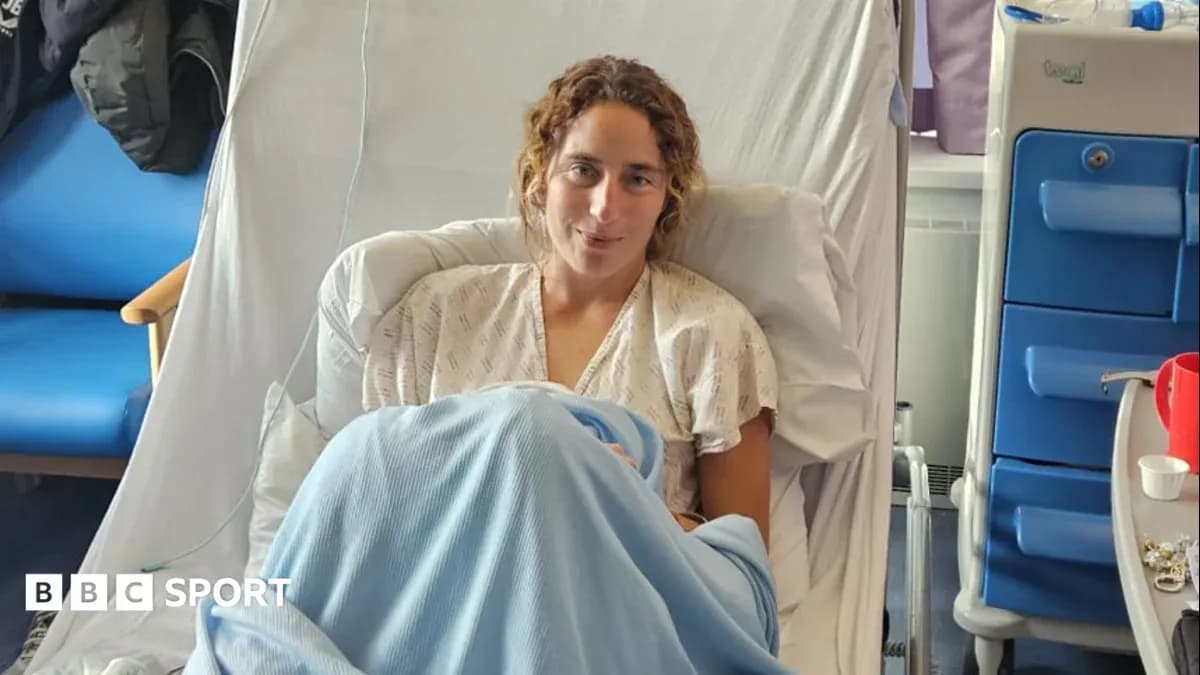
Four or five doctors sprinted towards her. Two IV lines went in, pumping fluids and antibiotics. An oxygen mask covered her face. The diagnosis came: sepsis – a life-threatening reaction to infection that can kill within hours.
She was moved into intensive care. For the next couple of days, her blood was tested every 20 minutes, her organs constantly monitored.
Alone, scared, and learning to walk again
Her family in the United States couldn’t get across. Her wife, stuck in Finland in a snowstorm, was grounded too. The hospital room became a lonely, frightening place.
"On my third day in hospital, I tried to stand up and I couldn't. The nurses told me not to walk and when you hear that it's a bit of an alarm bell," she said.
Treatment came in relentless waves: lung therapy, fluids, antibiotics. She needed help just to get to the bathroom. The body that had powered her through a life in sport suddenly couldn’t trust its own legs.
"It was close to when you face your mortality. It just gives you another perspective on life."
When she finally left hospital, the battle was far from over. She had to learn to walk properly again. Coaching was out of the question. The career move she had crossed an ocean for went on hold.
Burnley, though, did not.
The club stayed in touch, checked in, waited. In July, they welcomed her back and handed her the women’s team manager’s job. It was a show of faith – and a reminder of how close they had come to losing her.
Living with the aftermath
Sepsis did not leave quietly. It rarely does.
Bachteler still lives with post-sepsis syndrome. Dizzy spells. Extreme fatigue. Mental fog. Memory lapses. Tremors when she pushes too hard.
During a pre-season friendly a few weeks ago, the heat hit her from the bench. The sun blazed straight into the dugout.
"It was so hot with the sun facing the bench. I got up in the second half and it was like when you have too much wine, you get up and you're like, 'woah!'
"I was just so dizzy. I gave the instruction, talked to the team and then I went to the cafe on site and said to them: 'Can I sit in your freezer?'
"I just needed to calm down. Then I started crying because my nervous system is still recovering and it's just been really, really hard."
Burnley’s medical staff continue to support her. The club doctors, whom she says "saved her life", have linked her up with a respiratory specialist. She undergoes regular respiratory therapy to help her lungs recover.
Her coaching staff have stepped up, taking on extra responsibilities when she needs to manage her load. She calls them "phenomenal". Players send messages of support. The club, in her words, has wrapped itself around her.
Family pain, and a new perspective
The hardest moments have often come with family.
In May, when her parents finally flew over from the US, they went out for a Sunday dinner. The restaurant was loud, busy, full of clatter and conversation. It overwhelmed her.
"We went for Sunday dinner and it was loud. I just got so dizzy and they could see it. As we were walking back, I was shaking and I didn't know where I was," she said.
"They started crying, both of them. I think it was even harder for them. I get emotional any time I talk about my family with this."
When her wife was eventually able to reach her in hospital, the shock was immediate. Bachteler had lost a significant amount of weight. The athletic, fit coach who thrived on physical energy could no longer walk unaided.
"I'm really athletic and I'm really fit, but then I wasn't able to walk. She had to hold me up going down the stairs."
Those images linger. So do the symptoms. Fatigue can still wipe her out. Her thoughts can blur. If she pushes beyond her limits, her body trembles. Dizzy spells remain a regular threat.
Yet the outlook has shifted.
"I'm definitely in a good way though. I'm about 70 to 80% Jackie again and that's thanks to the club, the doctors here and the NHS - but it was close.
"If I had gone home that day when the emergency room tried to send me back, I wouldn't be sitting here today."
She leaves work each day with a quiet gratitude. A second chance is not an abstract phrase for her; it’s a walk to the car park.
Football, too, looks different now.
"A loss is a loss. I really believe in what I'm doing and in the people that I'm doing it with. Now the worst thing that will happen is that we lose a game," she said.
World Sepsis Day, and a platform at Turf Moor
That is why Sunday matters so much.
Burnley against Sunderland at Turf Moor lands on World Sepsis Day. For Bachteler, it is more than a fixture list quirk. It is a stage.
She admits she barely knew what sepsis was before it nearly killed her.
"I realised it's a leading cause of death. I didn't even know what sepsis was before. I thought it was something you heard on Grey's Anatomy," she said.
"I didn't understand the severity of it and how much it's missed by doctors. The amount of people that have been affected really shocked me. It's a silent killer.
"Hopefully I can use the game as a tool to help others recognise the signs and let them know they are not alone. Over 50% of survivors have [post-sepsis syndrome]."
So when she steps into the dugout at Turf Moor, she will not just be a manager chasing three points. She will be a survivor standing where, almost a year ago, she had no guarantee she would ever stand again.
"To be standing on the pitch, doing something that I love, that I've dreamed of doing every single day and knowing that wouldn't have been the case almost a year ago, it's a bit poetic it's on World Sepsis Day."
The whistle will blow, the game will start, and for Jackie Bachteler, every minute on that touchline will feel like borrowed time she fully intends to use.