Impact of Three-Week International Break on Premier League and Championship Clubs
The club game has slammed on the brakes – and this time it’s not just a quick pit stop.
For the first time, the Premier League and Championship have downed tools for three weeks, stretching the usual two-week international pause into something that feels closer to a mini pre-season. The idea is simple enough: roll the four fixtures that used to be split across September and October into one window. On paper, domestic football actually gains a week back across the season.
Tell that to the players left behind.
Three weeks without competitive action is a long time for elite athletes whose lives are built around rhythm, intensity and matchday spikes. So while most of the stars have disappeared on international duty, clubs up and down the country have been forced to improvise.
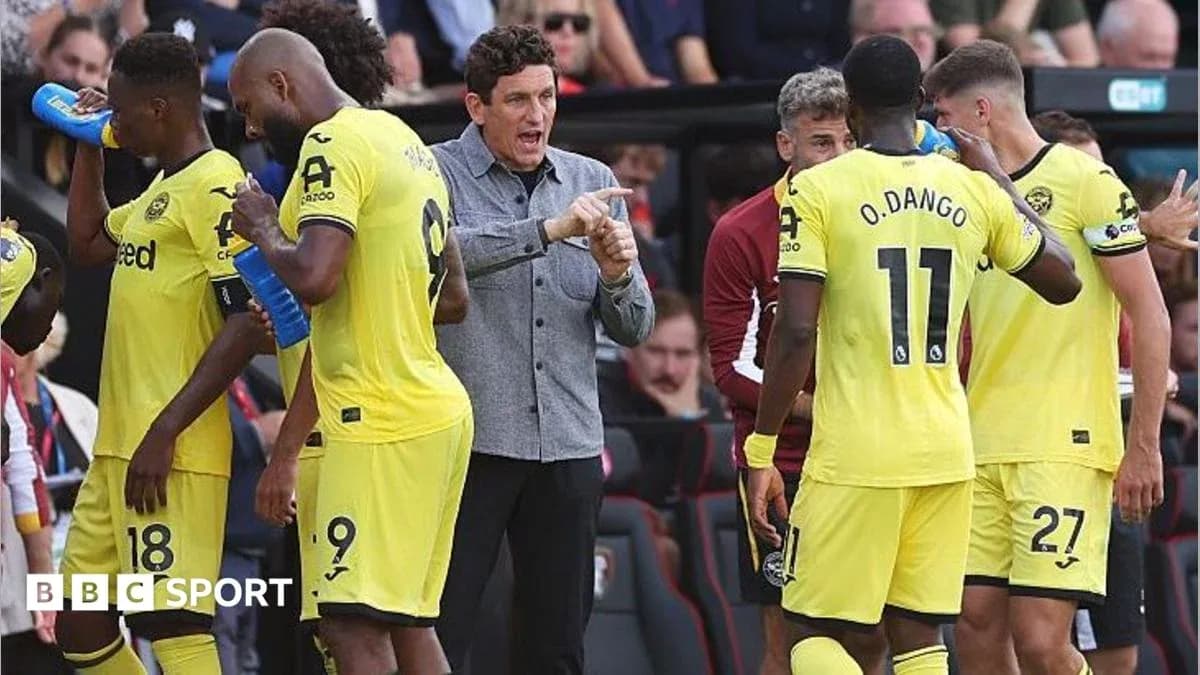
Brentford: a week off, then back to work
At Brentford, the training ground is quieter than usual but far from empty. Most of the Bees’ squad have jetted off with their national teams, yet around 12 players remain, including Callum Wilson and Igor Thiago, plus five working their way back from injury.
They also have one of the longest pauses of all. Having hosted Chelsea on the Friday before the break, Keith Andrews’ side now stare at a sizeable gap before their next competitive game.
Andrews has chosen to lean into it. His first-team players have been handed a week off, armed with individual training programmes. They are free to leave the country, though any long-haul adventures are highly unlikely to get the green light. Rest, not jet lag, is the priority.
The group will report back on Saturday, 26 September, when the real work starts again. The plan is to build towards a behind-closed-doors friendly against another English club on the weekend of 3 October.
That game could be important for the likes of Nathan Collins and Sepp van den Berg, who may use it as a stepping stone back into action. The rest of the squad for that friendly is expected to be fleshed out with under-21 players, a chance for the next generation to share the pitch with senior pros.
The second international break, though, will be a very different story for Brentford. This time the calendar squeezes tight. They face Brighton on Sunday, 8 November, then return against Everton on Saturday, 21 November. There will be the odd day off, but largely it will be business as usual – a standard training schedule, no friendly, and a straight run-in to the Toffees fixture.
Liverpool: thin squad, tight turnaround
At Liverpool, the pattern is more familiar: most of the squad gone, a skeleton group left behind.
Andoni Iraola will keep those remaining players ticking over with training and a few days’ rest sprinkled in. The real challenge comes at the end of the window. With so many away, Iraola expects to have “no more than three days probably to prepare” for the visit of Manchester City on 11 October once his internationals filter back.
For a game of that magnitude, three days is hardly ideal. But that is the reality of this new, condensed international block.
Aston Villa: Emery goes back to Sevilla
Aston Villa are taking a very different route.
Unai Emery will use the break to return to familiar ground at Sevilla, the club where he built his European reputation by winning three Europa League titles in a row. Villa and Sevilla will meet in the 15th edition of the Antonio Puerta Trophy on Friday, 2 October.
The match carries a weight that goes beyond tactics or sharpness. It is played in memory of Antonio Puerta, the Sevilla wing-back who died aged 22 on 28 August 2007 after suffering multiple cardiac arrests during a La Liga game against Getafe.
For Emery, it is a chance to honour a former club and a former player, while giving his current side a serious test in the middle of an unusually long domestic pause.
Championship clubs: a breather and a reset
Drop down a division and the picture changes. The Championship is not stripped quite as bare by international call-ups. Many clubs lose only a handful of players. Blackburn Rovers, for instance, have just four away.
For Tony Mowbray, that is no bad thing.
Rovers have been hit hard by injuries in the early weeks of the season, with more than 10 players sidelined at one stage. This break offers space to breathe, to heal, and to rebuild. Recent returnees Gady Beyuku and Moussa Baradji can be eased back in, while others such as Scott Wharton edge closer to full involvement.
After their trip to Portsmouth on Saturday, Blackburn headed back to Lancashire and straight onto the training pitch for a few days of focused work. The schedule has been relentless so far, with league games and the Carabao Cup crammed together. For Mowbray, who only came back to the club in the summer, this is his first real stretch of time to work in depth with his players.
But he is not about to grind them into the ground.
Towards the end of the week, the squad will be given a few days off. Some, like Yuri Ribeiro, will have the chance to head home to Portugal if they choose. Then the pattern resets: training in the first half of the following week, a short weekend break, and in week three a return to the usual pre-match routine before Cardiff visit Ewood Park.
Mowbray is also trying to line up a behind-closed-doors friendly against a Premier League or League One side. That game would be gold dust for those coming back from injury and vital to keep the rest of the squad sharp.
When the shorter, two-week break arrives in November, the approach will tweak again. Players may still get a brief spell off, but any matches are more likely to be in-house, with senior players mixed in with under-21s.
League One: threading the gaps
The new three-week window has thrown up a quirky problem in League One. In theory, some clubs could have had full squads and absolutely nothing to play.
The division continues as normal unless a club has three players called up under the EFL’s criteria, at which point they can request a postponement. This time, the international drain has bitten hard: on each of the two affected weekends, only four of the 12 scheduled matches are still on.
Many clubs saw this coming and moved quickly. They stacked Football League Trophy fixtures into this three-week stretch. Those games tend to feature heavy rotation anyway, so they can survive international absences that would derail a league fixture.
The result? Twelve teams will play two Trophy ties during the break, and 10 more will play once. That left just Leyton Orient and Reading potentially staring at three empty weekends. In the end, both have only one league game postponed, so neither will be left with a totally blank calendar.
The shape of the season has changed. One long, deep breath now instead of two shorter pauses later. Clubs are treating it as a nuisance, an opportunity, or a mid-season laboratory depending on their needs.
By the time the domestic game restarts, we will find out who used the silence best.