Hellas Verona vs AS Roma: Final Serie A Showdown
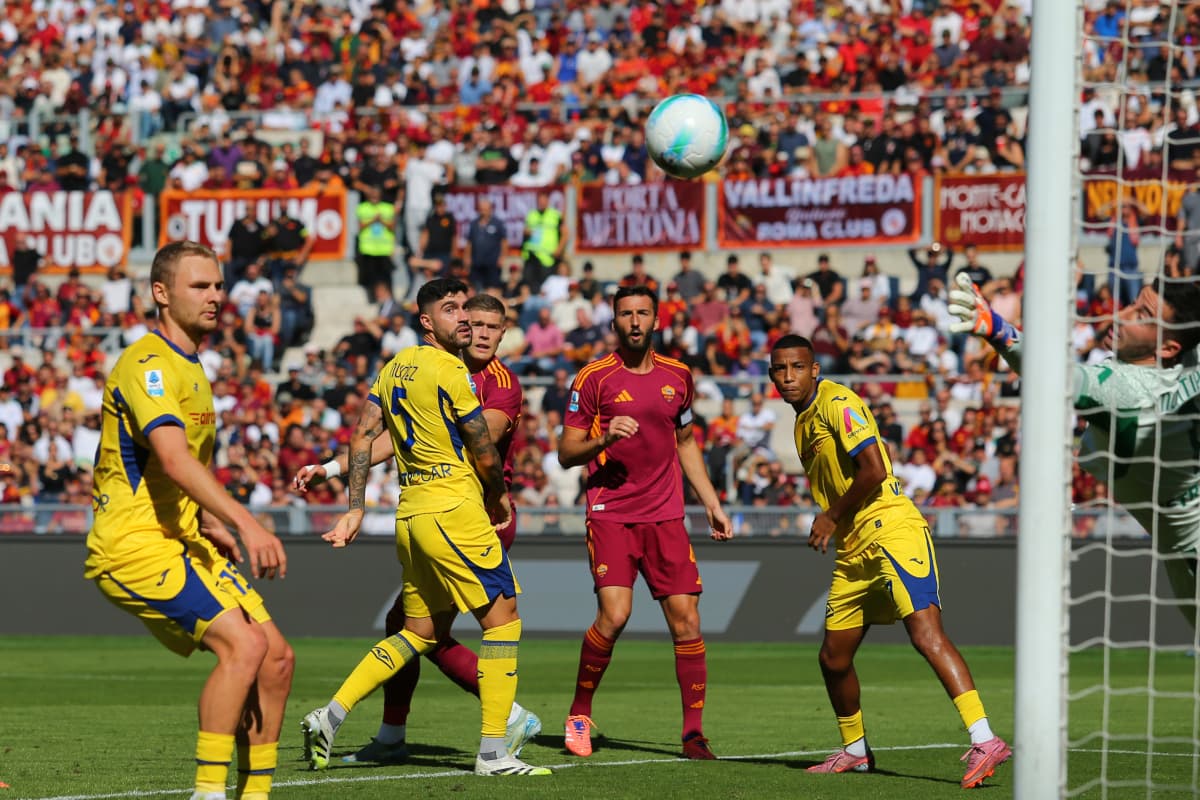
Hellas Verona host AS Roma at Stadio Marcantonio Bentegodi in the final regular round of Serie A 2025, a match with asymmetric stakes: Verona sit 19th with 21 points and a -34 goal difference in the league phase (25 scored, 59 conceded), already in the relegation zone, while Roma arrive 4th on 70 points with a +26 goal difference in the league phase (57 scored, 31 conceded) and need to lock in Champions League qualification on the final day.
Head-to-Head Tactical Summary
Across the last five Serie A meetings, this has been a tight but high-stakes matchup. On 28 September 2025 at Stadio Olimpico in Rome, Roma beat Verona 2-0, leading 1-0 at half-time. Earlier in 2025, on 19 April at Stadio Olimpico, Roma again won 1-0, having been 1-0 up at the break. On 3 November 2024 at Stadio Marcantonio Bentegodi in Verona, the hosts edged a 3-2 win, after going in 2-1 ahead at half-time. On 20 January 2024 at Stadio Olimpico, Roma won 2-1, leading 2-0 at half-time. The sequence starts with 26 August 2023 at Stadio Marcantonio Bentegodi, where Verona also defeated Roma 2-1 after a 2-0 half-time advantage. Overall, home advantage has mattered, with Verona twice winning 2-1 in Verona and Roma using control in Rome to secure three wins (2-0, 1-0, 2-1).
Global Season Picture
- League Phase Performance:
Hellas Verona are 19th with 21 points from 37 games in the league phase, with just 3 wins, 12 draws and 22 defeats. Their attack has been blunt (25 goals for) and their defense vulnerable (59 against). At home they have 1 win in 18, with 12 goals scored and 26 conceded.
AS Roma are 4th with 70 points from 37 games in the league phase, built on 22 wins, 4 draws and 11 losses. Their attack is productive (57 goals for) and their defense solid (31 against). Away from home they have 9 wins in 18, scoring 24 and conceding 21. - Season Metrics:
Scope detection shows team statistics and standings both at 37 games, so this is a league-only dataset; all metrics are in the league phase.
Verona’s attack is low-volume and inefficient in the league phase (0.7 goals per game, 25 total), while their defense is regularly exposed (1.6 goals conceded per game, 59 total). The pattern of 19 matches without scoring (failed to score in 19 games) underlines a frequently toothless attack. Discipline is an issue: they accumulate yellow cards heavily in the 31–60 minute windows (38 yellow cards in the 31–60 ranges combined), and they have 4 reds, which points to a reactive, often late-tackling side.
Roma show a balanced, top-four profile in the league phase: 1.5 goals scored per game (57 total) with 0.8 conceded per game (31 total). They have 17 clean sheets, indicating a consistently well-structured defense, and have failed to score only 7 times. Their card profile is more controlled, with yellows spread but peaking between 46–90 minutes, and only 3 reds across the campaign. - Form Trajectory:
Verona’s recent form string in the league phase is "DLDDL": one defeat, one draw, one defeat, one draw, one loss. That sequence confirms a team unable to generate momentum, alternating between narrow resistance and frequent losses, with no back-to-back wins and very limited upward mobility.
Roma’s form string in the league phase is "WWWWD": four consecutive wins followed by a draw. That run shows a side peaking at the right time, combining strong results with stability, and arriving in Verona on an unbeaten five-game streak that has consolidated their top-four position.
Tactical Efficiency
Using the team statistics in the league phase, Verona’s profile is that of a low-efficiency side in both boxes: they score 0.7 goals per match and concede 1.6, with 6 clean sheets but 19 games without scoring. Even without explicit xG values, the combination of low scoring and frequent blanks suggests that when they do create chances, they convert poorly, and they struggle to sustain pressure. Their use of three-at-the-back systems (3-5-2 in 25 matches) indicates a defensive-first approach that has not translated into solidity (59 goals conceded).
Roma, by contrast, show strong tactical efficiency in the league phase. They average 1.5 goals scored and only 0.8 conceded per game, with 17 clean sheets indicating a high defensive success rate relative to shots faced. Their attacking output (57 goals) is well-distributed between home and away, and they rarely fail to score. Penalty conversion at 100% (5 scored from 5) adds to their edge in high-leverage situations. In any comparison-based Attack/Defense Index, Roma’s numbers would place them in the league’s upper tier both offensively (consistent scoring) and defensively (among the best for goals conceded and clean sheets), while Verona’s figures would sit near the bottom in both categories.
The Verdict: Seasonal Impact
For Hellas Verona, this match is the final chance to salvage pride rather than safety: at 19th with 21 points and a -34 goal difference in the league phase, the structural issues of a weak attack and leaky defense are already baked into their relegation. A positive result against a top-four side would not change their fate but could influence the post-relegation narrative, offering a platform for squad evaluation and tactical decisions ahead of life in Serie B.
For AS Roma, the stakes are significantly higher. Sitting 4th on 70 points in the league phase, they are in a Champions League qualifying position but not yet beyond reach of rivals. Given their strong form ("WWWWD") and superior goal difference (+26), a win in Verona would almost certainly secure their place in the Champions League and cap a season of clear progression. A draw would keep them vulnerable if the chasing pack closes the gap, while a defeat to a relegated side could open the door to a late swing in the top-four race.
In seasonal terms, the expected outcome based on form and efficiency is a Roma win, reinforcing their top-four finish and confirming their status as a Champions League club in 2026. Verona’s role is that of a potential spoiler: if they can disrupt Roma’s rhythm at Stadio Marcantonio Bentegodi, they could reshape the final Champions League picture, but the broader trajectory of both clubs—Roma upward into Europe’s elite, Verona downward into Serie B—has already been largely defined by their contrasting numbers in the league phase.