
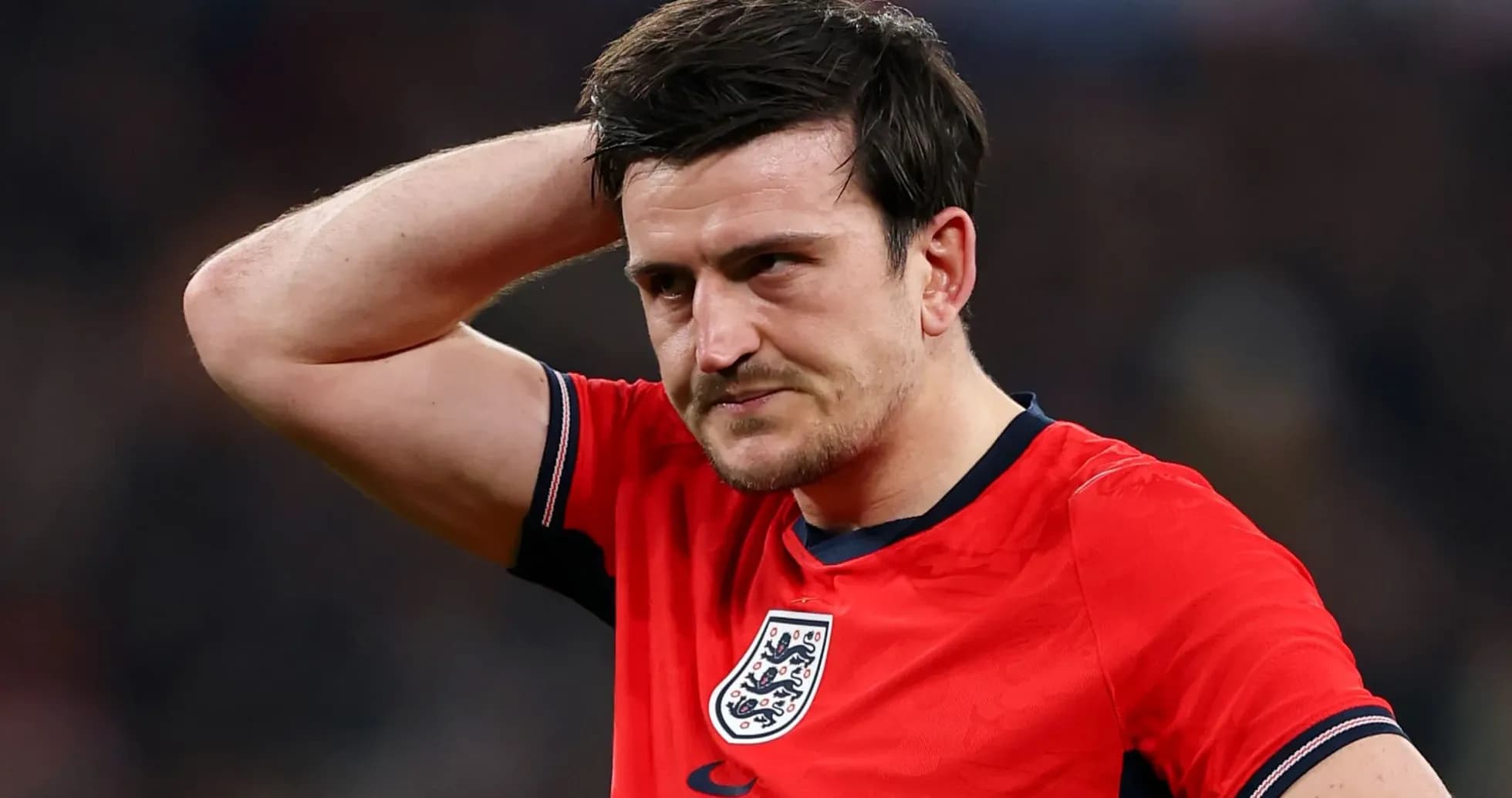
Harry Maguire's Omission from England's World Cup Squad
Harry Maguire spent the run-in to the 2025-26 Premier League season doing exactly what international managers always say they want: playing well, playing regularly, and playing under pressure. Manchester United surged to third, banked a return to the Champions League, and the 33-year-old looked like a man who had muscled his way back into the England conversation.
On pedigree alone, he should never really have left it. Sixty-six caps, big-tournament scars, and a track record of delivering when the Three Lions tighten their grip on the anthem. Maguire has never flinched for his country.
This time, it wasn’t enough.
Tuchel’s England moved on without him. John Stones, Ezri Konsa, Marc Guehi, Dan Burn and Jarell Quansah all stood in front of him in the queue. Maguire found out the modern way. As he told The Rest Is Football podcast, the England manager didn’t call, he FaceTimed. A small detail, but it underlined the awkwardness of the moment.
“He FaceTimes everyone. It’s quite an awkward call,” Maguire admitted. The sort of line that tells you the decision hurt.
Stones and Konsa got the nod in Texas as England opened their World Cup campaign against Croatia. On paper, it looked composed and progressive. On grass, in that first half, the edges frayed. England’s back line creaked more than once before the attack bailed them out in a 4-2 win.
The scoreline flattered the defence more than the defenders.
For former England full-back Danny Mills, speaking on behalf of betTOM, none of this came as a shock. The warning lights, he felt, were flashing long before kick-off.
“I think going into the tournament, the defensive situation was always going to be the worry – especially as you go deep into the tournament and you come up against better teams, some very, very good teams, in the latter stages,” he told GOAL. “Trying to find that balance is never going to be easy, I think, with the squad that was picked.”
The selection at centre-back, in particular, jarred with him.
“I was a little bit surprised by Stones and Konsa, that selection. I've said from day one, if Stones is fit, he plays, because I think he's exceptional. But I would have played him alongside Marc Guehi. They've not just played together at Manchester City, they know each other from Manchester City as well. They've trained together every day, they have an understanding, they've built that up.”
The concern wasn’t just who played, but who didn’t. The absence of a dominant organiser, the kind of authoritative voice that drags a back line into shape when the tempo rises, stood out. It is precisely the role Maguire has filled for England across three major tournaments.
Instead, Tuchel rolled with technical quality and versatility. Reece James, in Mills’ eyes, is “a fantastic full-back and a great footballer”. On the left, Nico O’Reilly has impressed at Manchester City, but his instincts lean towards the opposition half.
“Left-back, Nico O'Reilly has done great for Manchester City, but my concern is he's better attacking than he is defensively at times, and he goes wandering into those areas,” Mills said. “So, yes, I was surprised by the omission of Harry Maguire.”
The first 45 minutes against Croatia did little to silence that argument. England’s second half was excellent, ruthless even, but the defensive doubts lingered. Mills could enjoy the goals; he couldn’t ignore the cracks.
“So, yes, one or two defensive concerns still. Fantastic second half, great performance in the second half, but I think there will be much stiffer challenges to come.”
The story might have taken a different twist when injuries struck. Tino Livramento’s withdrawal opened up a route back into the squad. If ever there was a moment for experience, for a known quantity, this was it.
Tuchel went another way again.
Trevoh Chalobah, with just one senior cap, received the call. Another defender with promise, another selection that underlined the manager’s willingness to back those on his internal list rather than return to the old guard.
It raised an obvious question: had Maguire’s immediate reaction to his initial omission – comments made while the disappointment was still raw – cost him a way back? Mills stopped short of that conclusion, but he did draw a line between preparation and opportunity.
“I have to assume that when the squad was announced – three weeks ago, three-and-a-half, four weeks ago – Thomas Tuchel would have had to say to four or five players, ‘keep yourself fit and keep yourself ready, because you're on the standby list and if something happens, you may get a phone call’.”
That standby life is a strange limbo. No tournament buzz, no dressing-room rhythm, no crowd. Just lonely sessions, while team-mates scatter to World Cups or holidays.
“That is hard because you're not involved in it and most of your other players and colleagues are either at a World Cup or they're off on holiday, enjoying themselves and doing what they need to do. But you've got to train alone, keep training – very, very hard to get to that stage and be ready just in case.”
For Mills, the explanation is simple: the second wave of call-ups was always going to come from a very specific, very prepared group.
“So I would assume that's the reason why there would be a list of maybe four or five that were told you have an opportunity if somebody gets injured and that's maybe why that call-up has come.”
In other words, England’s defensive reshaping isn’t an accident or a short-term whim. It is a deliberate break from what came before – even if that means leaving 66 caps, and a proven tournament performer, watching from home while the back line learns to live without him under the harshest spotlight of all.





