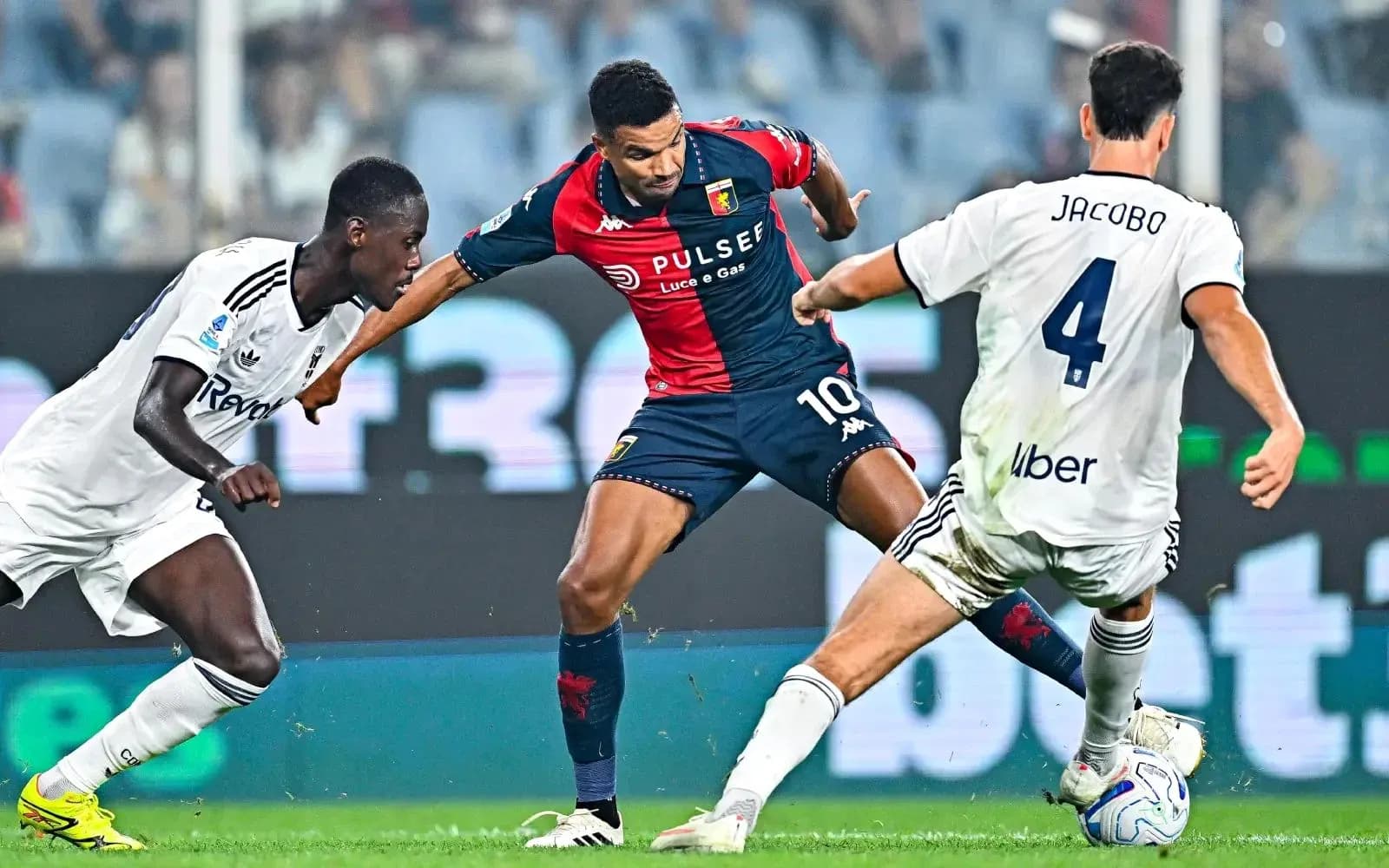
Genoa vs Como: Serie A Clash Ends 1–4
Under the lights of Stadio Luigi Ferraris, this was billed as a crossroads night in Serie A’s “Regular Season - 3”: Genoa, stuck at the foot of the table, against a Como side riding the momentum of a fearless start under Cesc Fàbregas. By full time, the scoreboard read 1–4, and the story of two clubs heading in opposite directions had been underlined in bold.
Final Score: Genoa 1 - 4 Como
Following this result, Genoa remain 19th with 0 points from 3 matches, a goal difference of -6 built from 1 goal scored and 7 conceded overall. At home, they have now played 2, losing both, with 1 goal for and 6 against. Como, by contrast, consolidate 3rd place on 7 points from 3 games, unbeaten with 2 wins and 1 draw, scoring 7 and conceding 3 overall for a goal difference of +4. All of Como’s football so far has come on their travels: 3 away matches, 2 wins, 1 draw, 7 scored and 3 conceded.
Tactical Analysis
The tactical shapes told their own story. Daniele De Rossi doubled down on Genoa’s back-three identity, rolling out a 3-4-1-2 that tried to combine solidity with an extra line-breaking presence between the lines. J. Bijlow anchored the side in goal, with a defensive trio of M. Ellertsson, L. Østigård and A. Marcandalli. The wing lanes were entrusted to S. Sabelli on the right and the young technician T. Baldanzi starting higher on the left, while D. Sow and J. Vásquez formed the central platform. Ahead of them, M. Frendrup operated as a roaming connector behind a strike pair of L. Colombo and M. Osmajić.
On paper, it was a structure built to protect a fragile defence that, heading into this game, had been conceding 3.0 goals per match at home and 2.3 overall, while offering some punch between the lines. In reality, the gaps between Genoa’s lines were too easily exploited, and the lack of confidence in a side with 0 wins and just 1 goal in total was brutally exposed.
Como arrived with a clear identity: the 4-2-3-1 that has been Fàbregas’ default, used in all 3 league outings so far. J. Butez started in goal, shielded by a back four of Álex Valle, T. Chalobah, Jacobo Ramón Naveros and the adventurous Yan Couto. In front of them, M. Perrone and L. da Cunha formed a double pivot that mixed progression with protection. The line of three behind lone striker T. Douvikas was rich in creativity and vertical threat: M. Baturina as the central playmaker, flanked by M. Baturina’s fellow technicians Assane Diao and N. Paz, with M. Baturina himself already emerging as one of Serie A’s standout midfielders.
Como’s attacking spine is no longer a surprise. Baturina, Diao and Douvikas each came into this round with 2 goals in total, giving Fàbregas three different “hunters” who can finish moves as well as create them. Baturina’s numbers across the opening three matches — 2 goals, 1 assist, 90 completed passes with 87% accuracy, and 3 key passes — speak to a player who dictates tempo and final-third decisions. Diao adds directness: 2 goals, 1 assist, 7 shots, 12 dribbles attempted with 6 successful, and 26 duels contested, a wide forward who constantly tests full-backs one-v-one. Douvikas, with 2 goals from 9 shots and 5 on target, offers penalty-box presence and an outlet for early balls when Como break.
Against a Genoa defence that, overall, has conceded 7 times in 3 games and has yet to keep a clean sheet at home or away, this trio was always likely to find space. Even with a leader like Østigård — who has already blocked 4 shots and made 4 interceptions this season — the strain is constant when the team’s block is repeatedly pulled apart. His aggressive front-foot defending, combined with 3 yellow cards across the opening matches, tells of a centre-back often forced into recovery and last-ditch interventions rather than controlling the line on his own terms.
Midfield Battle
In midfield, the “engine room” battle was always going to be decisive. Genoa leaned on D. Sow and J. Vásquez to stabilise possession and protect transitions. Sow, with 91 completed passes at 91% accuracy and a willingness to press, is one of the few stabilising presences in a side still searching for structure. Frendrup, operating just ahead, had to shuttle between linking play and plugging gaps whenever Como’s midfielders drifted between the lines.
On the other side, Perrone and da Cunha had the benefit of a functioning, confident system. Their task was to control Genoa’s rare forays through Baldanzi and Frendrup while feeding the creative hub in front of them. The presence of Yan Couto high on the right, already with 1 assist, 160 passes at 89% accuracy and 4 key passes this season, gave Como a natural overload against Baldanzi’s flank. Time and again, Genoa’s left side was forced into uncomfortable decisions: step out to meet Couto and leave Diao inside, or stay compact and concede the wide lane.
Discipline and emotional control also tilted the narrative. Genoa’s season-long yellow-card distribution shows a team that can become stretched at multiple stages of the game: 16.67% of their yellows have arrived in each of the 0–15, 31–45 and 61–75 minute windows, with an additional 16.67% between 91–105 minutes and 33.33% in undefined periods. The pattern suggests a side that struggles both in early-game duels and in managing frustration late on. Como, by contrast, have only registered a single yellow so far, and that came between 46–60 minutes — a sign of relative control in high-stress phases.
Absences added another layer to Genoa’s problems. C. Drameh was unavailable, officially inactive, while E. Havel (thigh injury) and L. Venturino (knee injury) also missed out. For a squad trying to find balance and competition in wide and midfield zones, those missing options narrowed De Rossi’s ability to adjust mid-game. Como had their own absentee in J. Addai, sidelined with an Achilles tendon injury, but Fàbregas’ bench — with options like Luis Milla, M. Caqueret, A. Lahdo and M. Kean — offered multiple ways to change the rhythm if required.
Statistical Prognosis
From a statistical prognosis perspective, the trajectories of these two teams are stark. Genoa’s attack is anaemic: 1 goal in total across 3 fixtures, with an average of 0.5 goals at home and 0.0 away. They have already failed to score in 2 of their 3 matches overall. Their defence is porous, conceding 3.0 goals per game at home and 1.0 away, for 2.3 overall. Como, on the other hand, are producing 2.3 goals per match both away and overall, while conceding just 1.0 on their travels. They have yet to fail to score in any league game.
Blend those numbers with the tactical reality on the pitch at Ferraris, and the 1–4 scoreline feels less like an anomaly and more like an accurate reflection of where these squads are. Genoa’s 3-4-1-2 can still be a platform — especially if Baldanzi and Frendrup are given clearer roles and if Østigård’s aggression is better protected by the collective block — but the current version leaks chances and offers too little threat. Como’s 4-2-3-1, meanwhile, looks like a fully formed attacking machine, powered by Baturina’s orchestration, Diao’s directness and Douvikas’ penalty-box instincts, with Couto and Paz adding width and creativity.
Following this result, the narrative is set: Genoa are fighting to stabilise, to turn structure and effort into points; Como are playing with the poise and cutting edge of a side that believes it belongs in the Champions League places. On this evidence, both the table and the underlying profiles say the same thing.