Frosinone vs Juventus: Tactical Lessons from Serie A Opener
Under the late‑summer glare at Stadio Benito Stirpe, Frosinone’s return to Serie A met the cold efficiency of a Juventus side already shaped in Luciano Spalletti’s image. The visitors left with a 1–0 win, a clean sheet and an early statement; the hosts were left with lessons about the margins at this level.
I. The Big Picture – contrasting foundations after Round 1
Following this result, the table tells a simple story. Juventus sit 8th with 3 points, a goal difference of +1 from 1 goal scored and none conceded in total. Frosinone are 14th with 0 points, their goal difference -1 after failing to score and conceding once in their only game so far.
The symmetry of the formations – both sides in a 4‑2‑3‑1 – masked very different levels of maturity. Juventus arrived with a fully formed spine: Guglielmo Vicario in goal, Bremer and Lloyd Kelly at centre‑back, Manuel Locatelli and Douglas Luiz as the double pivot, and Randal Kolo Muani leading the line. Around them, Spalletti deployed a mobile, aggressive band of three in Francisco Conceição, Weston McKennie and Kenan Yildiz.
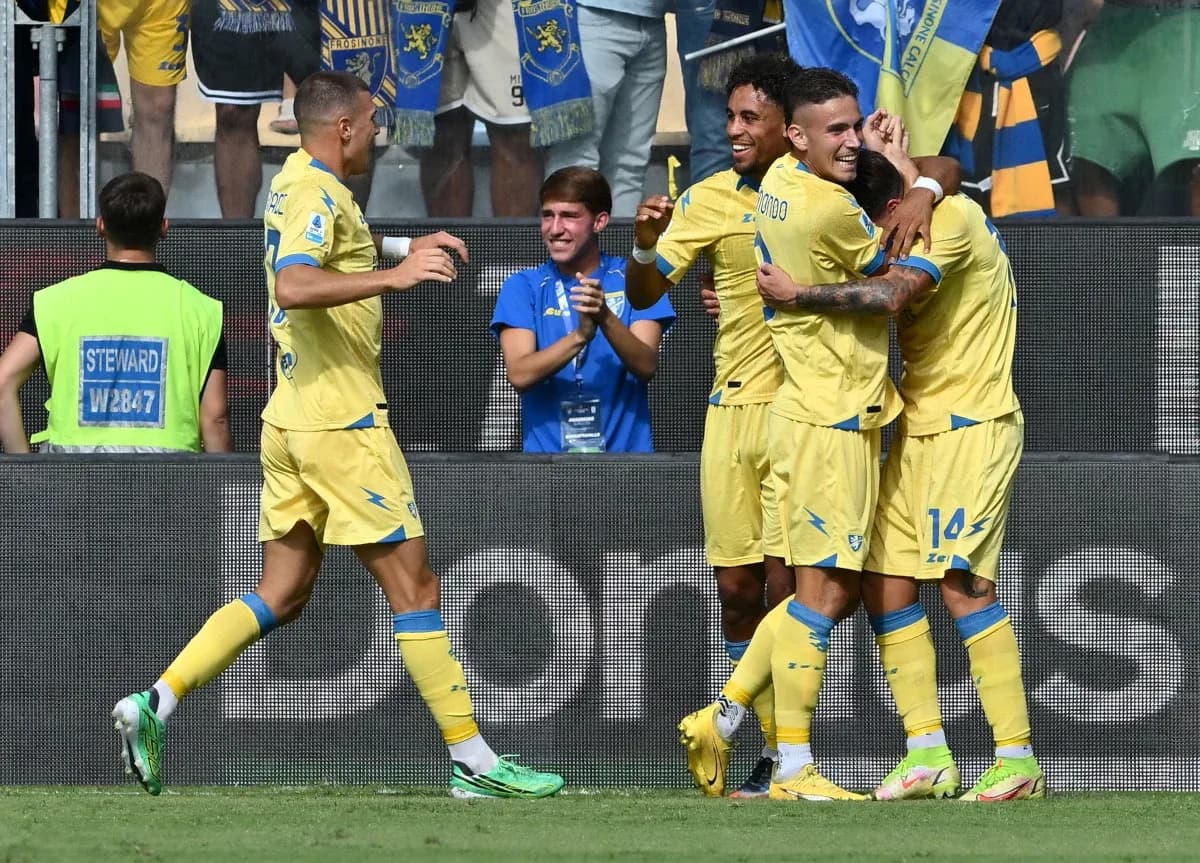
Massimiliano Alvini mirrored the shape but not the experience. L. Palmisani behind a back four of I. Monterisi, G. Calvani, G. Cittadini and G. Bracaglia, with G. Calò and M. Cichella shielding. Ahead, S. Fini, Romano Schmid and G. Kvernadze supported lone forward A. Raimondo. It was a line‑up built on promise more than proven Serie A know‑how.
Heading into this game, the numbers already hinted at the roles both sides would play. Frosinone’s overall attacking record was a blank slate: 0 goals in total, with an average of 0.0 at home and 0.0 overall. Defensively, they had already conceded 1 goal in total, all of it at home, for an average of 1.0 at home and 1.0 overall. Juventus, by contrast, had started as they finished here: 1 goal scored on their travels, 0 conceded, averaging 1.0 goals for away and 0.0 goals against in total. One game each, but the pattern was already clear: Frosinone would need to scrap; Juventus could afford to control.
II. Tactical voids and discipline – where the squads were stretched
Juventus travelled without several potential starters. M. Di Gregorio missed out due to transfer negotiations, while J. Ekhator and F. Gatti were absent through injury. The absences forced clarity: Vicario’s status as number one was underlined, and Bremer’s leadership at the back became non‑negotiable. With Gatti unavailable, the Brazilian’s command performance – 90 minutes, 1 goal, 2 tackles, and 1 blocked shot – doubled as both defensive anchor and decisive attacking threat.
For Frosinone, the void was more structural than individual. Their season data shows a single preferred shape – 4‑2‑3‑1 played once – but no clean sheets in total and 1 failure to score, also in total. The double pivot of Calò and Cichella was tasked with shielding a young back four and providing the first pass out. Too often, they could do one but not both.
Discipline framed the emotional edge of the contest. Frosinone’s season card profile is already stark: 2 yellow cards in total, split evenly between 31–45 minutes (50.00%) and 91–105 minutes (50.00%). That fits the narrative of a side straining just before the break and again in stoppage time as intensity spikes. Schmid embodies that fine line. In his 59 minutes, he committed 4 fouls, drew 2, and took 1 yellow card, placing him among the league’s leading yellow card recipients. His aggression is an asset, but at this level it must be timed, not constant.
Juventus’ cautions are clustered differently. Their season profile shows 2 yellow cards in total, both away: 1 between 46–60 minutes (50.00%), 1 between 76–90 (50.00%). That suggests a side that tightens the screws after half‑time and again in the closing quarter‑hour, accepting tactical fouls to protect a lead. Zeki Çelik and Andrea Cambiaso, both already on the yellow radar, personify that calculated edge; Çelik’s 2 fouls and 1 interception from right‑back show a defender comfortable living in the grey area.
III. Key matchups – Hunter vs Shield, and the engine room battle
The match’s decisive duel was an unusual one: Juventus’ “hunter” was a centre‑back. Bremer, already among Serie A’s early top scorers with 1 goal from 1 appearance, attacked the box like a striker on set pieces. His 2 shots, 1 on target, were enough to tilt the game. Against a Frosinone defence that had conceded 1 goal at home from their only outing, his timing and physicality were simply too much.
On the other side, A. Raimondo was left to feed on scraps. With Frosinone’s overall goals for still at 0 and an average of 0.0 at home, the young forward’s main opponent was isolation. Bremer and Kelly compressed the space ruthlessly, with Locatelli dropping in to form a situational back three when Juventus built from deep. Without sustained support runs from Fini, Schmid or Kvernadze, Raimondo’s role became more about occupying defenders than threatening Vicario.
In midfield, the “engine room” was where the structural gap really showed. Locatelli and Douglas Luiz operated as a double metronome. Locatelli’s role was to dictate tempo, dropping between the centre‑backs to evade Frosinone’s first line. Douglas Luiz, more aggressive between the lines, stepped into pockets behind Calò and Cichella, linking with McKennie and Yildiz.
For Frosinone, Calò’s 14 attempted passes and 50% accuracy underline the difficulty of playing through Juventus’ press. Schmid, nominally the creative hub, struggled to influence possession phases; his 7 duels, with only 2 won, highlight how often he was forced into physical contests rather than allowed to orchestrate. The result was a broken attacking structure: vertical balls into Raimondo without the second and third runs needed to sustain pressure.
Out wide, Francisco Conceição was the game’s purest chaos agent. With 9 dribbles attempted and 4 successful, plus 2 key passes and 1 assist already in his season tally, he repeatedly isolated Frosinone full‑backs in one‑v‑one situations. Kvernadze and Monterisi had to choose between stepping out to meet him or staying compact; either way, Juventus found a way to tilt the flank in their favour.
IV. Statistical prognosis – what this performance projects
With only one round played, the sample is small, but the tendencies are sharp. Frosinone have played 1 match in total, all at home, with 0 wins, 0 draws and 1 defeat. They have failed to score once in total, and kept 0 clean sheets. Their biggest result so far is a 0–1 home loss; their overall goal difference of -1 (0 scored, 1 conceded) accurately reflects a side that can stay in games but lacks punch.
Juventus, by contrast, have played 1 away game and won it, scoring 1 and conceding 0. Their overall goal difference of +1 (1 scored, 0 conceded) is modest in size but strong in implication: this is a side built first on defensive solidity, then on moments of quality. Their clean sheet on their travels confirms that identity.
Looking ahead, the “critical intersection” of tendencies is clear. Frosinone’s attack, still at 0 goals with an average of 0.0 in total, will continue to rely on moments from Schmid, Fini and Kvernadze unless Alvini can add more structure between the lines. Their disciplinary profile – yellow cards clustering just before and after regulation – suggests late‑half fatigue that opponents can target with fresh legs and direct running.
Juventus, meanwhile, have the luxury of multiple match‑winners. Bremer’s aerial threat, Conceição’s dribbling and Kolo Muani’s movement give Spalletti tools to decide tight games even when open‑play dominance is partial rather than total. Their yellow‑card timing – 46–60 and 76–90 – also points to a team that understands game management, willing to break rhythm to preserve a narrow advantage.
In tactical terms, this was a lesson in Serie A realism for Frosinone. They were not outclassed in shape, but in detail: the timing of runs, the security of first passes under pressure, the management of set pieces. Juventus did not need volume; they needed one Bremer header, one Conceição delivery, and a defensive structure that never cracked.
If Frosinone can keep their back line as compact as it was for long spells here and gradually raise their attacking averages above 0.0 at home, they will turn narrow defeats into survival points. Juventus, already on 3 points from 1 away game with 1 clean sheet, look like a side built to live on that knife‑edge – and win there.