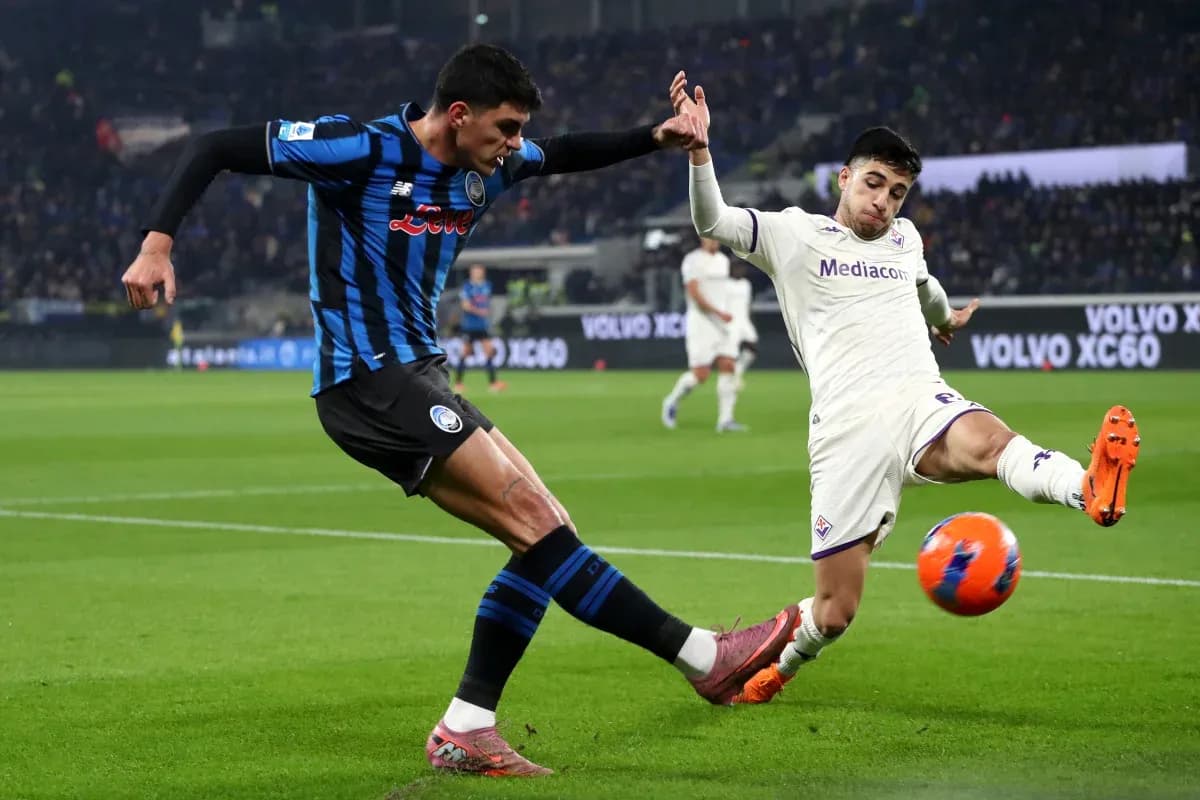
Fiorentina vs Atalanta: A Season Defined by Stalemate
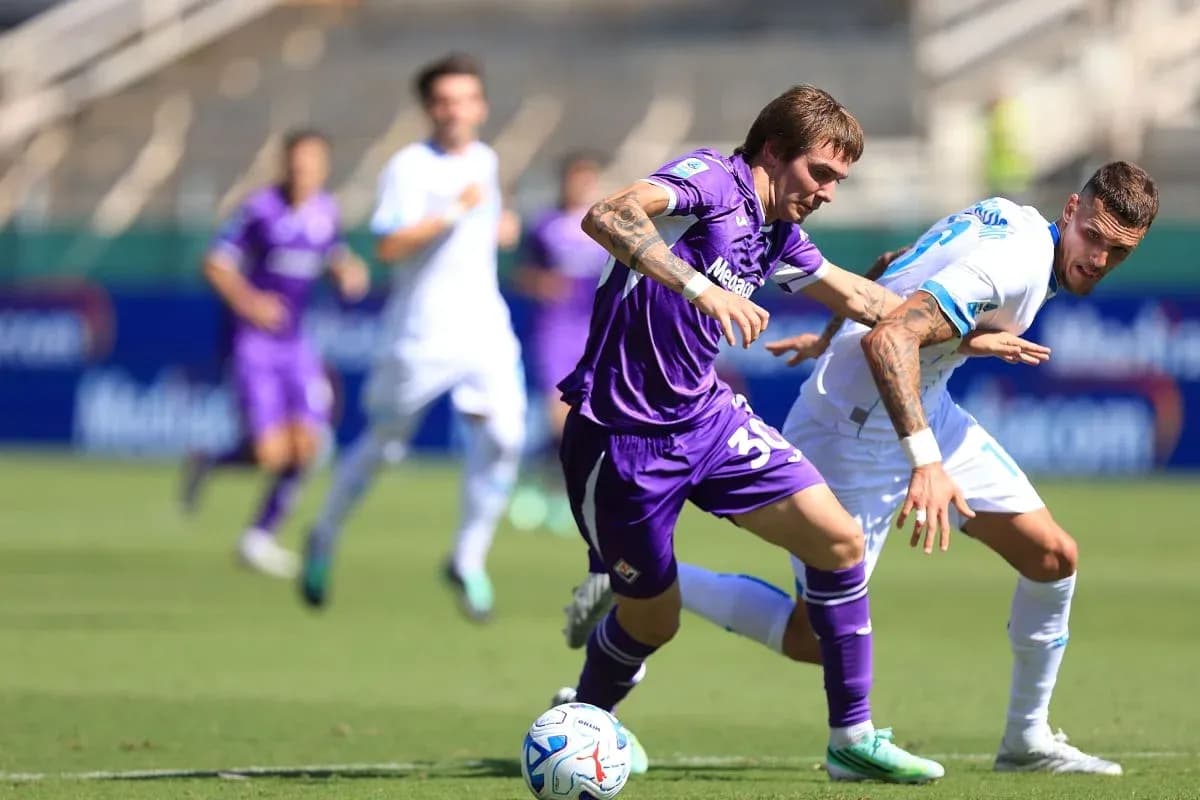
Under the soft May lights of Stadio Artemio Franchi, a fraught Serie A campaign closed with a draw that felt like a verdict on both Fiorentina and Atalanta. The 1-1 scoreline, sealed after Fiorentina led 1-0 at half-time and were pegged back after the break, left the table crystallised: Fiorentina finishing 15th on 42 points, Atalanta 7th on 59, bound for Conference League qualification. Following this result, the numbers tell us as much about identity as they do about outcome.
I. The Big Picture – Two Philosophies, One Stalemate
Fiorentina’s season-long profile is that of a side permanently on the brink without ever quite falling or flying. Overall they played 38 matches, winning 9, drawing 15 and losing 14. Their goal difference of -9 is cleanly derived from 41 goals scored and 50 conceded, a narrow deficit that mirrors their habit of sharing points. At home they were cautious to a fault: only 4 wins from 19, but 9 draws and 6 defeats, with a perfectly balanced 21 goals scored and 21 allowed. The average of 1.1 goals for and 1.1 against at home underlines a team that rarely broke shape, rarely broke away.
Atalanta, by contrast, travelled to Florence with a more assertive statistical DNA. Overall, 15 wins, 14 draws and 9 defeats across 38 games produced a positive goal difference of 15, from 51 scored and 36 conceded. On their travels they were solid rather than spectacular: 6 away wins, 8 draws and 5 defeats, with 26 goals scored and 21 conceded, averaging 1.4 goals for and 1.1 against away. Where Fiorentina’s season was defined by survival and containment, Atalanta’s was about controlled ambition.
The formations on the night were faithful to those arcs. Fiorentina, under Paolo Vanoli, returned to their most-used 4-3-3, a shape they deployed 15 times this campaign. Atalanta, guided by Raffaele Palladino, stayed loyal to their trademark 3-4-2-1, the structure that framed 34 of their league outings. The draw felt like a meeting of two teams playing to type.
II. Tactical Voids – Absences and the Discipline Edge
Both squads arrived with notable absentees that subtly re-wired the tactical script. Fiorentina were without M. Kean (calf injury) and F. Parisi (knee injury), removing a direct outlet in attack and a progressive option at left-back. More tellingly, L. Ranieri’s suspension for a red card stripped Vanoli of a left-sided defender whose season was defined by edge and aggression: 8 yellow cards and 1 red, with 34 tackles, 13 successful blocks and 24 interceptions. His absence forced a different defensive balance, with R. Gosens stepping into the back line and P. Comuzzo partnering D. Rugani.
Atalanta, for their part, travelled without L. Bernasconi (knee injury) and O. Kossounou (thigh injury), trimming depth in the defensive unit. Palladino still fielded a robust back three of G. Scalvini, I. Hien and H. Ahanor, but the rotation options behind them were thinner, nudging the coach toward a more conservative use of his wing-backs.
Disciplinary trends framed the psychological undercurrent. Fiorentina’s yellow card distribution shows a pronounced late-game spike: 25.30% of their bookings arriving between 76-90 minutes, and a further 15.66% between 91-105. Their red cards were almost exclusively late as well, with 66.67% between 76-90 and another 33.33% outside regular ranges. Atalanta also tilt toward late aggression, with 23.33% of their yellows between 76-90 minutes and reds split between 0-15 and 76-90. This was always likely to be a match that became more chaotic as it aged, and the second-half equaliser fit that pattern of rising tension and risk.
III. Key Matchups – Hunter vs Shield, Engine Room vs Enforcer
The “Hunter vs Shield” duel existed more in structural terms than in a single head-to-head. Atalanta’s attacking threat is broadly distributed, but the league context shines a light on N. Krstović and G. Scamacca as the reference points of their offensive identity. Krstović, with 10 goals and 5 assists in 33 appearances, and Scamacca, also on 10 goals with 2 penalties converted, give Atalanta a double spearhead of penalty-box presence and link play. Even starting from the bench in Florence, Scamacca’s shadow shapes defensive planning; Krstović’s 75 shots and 34 on target speak to a volume shooter who keeps back lines honest.
Against that, Fiorentina’s shield is a collective rather than a single wall. Overall they conceded 50 goals, with 21 at home and an average of 1.1 goals against at Franchi. Their 10 clean sheets in total – 6 at home – suggest that when their block is set, they can suffocate games. The back four of Dodo, Comuzzo, Rugani and Gosens reflects that intent: two centre-backs who prioritise positioning, flanked by full-backs capable of narrowing into a compact line of four. The 1-0 lead at the break was the reward for that structure; the eventual concession a reminder that sustained pressure from an attack averaging 1.4 away goals is hard to resist for 90 minutes.
In the “Engine Room” battle, Atalanta’s midfield triangle of M. De Roon, M. Pasalic and Y. Musah offered a blend of screen, surge and shuttle. De Roon’s role as enforcer is obvious: he anchors transitions, steps into duels and allows the advanced pair of L. Samardzic and K. Sulemana to take higher positions between the lines. Fiorentina answered with R. Mandragora, M. Brescianini and G. Fabbian, a trio built more on circulation and second-ball coverage than on outright dominance. Their season-long averages – 1.1 goals scored and 1.3 conceded overall – underline a midfield that can keep games even but rarely tilt them decisively.
IV. Statistical Prognosis – xG Echoes and Defensive Solidity
We do not have explicit xG figures, but the season’s underlying patterns sketch a clear probabilistic picture. Atalanta’s overall average of 1.3 goals scored and 0.9 conceded per match, coupled with 13 clean sheets (7 at home, 6 away), marks them as one of Serie A’s more balanced sides. Fiorentina’s 1.1 goals for and 1.3 against, and a habit of drawing 15 times, describe a team whose matches gravitate toward narrow margins and shared spoils.
Overlay those profiles onto this fixture and the 1-1 feels like the most likely node in a range of outcomes: Atalanta’s superior attacking volume grinding against Fiorentina’s home caution, Atalanta’s away solidity blunting Fiorentina’s front three of J. Harrison, R. Piccoli and A. Gudmundsson. Gudmundsson’s own season – 5 goals, 4 assists, plus a red card that hints at his volatility – encapsulates Fiorentina’s campaign: flashes of incision, streaks of frustration, and just enough output to stay afloat.
Following this result, the table does not lie. Fiorentina’s -9 goal difference and 42 points place them in the lower mid-table they have statistically earned. Atalanta’s +15 and 59 points confirm them as a European-calibre side whose structure and numbers travel well. The match at Franchi, in its tension and its equilibrium, was not an anomaly; it was the season, distilled into 90 minutes.