
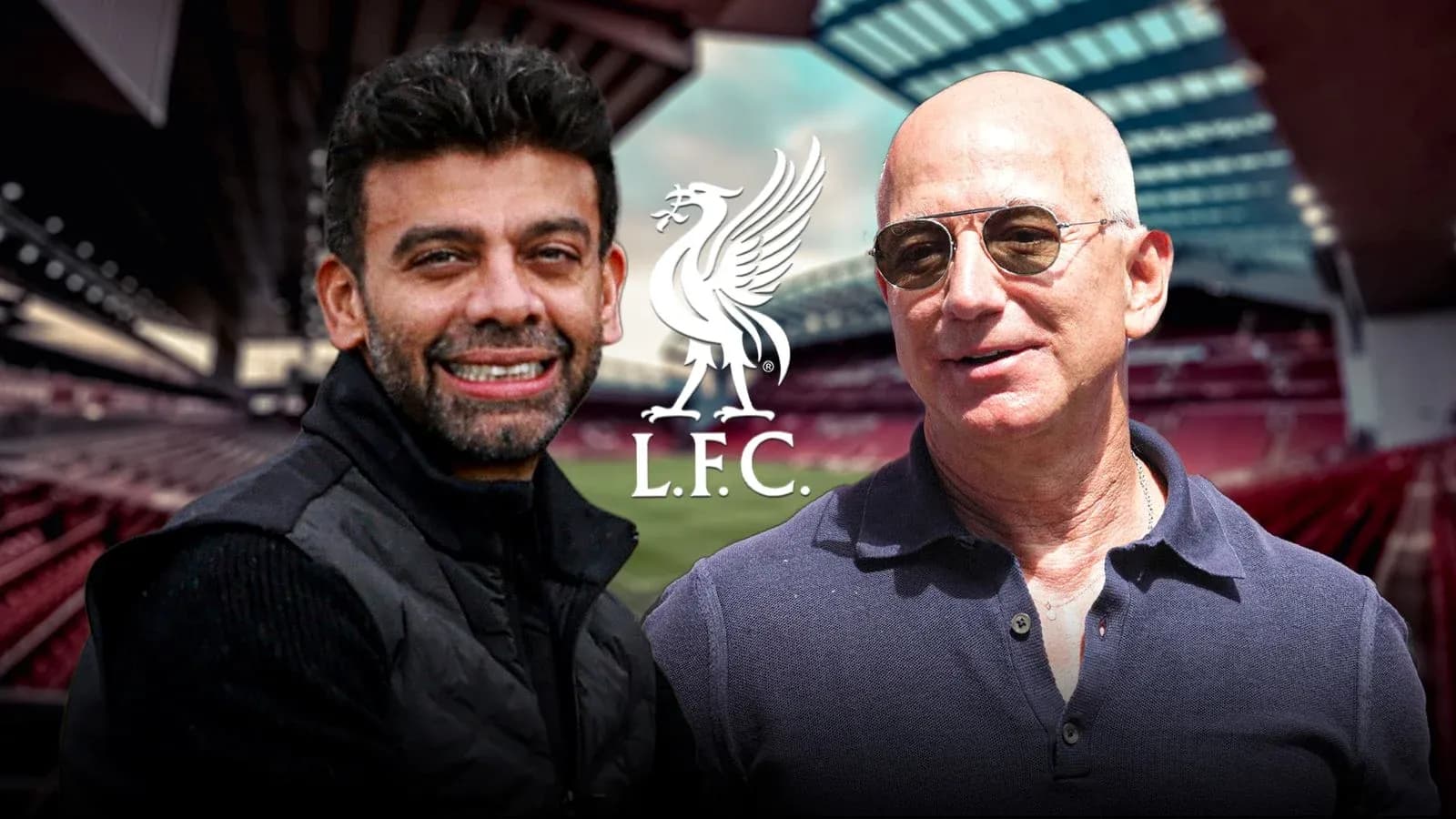
Liverpool Ownership Deal: Bezos, Bhatia, and Silicon Valley
Liverpool are on the brink of one of the most eye‑catching ownership deals football has ever seen – and it has Silicon Valley fingerprints all over it.
Fenway Sports Group (FSG) are close to selling a significant minority stake in the club to a heavyweight consortium that includes Amazon founder Jeff Bezos and former QPR co-owner Amit Bhatia, with Facebook co-founder Eduardo Saverin also at the table.
The proposed deal, first reported at the end of last month and now rapidly advancing, would see the group acquire roughly a one-third share of Liverpool. The investment is expected to value the club at around £4.4bn ($6bn) – a figure that would place this among the richest transactions in football history.
Bezos, Bhatia and the new money circling Anfield
Jeff Bezos needs little introduction. The Amazon founder, Blue Origin backer and owner of The Washington Post is estimated by Forbes to be worth around $281bn (£209bn), making him the third-richest person on the planet behind Elon Musk and Larry Page.
He has long been linked with American sports franchises, having explored potential moves for the Washington Commanders and Seattle Seahawks, but has yet to take a major stake in any team. Liverpool would be his first big step into elite sport ownership.
The man fronting the consortium, however, is Amit Bhatia. The 46-year-old British Indian entrepreneur has an investment banking background and runs AyBe Capital, a multi-asset investment firm with interests across technology, media, property, real estate, consumer retail and health.
Bhatia is no stranger to the football boardroom. He joined QPR’s board at just 28 in 2007 after the Mittal family bought a 20 per cent stake, partnering with Bernie Ecclestone and Flavio Briatore. He went on to serve five years as QPR chairman between 2018 and 2023, remaining as director and co-owner until earlier this week, when he transferred his stake to majority owner Ruben Gnanalingam.
His sporting reach stretches beyond football. Through AyBe Capital he has invested in TGL, the tech-fused golf league fronted by Rory McIlroy and Tiger Woods, and in Switch Hitter, the Kevin Pietersen-founded media brand focused on elite cricket content. Earlier this year, his father-in-law Lakshmi Mittal – worth an estimated £23.2bn and ranked by Forbes as the 72nd richest person in the world – acquired a 75 per cent stake in IPL franchise Rajasthan Royals.
Saverin, 44, brings his own track record in big-ticket bids. The Facebook co-founder previously joined a consortium that tried, unsuccessfully, to buy Chelsea during the 2022 auction triggered by sanctions on Roman Abramovich following Vladimir Putin’s invasion of Ukraine. His involvement here underlines the financial firepower being assembled around Liverpool.
The identities of any further investors in the syndicate remain under wraps for now.
Why would FSG cash in – but not cash out?
This is not a fire sale. FSG are under no pressure to sell and retain full control of Liverpool. They have already welcomed minority investors in recent years, with RedBird Capital, Arctos Sports Partners and, most recently, Dynasty Equity all taking small stakes. Dynasty’s £164m injection in 2023 valued the club at more than $4.5bn.
What is happening now looks more like a strategic reloading.
FSG bought Liverpool – then under the name New England Sports Ventures – for £300m in October 2010, stepping in after a chaotic period under Tom Hicks and George Gillett. Since then, the club have climbed back to the summit of European and domestic football, winning every major trophy available under their watch.
They have overseen a transformation on and off the pitch, and at a valuation of £4.4bn they stand to crystallise a staggering profit even by selling only a percentage. After more than a decade of heavy lifting, there is a sense that FSG see “mission accomplished” in some respects, and are now open to fresh capital to fuel the next phase without surrendering control.
What the deal would mean for Liverpool
On paper, the numbers are stark. A one-third stake at a £4.4bn valuation would represent one of the most lucrative minority sales in football, cementing Liverpool’s status as the fourth most valuable club in the world.
For FSG, it means deeper pockets without diluting their majority position. For Bezos, Bhatia and Saverin, it offers a seat at the table of one of the game’s true global superclubs.
The club’s ownership structure would still be led by FSG, with RedBird, Arctos, Dynasty Equity and the new consortium all sitting as minority shareholders. The power base remains in Boston, but the money and influence behind Liverpool would stretch even more firmly across the Atlantic and into the tech and venture capital worlds.
When could it happen?
The timeline is tight but fluid. Talks have accelerated in recent days and an announcement could come as early as this week, though it may slip into next.
What is clear is that Liverpool, a club once dragged through boardroom turmoil, now sit at the centre of a very different kind of power play: a battle among some of the wealthiest figures in global business for a slice of Anfield’s future.





