Fiorentina and Napoli Share Points in Tactical Serie A Clash
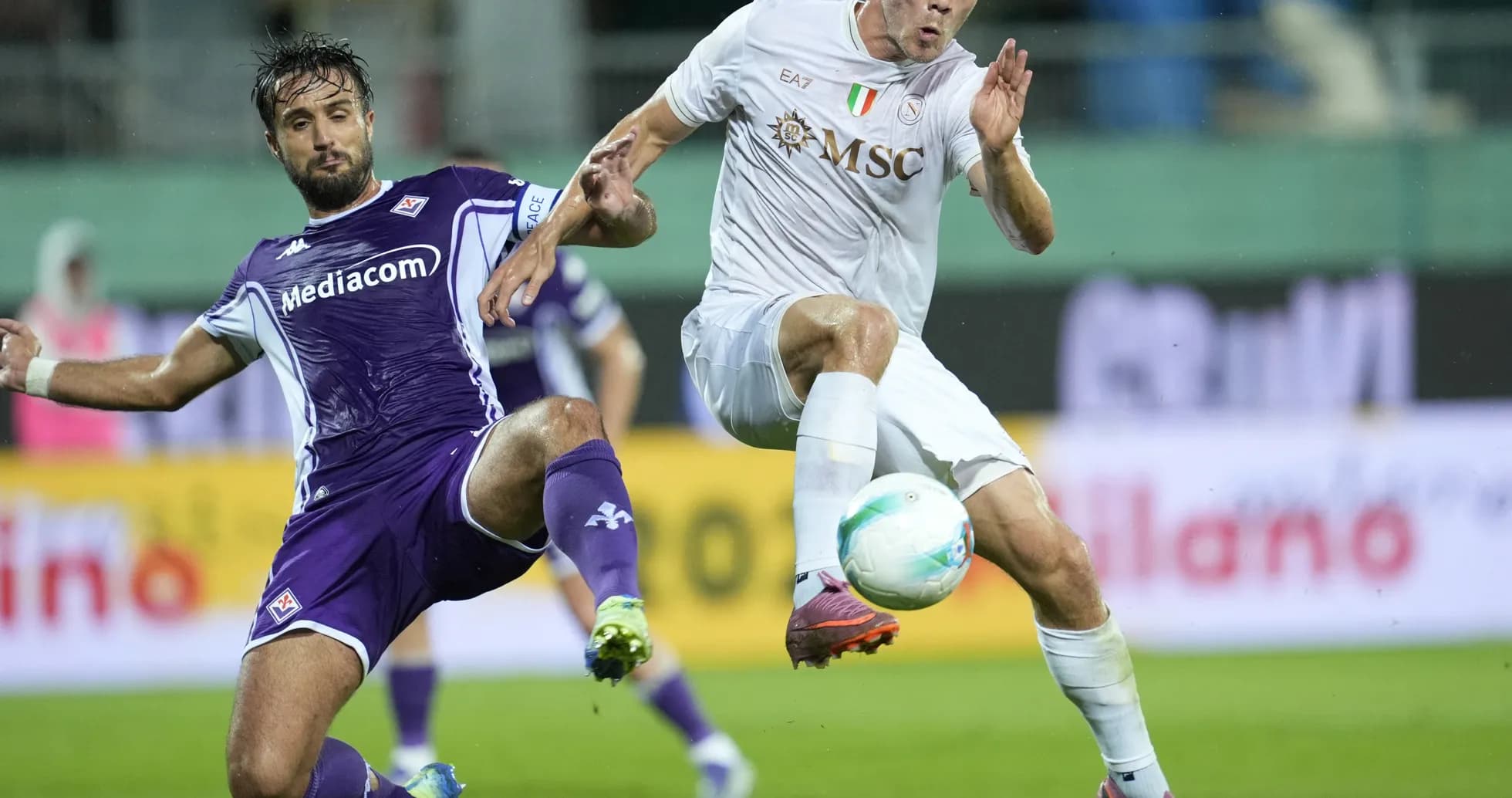
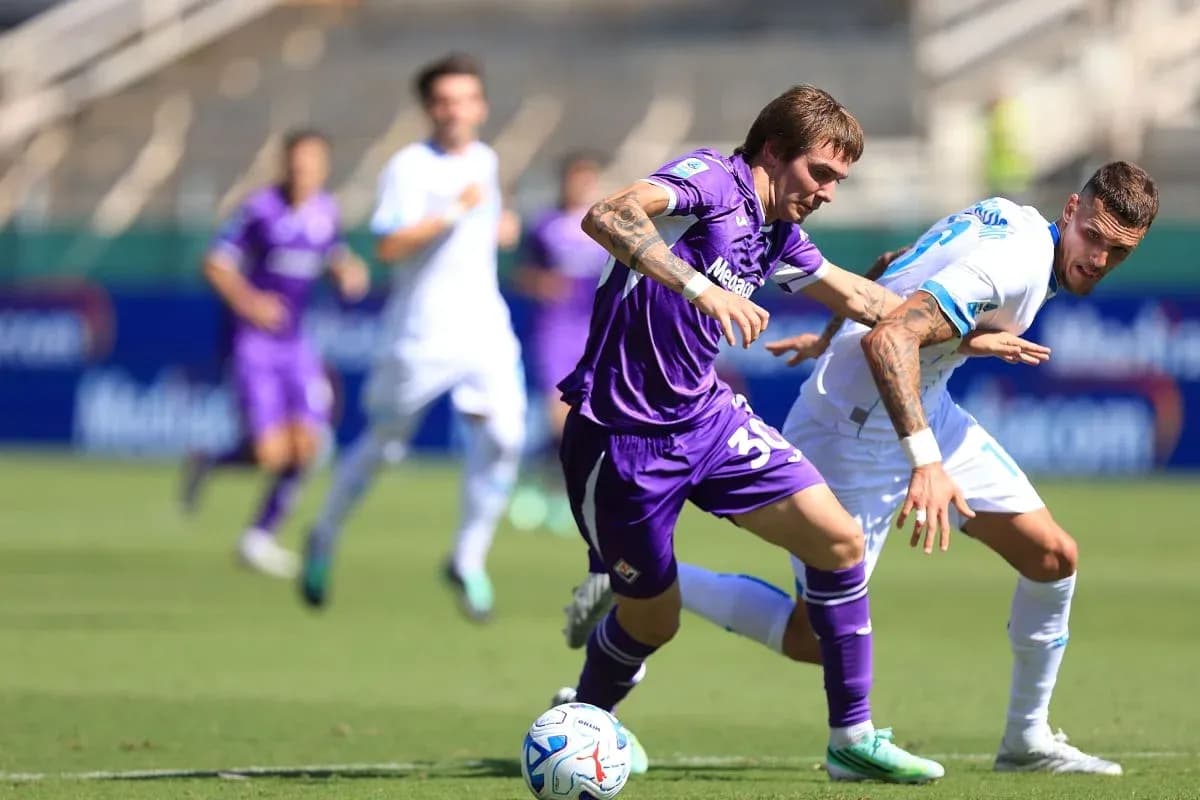
Under a sharp Tuscan sun at Stadio Artemio Franchi, Fiorentina and Napoli shared a 1-1 draw that felt less like a stalemate and more like a tactical negotiation between two teams at very different stages of their Serie A journey.
For Fiorentina, 17th in the table with 4 points and a goal difference of -6 heading into this game, this was less about spectacle and more about survival. Napoli arrived in Florence sitting 9th with 7 points and a goal difference of 1, a side still carrying the aura of a contender even if their early-season form has been uneven.
The tone of the afternoon was set by the lineups. Paolo Vanoli doubled down on Fiorentina’s identity with a 4-3-3, a structure that tried to marry defensive protection with the need to unleash their brightest talent: Franco Mastantuono. Officially listed as a forward here but functioning in the half-spaces as a hybrid creator-finisher, the 18-year-old entered the match as Fiorentina’s top scorer in Serie A with 3 goals in 5 appearances, backed by 17 shots and 10 key passes. He was the purple flag bearer of a struggling side that had scored only 6 goals in total this season, conceding 12.
Behind him, the spine was pragmatic. David de Gea in goal, shielded by a back four of Viery, Luca Ranieri, Radu Dragusin and A. Jimenez, was tasked with stabilizing a defence that, heading into this game, was conceding an average of 2.0 goals at home and 2.4 overall. In midfield, C. Ndour, N. Fagioli and A. Atta formed a trio that mixed legs, technique and verticality, but also carried the burden of protecting a back line that had yet to keep a single clean sheet this campaign.
Up front, Mastantuono flanked M. Pellegrino and A. Njie, a front three built more on promise than proven output. Fiorentina’s home record before this fixture was stark: 0 wins, 1 draw, 2 defeats, with just 2 goals scored and 6 conceded. The 4-3-3 was less a romantic statement than a calculated risk: if they were going to climb away from the bottom, they would need their young star to drag them there.
Across the pitch, Massimiliano Allegri’s Napoli arrived with a different kind of tension. The 4-2-3-1 on the teamsheet was a subtle evolution from their more frequent 4-3-3 this season, a shape designed to put Kevin De Bruyne at the heart of everything. With V. Milinkovic-Savic in goal and a back four of M. Olivera, R. Marin, Amir Rrahmani and Giovanni Di Lorenzo, Napoli could afford to hold a higher line, supported by the double pivot of B. Gilmour and Stanislav Lobotka.
Ahead of them, the attacking band of three – N. Lang on the left, De Bruyne centrally, M. Politano on the right – orbited around Rasmus Hojlund as the lone striker. Napoli’s offensive profile heading into this match was solid if unspectacular: 7 goals in total, with 5 of those coming on their travels at an average of 1.7 away goals per game. Crucially, they had also shown defensive balance, conceding just 4 away goals at an average of 1.3, and keeping 2 clean sheets overall.
The absences framed the tactical voids. Fiorentina were without F. Parisi and R. Sottil, both sidelined with injuries, stripping Vanoli of a natural left-back option and a direct wide threat. That placed more responsibility on Viery to hold the flank and on Mastantuono and Njie to stretch Napoli in transition.
Napoli’s injury list was longer and more structural: Alisson Santos, A. Buongiorno, Giovane, L. Marianucci, S. McTominay, A. Meret and L. Spinazzola all missing. The absence of Buongiorno and Spinazzola narrowed Allegri’s defensive rotation and pushed Marin and Olivera into prominent roles. Without McTominay, Napoli’s midfield lost a more physical, box-to-box presence, forcing Gilmour and Lobotka to manage both build-up and defensive coverage.
Within that framework, the key matchups wrote themselves. The “Hunter vs Shield” duel was Mastantuono against Napoli’s central defence and Milinkovic-Savic. With 3 goals already and a willingness to shoot from range, the Argentine teenager was Fiorentina’s primary route to goal against a Napoli back line that, while relatively solid, had shown vulnerability in away defeats, including a 3-2 loss on their travels.
On the other side, Hojlund’s battle with Dragusin and Ranieri was equally decisive. Napoli’s away scoring profile suggested they would create enough chances; the question was whether Fiorentina’s centre-backs, who had already endured a 0-3 home loss this season, could hold the line long enough for their attack to respond.
In the “Engine Room,” De Bruyne against Fagioli and Ndour was the tactical hinge. De Bruyne’s freedom between the lines threatened to overload Fiorentina’s midfield three, especially with Lobotka and Gilmour recycling possession behind him. For Fiorentina, Fagioli’s ability to connect first and second phases was vital; if he could not find Mastantuono and Pellegrino early, Napoli’s press would suffocate the hosts.
Disciplinary trends added another layer. Fiorentina’s yellow cards this season had clustered late, with 33.33% arriving between 61-75 minutes and 22.22% between 76-90. Napoli’s bookings skewed towards the end of the first half, with 50.00% between 31-45 minutes. That dynamic hinted at a game where Fiorentina might grow increasingly desperate in the final quarter-hour, while Napoli’s intensity could spike just before the interval.
In the end, the 1-1 scoreline reflected the statistical balance. Fiorentina, a side averaging 1.2 goals overall but conceding heavily, managed to find a way through without collapsing. Napoli, who typically score 1.7 on their travels and concede 1.3, landed somewhere in the middle of their expected range.
From a broader lens, the draw offers different narratives. For Fiorentina, it is a small but vital stabilising point in a season where their defensive numbers still scream danger. For Napoli, it is a missed opportunity to climb, but also a reminder that even with a patched-up squad, their structure and individual quality – especially in that De Bruyne-led attacking band – will keep them in every game.
The story that lingers, though, belongs to Mastantuono. In a side fighting gravity near the bottom, he continues to play like a man already rewriting the script.