Feyenoord's Win Overshadowed by Fireworks Incident at SC Cambuur
Feyenoord’s five-goal win at SC Cambuur should have been about football. It wasn’t.
By the time the visitors walked off with a 5-2 Eredivisie victory, the story of the afternoon in Leeuwarden had already been written in smoke, sirens and shock.
Flares, Fireworks and a Ten-Minute Halt
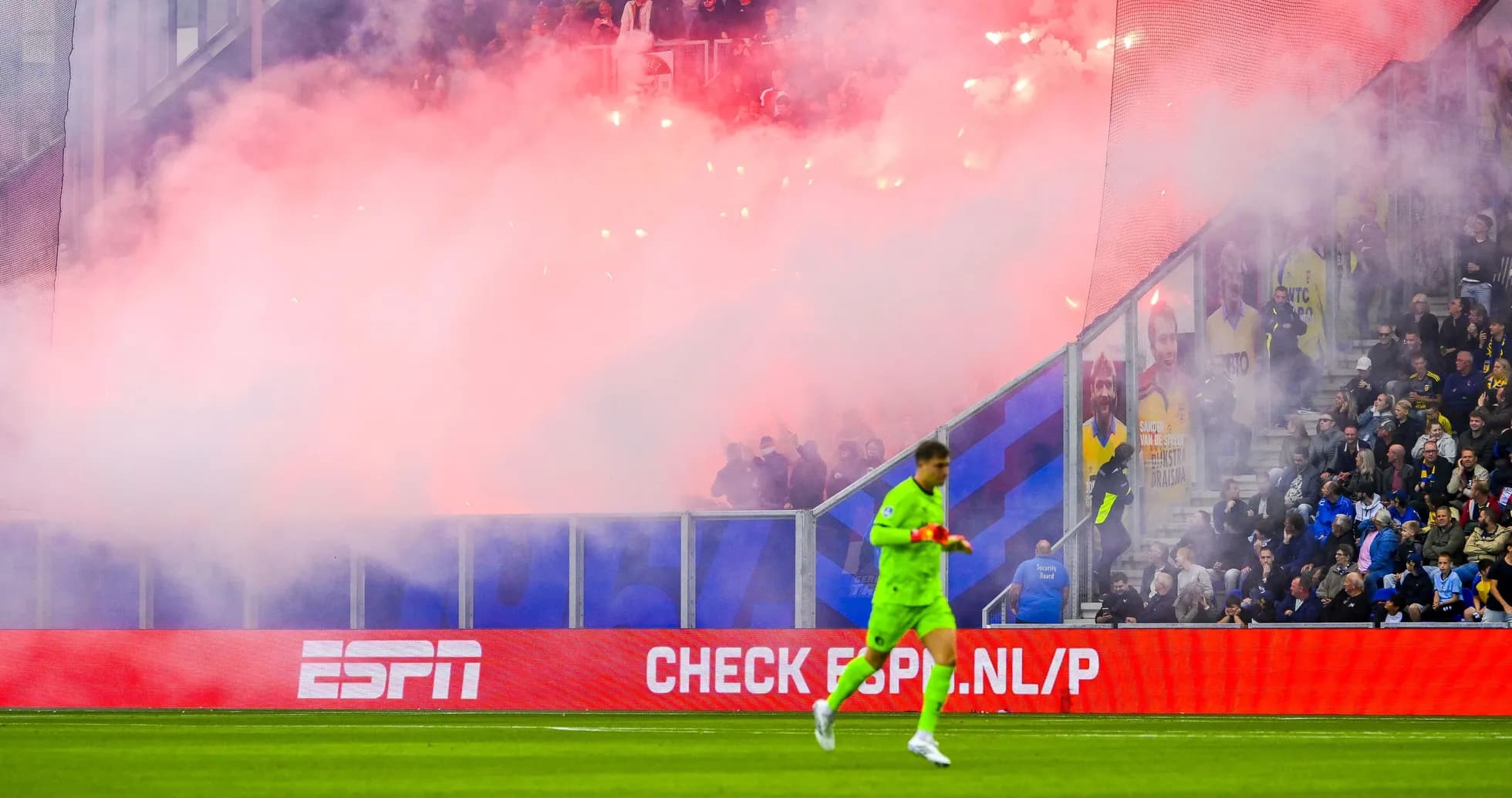
The trouble erupted early. In the 12th minute at the Kooi Stadion, the away section lit up in a sea of red as Feyenoord supporters set off a barrage of flares. Then came the fireworks.
Projectiles were fired onto the pitch and towards the home end, forcing the referee to act. With smoke drifting across the playing surface and explosions landing dangerously close to the touchline, the officials led both sets of players back down the tunnel. Play was halted for around 10 minutes.
One blast landed just metres from Feyenoord goalkeeper Tjark Ernst. It missed, but it underlined how close the afternoon came to a serious, possibly career-ending injury.
When the match finally resumed, the damage in the stands was already done.
Injured Fans and a Shaken Club
Cambuur later confirmed the grim toll. In a detailed medical update after the game, the club revealed that five home supporters had been injured in the incident.
The injuries were not minor. The club said fans had suffered burns, hearing damage and eye injuries after fireworks were fired directly into the home seating areas. For a club only recently back in the Dutch top flight after three seasons away, it was a brutal way to mark their return to high-level football.
On the pitch, Cambuur were outclassed. Off it, they were left to count the cost of a failure to keep their own people safe.
Feyenoord Win, but Leave With Apologies
Feyenoord’s performance should have been the talking point. Five goals away from home, three points secured, a statement win. Instead, the mood around the Rotterdam side was subdued.
Head coach Giovanni van Bronckhorst moved quickly after the final whistle. The former assistant to Arne Slot at Liverpool personally apologized to the Cambuur hierarchy on behalf of Feyenoord, acknowledging the severity of what had unfolded in the away end.
The club then released a stark statement. Feyenoord said it “firmly distances itself from the unacceptable events” and promised internal action. The club has already committed to requesting and reviewing all available camera footage to identify those responsible for what it described as life-threatening behaviour.
General manager Robert Eenhoorn cut a visibly distraught figure when he spoke post-match. The result, he made clear, meant little.
“I cannot be happy,” he admitted. “Frustration prevails too much for that. This problem obviously does not only affect Feyenoord and is unfortunately something we have been unable to put a stop to for decades. We will therefore have to sit down again with all stakeholders, clubs, the KNVB [Dutch football association], and the authorities to look for a solution together.”
The message was blunt: this is bigger than one club, and it has been allowed to fester for years.
Cambuur and City Authorities Demand Answers
Cambuur’s response carried a similar edge. The club’s administration pledged a full investigation, working alongside local police and government officials to establish how such a dangerous situation was allowed to develop.
In their official communication, Cambuur did not soften their language. “It should be clear that setting off and firing fireworks is completely unacceptable and has no place in a football stadium whatsoever,” the club stated.
The anger was not confined to the club offices. Leeuwarden mayor Foort van Oosten condemned the incident in the strongest terms and promised a thorough investigation into how such a large quantity of pyrotechnics had been smuggled into the Kooi Stadion.
Attention now turns to the turnstiles, the stewards, the searches. How did that volume of flares and fireworks get through on a routine league weekend?
A League Problem, Not a One-Off
This was not an isolated flashpoint. Dutch football has been wrestling with escalating fan disorder, and the images from Leeuwarden fit a troubling pattern.
Last season, a match between Ajax and Groningen was abandoned after similar use of flares and fireworks. The warning signs have been there. The question is whether anyone has done enough to heed them.
The scenes at Cambuur have intensified scrutiny on security protocols across Eredivisie grounds. Clubs, local authorities and the KNVB now face renewed pressure to tighten controls and impose harsher sanctions on those who bring pyrotechnics into stadiums.
KNVB Under Fire Over Protocols
One decision has sparked particular fury: the choice to let the match continue despite five supporters being injured.
Under current KNVB rules, a game must be permanently abandoned if a player or match official is hit. The regulations are far less explicit when the victims are in the stands.
Jan Bluyssen, the KNVB’s manager of professional football competition affairs, did not try to dress that up. Speaking to Dutch news agency ANP, he admitted the optics of playing on were troubling. “That doesn’t feel right,” he said.
That single line has turned up the heat on the governing body. If fan safety is not an automatic trigger to stop a game, what does that say about priorities?
The KNVB has confirmed it will revisit its protocols for dealing with disorder, with a clear promise that supporter safety must come before the completion of any fixture. The pressure now is to turn those words into hard rules and meaningful punishments.
Because the next time a firework lands a few metres short, Dutch football might not be so lucky.