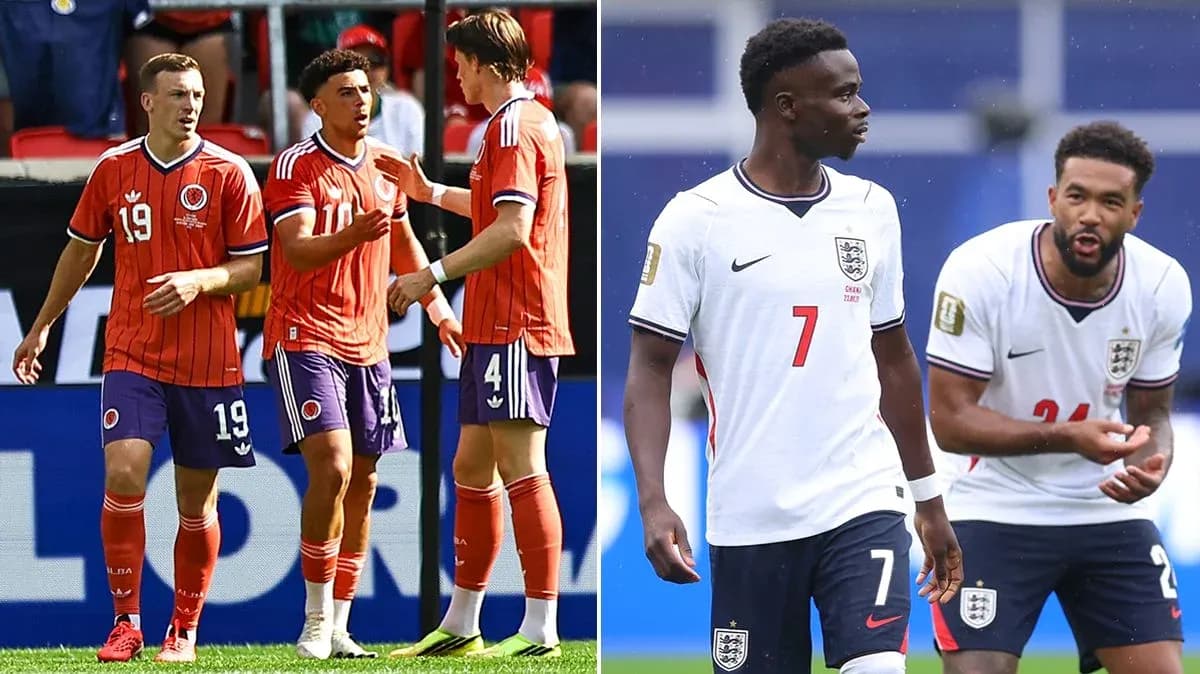
England vs Panama: Bellingham's Warning and Scotland's Brazil Challenge
The World Cup has reached that awkward middle act. Nerves fray, legs tire, and the margins tighten. England felt all of it in Boston.
Thomas Tuchel’s side trudged away from a flat 0-0 with Ghana, denied early qualification and stripped of momentum, but not of belief. At the centre of it all, again, stood Jude Bellingham.
Bellingham’s warning: ‘second game fever’
Bellingham, named man of the match on a night short on highlights, tried to drag the conversation away from panic and towards perspective. He called it “second game fever” – England’s fourth straight draw in the second match of a major tournament, stretching back to Euro 2020.
The pattern is familiar: fast start, stumble, reset. England had Croatia beaten in their opener; against Ghana, they never quite found the rhythm. Half-chances came and went, Nico O’Reilly rattled the underside of the bar, Harry Kane blazed over from seven yards, and that was that.
Bellingham’s message was simple: roll with it, learn from it, and move on. England now look to Saturday and Panama, knowing a win would secure top spot in Group L and restore the swagger that briefly flickered in Dallas.
The draw, though, has triggered ripples far beyond the scoreboard.
FIFA complaint drags Bellingham into World Cup storm
Reports in Spain claim Paraguay have filed an official protest with FIFA after Bellingham escaped punishment for covering his mouth while talking to Jordan Ayew.
Under a new World Cup directive, players can be sent off for shielding their mouths during confrontations. Miguel Almiron became the first to walk under the law in Paraguay’s win over Turkiye, dismissed after VAR intervened.
Bellingham, though, spoke to Ayew without any hint of aggression and received no card. Paraguay’s federation argue the rule is being applied inconsistently and want answers. FIFA now find themselves juggling a disciplinary row in the middle of a tournament already wrestling with weather delays and scheduling headaches.
Kane shrugs off miss – and the ‘over-reliance’ debate
While the storm brews off the pitch, Kane has chosen not to create one on it.
The England captain, who had barely a sniff until that late, glaring miss against Ghana, refused to dwell on the chance that would usually nestle in the top corner. For him, it’s the life of a No 9: some go in that shouldn’t, some don’t that normally would. Score and you’re the saviour; miss and the questions arrive.
He insists there is no unhealthy dependence on his goals, a view echoed inside the camp. Eberechi Eze pointed to the depth of creativity around Kane and framed the Ghana stalemate as part of a long journey, not a derailment. The mood is calm rather than euphoric, measured rather than anxious.
Off the pitch, the narrative has taken a more surreal turn. Ghanaian “witch doctor” Nana Kwaku Bonsam has claimed credit for Kane’s blank in Boston, boasting of a spell to stop him scoring – and now says he has “released” the striker ahead of the Panama game. England’s analysts will care more about xG than hexes, but the story underlines the kind of theatre this tournament is generating.
Rice walks a disciplinary tightrope
Declan Rice, one of England’s better performers against Ghana, left Boston Stadium with his leg strapped and a yellow card to his name.
The booking for a foul on Jerome Opoku was England’s first of the tournament and leaves Rice one caution away from a one-game ban. Under FIFA rules, two yellows before the end of the group stage mean an automatic suspension; single cards are wiped after the groups conclude.
Medically, there is no major concern reported, but Rice and Reece James will both be assessed before Tuchel decides whether to risk them against Panama. Resting Rice would protect him from both injury and suspension – but it would also remove the side’s midfield anchor in a game that still matters for seeding.
England fans praised as off-field row simmers
If the football stuttered, the travelling support did not. Around 30,000 England fans packed into Boston’s stadium, with UK Football Policing chiefs describing their behaviour as “exemplary”. No arrests, no trouble, just relentless backing.
Local authorities in both Boston and Dallas have also highlighted the contribution of Scotland’s fans, whose numbers and noise have turned US venues into pockets of Tartan blue.
As things stand, the tournament’s logistics throw up a tantalising prospect: England, top of Group L, and Scotland, currently third in Group C, are on course to collide in the last 16 in Mexico City on July 6. That, though, depends on what happens next – particularly in Miami.
Scotland’s date with Brazil – and history
While England wrestle with frustration, Scotland face something altogether different: Brazil, Neymar, and the chance to change their footballing story.
Steve Clarke’s side arrive in Miami with their World Cup hopes balanced on a knife-edge. A laboured 1-0 win over Haiti, followed by a 1-0 defeat to Morocco sealed by Ismael Saibari’s strike inside 70 seconds, has left them needing a result – or at least avoiding a heavy beating – against the five-time champions.
The permutations are dizzying but clear in essence. Beat Brazil and Scotland are through, possibly as group winners if Morocco falter against Haiti. A draw would almost certainly be enough to take them to four points, a total that usually secures progression as one of the best third-placed teams. Lose narrowly and they might still squeeze into the last 32, clinging to goal difference and hoping other groups descend into stalemates.
Lose heavily and the dream almost certainly dies.
Ancelotti sounds the alarm: ‘fighters’ await Brazil
Carlo Ancelotti knows exactly what’s at stake – for both sides.
The Brazil coach has warned his players to expect a night of collisions and intensity from Scotland, calling Clarke’s men a team of “fighters” with real quality. He namechecked Scott McTominay and John McGinn as experienced operators and dismissed the idea of any easy games at this World Cup.
Brazil, who found their stride with a 3-0 win over Haiti, will be boosted by the return of Neymar. The forward has yet to feature at these finals due to a calf problem but has trained fully and is, in Ancelotti’s words, “fit and able and ready to play”. Whether he gets 45 minutes or the full 90, his presence changes the temperature of the contest.
Barcelona’s Raphinha, though, misses out with a hamstring injury, trimming Brazil’s wide options. That places even more focus on Neymar’s creativity and leadership – and on Scotland’s ability to contain him.
Tartan Army turns Miami into a carnival
If Brazil bring the pedigree, Scotland bring the party.
Miami’s beaches have been awash with kilts, flags and the sound of bagpipes as the Tartan Army have traded Boston ballparks for South Beach sunshine. Local police have praised the “unforgettable atmosphere” created by the Scots, whose reputation as one of the game’s most colourful travelling supports has only grown.
On matchday, they will pour into a stadium where kick-off is synchronised with Morocco vs Haiti. FIFA’s insistence on simultaneous final group games dates back to the “Disgrace of Gijón” in 1982, when West Germany and Austria were accused of playing out a mutually beneficial 1-0 to eliminate Algeria. The rule is designed to keep everything honest; in Miami, it will also keep Scotland’s nerves jangling until the final whistle.
Ronaldo roars back, Germany refuse to coast
Away from the British storyline, the World Cup’s other giants continue to shape the landscape.
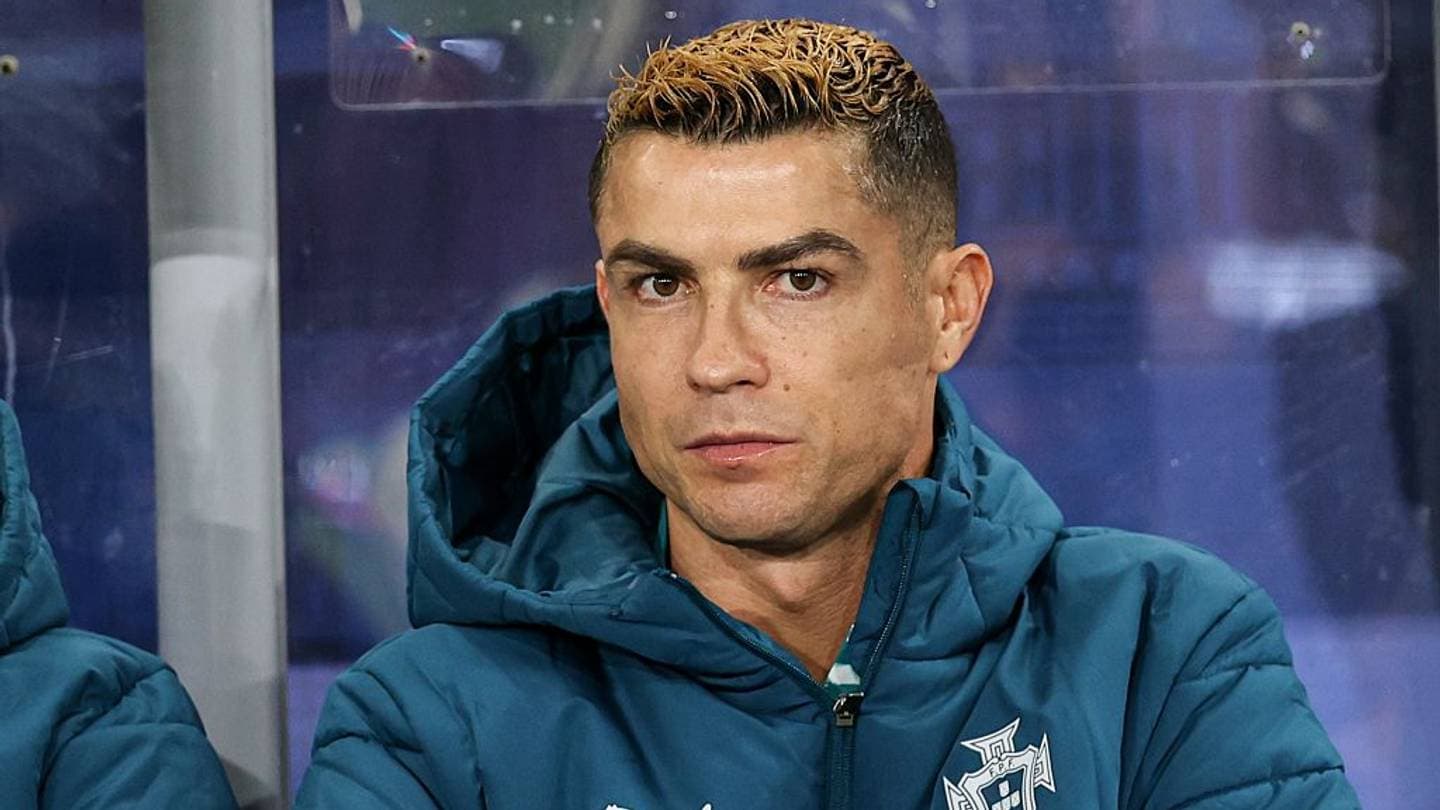
Cristiano Ronaldo, written off in some quarters after a poor display against DR Congo, roared back with a brace in Portugal’s 5-0 demolition of Uzbekistan. He declared himself “back” afterwards; Bruno Fernandes, who created Ronaldo’s second, admitted it was a relief for the squad to see their captain scoring again. Portugal now face Colombia in Miami on Saturday with top spot in Group K on the line.
Germany, already through, have no intention of easing off either. Midfielder Nadiem Amiri says their clash with Ecuador will be treated “like a final”, stressing the need to maintain momentum and respect the integrity of the group by going full tilt, even with qualification secured.
Weather, rules and the lurking fear of manipulation
FIFA, meanwhile, are bracing for complications of a different kind.
Severe storms have already disrupted France’s meeting with Iraq, stretching that game to almost four hours from kick-off. With the final round of group fixtures looming, there is concern that lightning or heavy rain could force staggered kick-offs, undermining the principle of simultaneous matches that was brought in to prevent collusion.
Tournament regulations state that final group games must start at the same time unless FIFA invoke force majeure. There is no bespoke weather clause, which leaves the governing body walking a tightrope between safety and sporting integrity should the skies open again.
Injuries, knocks and selection gambles
All over the tournament, coaches are juggling risk and reward.
Declan Rice and Reece James await medical checks before Tuchel decides whether to rotate against Panama. Christian Pulisic, who missed USA’s win over Australia after a knock against Paraguay, has given a one-word answer – “yes” – when asked if he will be fit to face Turkiye in California.
Argentina, already assured of topping Group J, are in no mood to ease up either. Lionel Scaloni plans to use Lionel Messi against Jordan in Dallas, with the captain keen to play at least a half as he chases the Golden Boot after five goals in two games. Cristian Romero, nursing a muscle issue, is expected to sit out until the last 16, while Scaloni prepares to rotate around his star man.
In Sweden’s camp, Graham Potter has gone on the offensive to protect captain Isak Hien after a brutal 5-1 defeat to the Netherlands in which the defender was blamed for three goals. Potter has made it clear Hien remains his leader and will not be made a scapegoat ahead of a crucial meeting with Japan.
Off the pitch: tickets, tremors and policing
The World Cup’s backdrop remains as noisy as the football.
Former UK prime minister Gordon Brown has called for an inquiry into ticket prices, accusing FIFA of “pricing ordinary fans out” with final tickets said to be 30 to 40 times more expensive than those for the Euro final in Germany. He wants a full review once the tournament ends and a commitment to more affordable pricing for families.
On the other side of the Atlantic, a magnitude 5.6 earthquake shook Mendocino County in California, with tremors felt as far as Sacramento, a day before USA’s decisive group game with Turkiye in Los Angeles. Authorities confirmed there was no tsunami warning, but it was a stark reminder of the unpredictable conditions this tournament is being played under.
Through it all, one constant has been the behaviour of supporters. Police chiefs from the UK and US have repeatedly praised both England and Scotland fans for their conduct, describing the atmosphere in host cities as welcoming, vibrant and largely trouble-free.
So the stage is set. England, bruised but unbeaten, chase fluency and first place against Panama. Scotland, fuelled by sun, song and a lifetime of near-misses, stare down Brazil and the weight of history.
One nation looks for a reset. The other for a breakthrough.
By the end of the week, will the path still point towards a World Cup showdown in Mexico City – or will one half of this old rivalry be watching the other from home?