England 2-1 Congo DR: Match Report and Tactical Analysis
England 2-1 Congo DR at Mercedes-Benz Stadium sends Thomas Tuchel’s side into the next phase of the World Cup with momentum, turning around an early deficit to convert group-stage authority into knockout resilience. England, who move from 7 to 10 points in the competition with their goals-for tally rising from 6 to 8 and goals-against from 2 to 3 (new goal difference +5), underline their status as Round of 32 favourites, while Congo DR’s brave effort ends with their points total fixed at 4, goals for moving from 4 to 5 and against from 3 to 5 (new goal difference 0) as they exit after a narrow defeat.
Match Report
The game opened with a shock for England. On 7' Congo DR goal — B. Cipenga (Congo DR) (assisted by C. Mbemba) finished clinically from a set attack, punishing hesitant English defending to make it 0-1.
England’s frustration grew when, on 19' J. Bellingham (England) — yellow card (Tripping), the midfielder was booked for a late challenge as he tried to inject intensity into England’s press.
Congo DR then picked up a caution of their own: 28' N. Sadiki (Congo DR) — yellow card (Tripping), after a mistimed tackle in midfield halted an English transition.
Tuchel moved early in the second half to change the game state. On 61' A. Gordon replaced M. Rashford (England), adding directness on the left, and simultaneously 61' B. Saka replaced N. Madueke (England), bringing more incision from the right.
Congo DR responded with fresh legs in attack: 64' M. Elia replaced N. Mbuku (Congo DR), aiming to stretch England on the counter.
England continued to adjust their structure, with 70' E. Eze replaced D. Spence (England), a bold move that effectively shifted England’s balance further towards ball progression and central creativity.
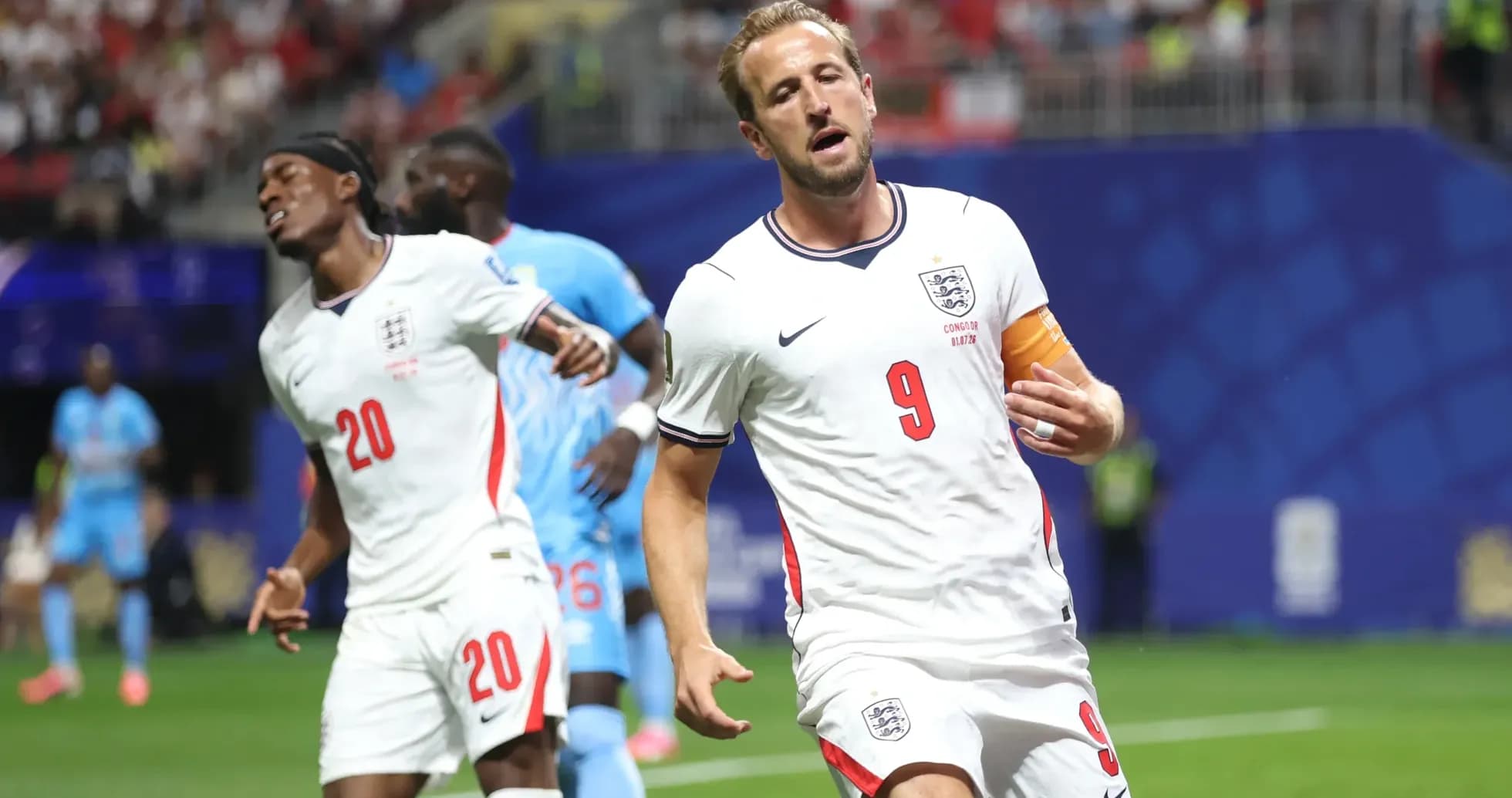
The pressure finally told. On 75' England goal — H. Kane (assisted by A. Gordon). Gordon, already influential from the left, delivered the key service for Kane to level at 1-1, rewarding England’s territorial dominance.
Congo DR then refreshed their midfield and attack to regain control: 76' E. Kayembe replaced N. Mukau (Congo DR) to add fresh energy in the middle, and 76' T. Bongonda replaced B. Cipenga (Congo DR), withdrawing their scorer to introduce more guile between the lines.
But England’s captain struck again late. On 86' England goal — H. Kane (assisted by A. Gordon). Once more, Gordon created and Kane applied the finish, a near-replica pattern that turned the match on its head at 2-1 and showcased the impact of Tuchel’s substitutions.
As Congo DR chased an equaliser, they reshaped their back line and midfield: 89' J. Kayembe replaced A. Masuaku (Congo DR), altering the left side of defence, and 89' F. Mayele replaced S. Moutoussamy (Congo DR), adding a more attacking profile from midfield.
England’s final change came in stoppage time to lock down the result: 90+1' J. Stones replaced D. Rice (England), introducing an extra defender to protect the narrow 2-1 lead through the closing moments.
Fixture Statistics & Tactical Audit
- xG: England 2.04 vs 0.8 Congo DR
- Possession: England 60% vs 40% Congo DR
- Shots on Target: England 7 vs 2 Congo DR
- Goalkeeper Saves: England 1 vs 5 Congo DR
- Blocked Shots: England 3 vs 2 Congo DR
The underlying numbers strongly support England’s comeback. With higher xG (2.04 vs 0.8), more shots on target (7 vs 2) and clear territorial control (60% possession vs 40%), Tuchel’s side systematically wore down Congo DR. The visitors’ early goal came against the general flow and forced England to chase, but Congo DR’s goalkeeper Lionel Mpasi Nzau was heavily worked (5 saves mirroring England’s 7 efforts on target with two goals conceded), illustrating how often England accessed high-quality shooting zones. Congo DR’s limited shot volume and low xG highlight a game plan built on compact defending and counters; once England’s wide substitutions tilted the contest, that defensive block came under sustained, and ultimately decisive, pressure.
Standings Update & Seasonal Impact
England advance from the Round of 32 with their record in the competition improving from 7 to 10 points, goals for rising from 6 to 8 and goals against from 2 to 3, for a new goal difference of +5. Already positioned as group leaders coming into the knockout phase, they now carry both form and statistical dominance into the last 16, underlining their status as one of the tournament’s most balanced sides in attack and defence.
Congo DR, who entered the Round of 32 on 4 points with a +1 goal difference (4 scored, 3 conceded), finish their campaign still on 4 points but with 5 goals scored and 5 conceded, leaving them on a neutral goal difference of 0. Their exit comes despite competitive group-stage form, and this narrow defeat shows they could trouble higher-ranked opposition but lacked the attacking depth to sustain a lead against a top seed over 90 minutes.
Lineups & Personnel
England Starting XI
- GK: Jordan Pickford
- DF: Djed Spence, Ezri Konsa, Marc Guéhi, Nico O'Reilly
- MF: Elliot Anderson, Declan Rice, Noni Madueke, Jude Bellingham, Marcus Rashford
- FW: Harry Kane
Congo DR Starting XI
- GK: Lionel Mpasi Nzau
- DF: Aaron Wan-Bissaka, Chancel Mbemba, Axel Tuanzebe, Arthur Masuaku
- MF: Ngal'ayel Mukau, Samuel Moutoussamy, Noah Sadiki
- FW: Nathanaël Mbuku, Yoane Wissa, Brian Cipenga
Post-Match Verdict
England’s display was ultimately clinical in the final third (2 goals from 2.04 xG and 7 shots on target) and dominant in territorial control (60% possession and 16 total shots), but it required decisive in-game management to unlock Congo DR. The introduction of Anthony Gordon and Bukayo Saka transformed the attacking dynamics, with Gordon directly assisting both of Harry Kane’s goals, turning sterile first-half pressure into clear chances. Defensively, England restricted Congo DR to just 2 shots on target and 0.8 xG, showing structural control after the early lapse.
For Congo DR, this was a disciplined but ultimately vulnerable defensive performance (conceding 16 shots and 2.04 xG), anchored by a busy goalkeeper who made 5 saves to keep them competitive deep into the match. Their attacking output faded after the opening goal, with only 7 total shots and limited presence inside the box (2 shots inside the area), underscoring a reliance on moments rather than sustained pressure. In the end, England’s superior shot quality and bench impact justified the 2-1 scoreline and highlighted the gap in depth and attacking variety between the sides at this stage of the World Cup.