Dominik Szoboszlai's Response to Criticism Shines Against Tottenham
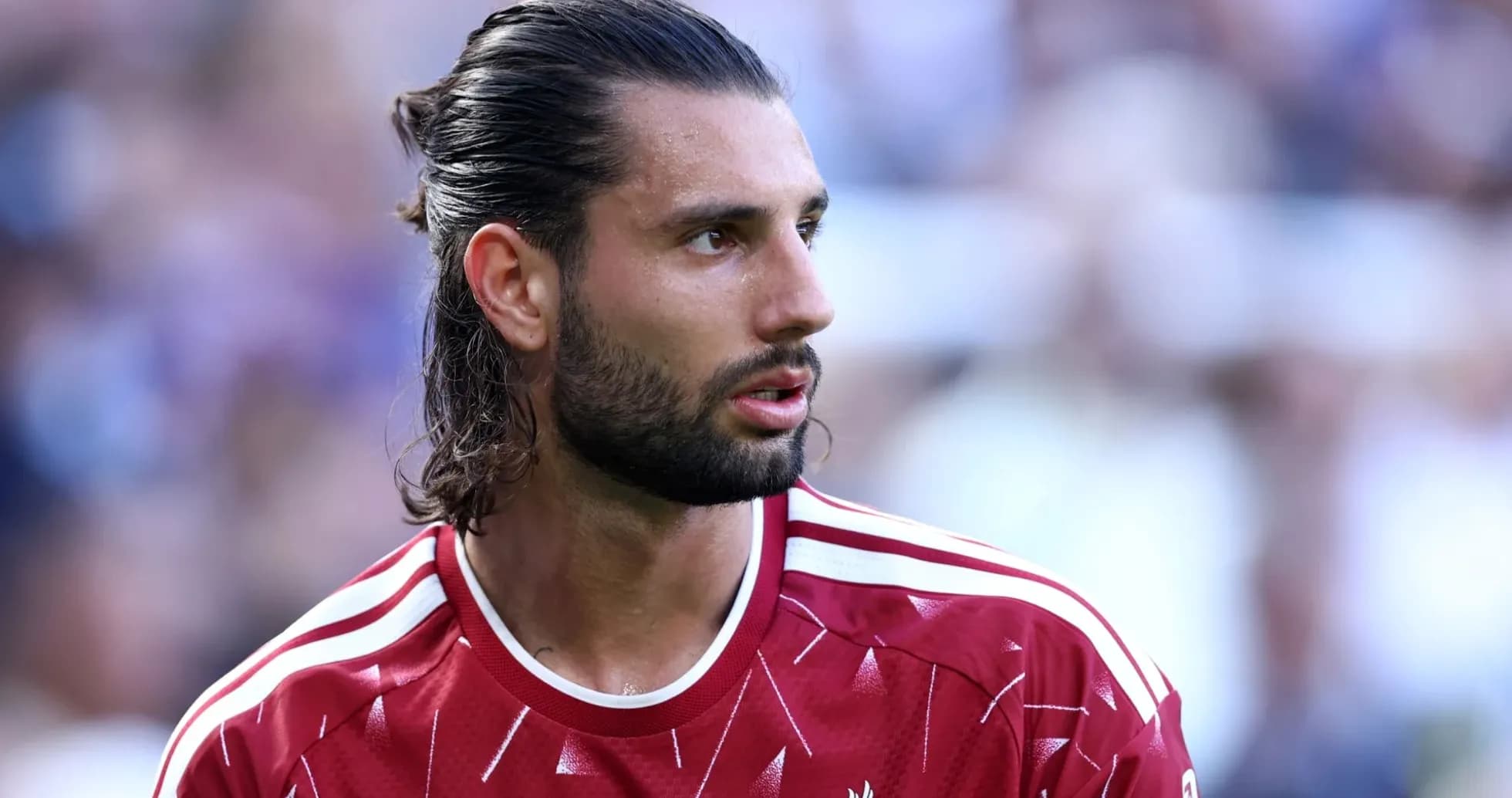
Dominik Szoboszlai didn’t bother scrolling through the criticism. He answered it instead – with his right foot.
Under the Anfield lights in the Carabao Cup, the Hungarian drove Liverpool past Tottenham with a performance that cut straight through the noise, capped by a thunderous long-range strike in a 3-1 win that jolted the stadium and reset the narrative around his form.
“Was there a criticism? I don't know, I didn't see but thanks for telling me,” he said afterwards, the hint of a smile wrapped around a sharper point. “You know this goal [against Spurs] was for the people who are always next to me because we are also humans so we can have bad games.”
That line mattered. Because the build-up to this tie had been about his struggles, not his strengths.
From Fulham frustration to Spurs statement
Just days earlier, Szoboszlai had trudged off at Craven Cottage after one of his toughest outings in a Liverpool shirt. In the 0-0 draw with Fulham he won only one of his 10 duels, a stat that ricocheted around pundit panels and social media feeds. The debate kicked off immediately: wrong position, wrong role, wrong use of his talent?
Under Andoni Iraola, Liverpool’s midfield has been ripped up and reimagined. High tempo, high risk, constant movement. Szoboszlai has been dropped into the heart of that experiment.
He’s not just an attacking midfielder any more. He’s a connector, a presser, a runner, a shooter – and, at times, a firefighter.
“I think you guys see a little bit different because we play with one 6, one 8 and one 10,” he explained. “So the 6 and the 8 are not next to each other, the 8 is a little bit higher and the 6 is a little bit deeper and the 10 is a little bit even higher so it is not two next to each other.”
It was a rare glimpse into the mechanics of Iraola’s system from the man living inside it. The roles are layered, not linear, and Szoboszlai has been asked to wear almost all of them.
“Last week against Fulham I was a No. 8, I have been No. 2 as well, I have been No. 6, No. 8, No. 10, No. 7 also,” he added. The numbers kept coming; the point stayed the same. Versatility is not a compliment on paper – it’s a weekly reality for him on the pitch.
A manager’s Swiss army knife
While supporters argue over his best position – closer to goal as a No. 10, or deeper as a playmaking 8 – Iraola has leaned into his adaptability. Injuries, tactical tweaks, and the demands of a new pressing structure have turned Szoboszlai into the manager’s Swiss army knife.
He doesn’t sound remotely bothered by that.
“No, I just want to be on the pitch,” he said. “Maybe I am not at the best in the 6 position because I win one of the 10 duels, maybe next the game I am going to win eight out of 10, so I am then a good 6? So it's always balance.”
It was a sharp response, delivered without bluster. One bad game doesn’t make him a misfit. One outstanding one doesn’t suddenly define him as a specialist in a single role either. The truth, as he sees it, lies in the work between those extremes.
And against Spurs, that work was everywhere – in the intensity without the ball, in the bravery to keep demanding it, and in the sheer audacity of that long-range strike that ripped into the top corner and reminded Anfield exactly why Liverpool signed him.
Reaction over reputation
The win over Tottenham booked a fourth-round Carabao Cup clash with Chelsea, another high-stakes night on the horizon. But the rhythm of the season doesn’t allow much time to savour it.
Next up: Bournemouth in the Premier League on Sunday. Another test, another chance for Szoboszlai to show that Spurs was not a one-off response, but the standard he intends to set.
At a club like Liverpool, the conversation never really stops. Form, tactics, roles, numbers – everything gets pulled apart. Szoboszlai knows that. He just refuses to live inside the noise.
“There will be games where we are not playing at our best as a team, as personally me or somebody else,” he said. “But trust me it is always leave the past and then the next one, the next one, the reaction is what matters.”
He’s delivered his first big reaction. The question now is simple: how often can he hit that level, and how far can it drive Liverpool’s season?