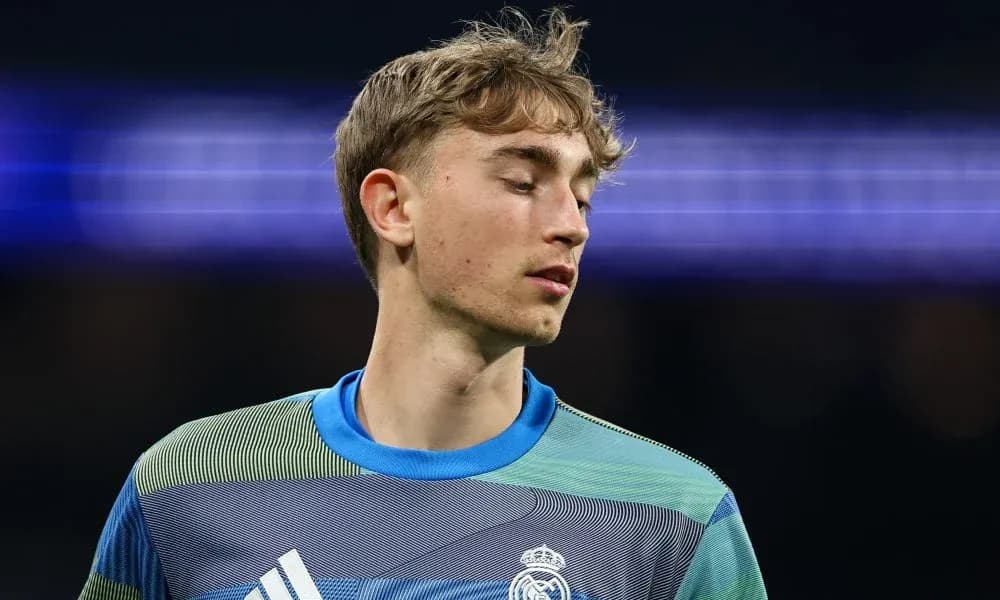
Dean Huijsen: From Promise to Pillar at Real Madrid
Dean Huijsen walked into Valdebebas this summer with a different number on his back and a very simple mission in front of him: stop being a promise, start being a pillar.
The 21-year-old is expected to start against Deportivo La Coruña in the Teresa Herrera Trophy later today, another small but telling step in a pre-season that has already underlined how important this year will be for him. He has shaken off the minor injury that ruled him out of Real Madrid’s trip to Austria and is back in the mix at exactly the right time.
From instant impact to harsh lessons
His Real Madrid story is barely a year old. It began in June 2025 at the Club World Cup, a tournament the club did not win but one that quietly launched Huijsen onto the big stage.
While others stumbled, the young centre-back stood out as one of the brightest notes in Xabi Alonso’s side. Confident on the ball, aggressive in duels, he carried that form into the early weeks of La Liga. For a while, he looked like he had skipped the usual adaptation period entirely.
Then came Madrid’s first real slump of the season. Results dipped. So did Huijsen.
The confidence that had made him so eye-catching sometimes tipped into overconfidence. Concentration wavered. His level swung from excellent to erratic and, in a squad that offers no margin for prolonged dips, he eventually lost his status as an automatic starter.
The response came late, but it came. In the final stretch of the campaign he looked more controlled, more mature, and much closer to the defender Madrid thought they were building around. Now he wants that version of himself to be the standard, not the exception.
The No. 4 and the Mourinho factor
Huijsen has not been handed just any shirt. At Real Madrid, the No. 4 carries weight. It is a number associated with authority at the back, and the club’s decision to give it to him underlines how heavily they have invested in his future.
He sees himself as a future leader of the defence. The club clearly sees the same possibility.
He also has a powerful ally on the bench. Jose Mourinho knows Huijsen’s game better than most. During his time at AS Roma, Mourinho personally pushed to bring the defender in on loan. That spell in Serie A toughened Huijsen up and sped up his development before he made the leap to the Premier League and, eventually, to Madrid.
Now their paths cross again, this time at the Bernabeu, and the early signs in pre-season have been encouraging. Huijsen started both training matches at Valdebebas, staking out his territory before a minor physical issue briefly halted his rhythm and kept him off the plane to Austria for the first official friendly against Fiorentina.
He returned against Ferencvaros, playing the second half and using those 45 minutes to rebuild match sharpness and timing. It was not spectacular, but it was exactly what he needed: minutes, duels, repetitions.
Konaté arrives, the comfort zone disappears
If last season was about learning the level, this one is about surviving the competition.
David Alaba is gone. In his place, Ibrahima Konaté has walked through the doors of the Bernabeu, adding power, pace and serious competition to the centre-back group. For Huijsen, that changes the landscape.
He already understands Mourinho’s demands. The talent is there. The club’s faith is written on his back in the form of that No. 4. But none of that guarantees a starting role now that Konaté has joined the fight.
This season will be judged on something simpler: can he deliver the same level every three days? Can he turn flashes of potential into the steady presence required at the heart of Real Madrid’s defence?
The next few months will provide a very clear answer.
Camavinga and Tchouameni: Madrid’s midfield puzzle, United’s temptation
While Huijsen battles for his place at the back, Real Madrid’s summer has been dominated by questions in another area of the pitch. The midfield, once the most settled part of the squad, has turned into a board of moving pieces.
The club spent weeks weighing up what to do with their existing options, even as they moved for new talent. Bernardo Silva has arrived, adding another high-profile name to an already crowded room.
Within that context, Aurelien Tchouameni and Eduardo Camavinga have repeatedly appeared in conversations about potential exits. In Tchouameni’s case, that has happened despite him being understood to have agreed a new long-term deal, even if the club has yet to make anything official.
According to ESPN journalist Rob Dawson, speaking on the United Stand, Manchester United are watching both Frenchmen closely, ready to pounce if the situation shifts.
Camavinga on the market – at least in theory
Dawson revealed that intermediaries tested the waters in England over Camavinga before the window really got going.
“United were told before the summer that Real Madrid were going to look to try and get a few players out the door,” he said.
“As far as I know, Camavinga was offered to Premier League clubs by intermediaries just to gauge interest.”
That fits the picture of a player whose role remains uncertain. Camavinga wants to stay at Madrid. He has said and shown as much. But under Mourinho he has not yet nailed down the status of undisputed starter, and his pre-season has not strengthened his case. At 23, with opportunities on the pitch, he has struggled to truly dominate games.
The talent is obvious. The hierarchy is not.
Tchouameni: renewal agreed, doubts linger
Tchouameni’s case is slightly different.
The French international is understood to have agreed a new long-term contract with Real Madrid. On paper, that should end speculation. In reality, the lack of an official announcement has left room for questions about his long-term role.
Manchester United, for now, are not pushing hard for either midfielder. They are waiting.
“I think United are looking at those two as market opportunities,” Dawson explained. The idea is simple: stay close, stay informed, and be ready if Madrid’s internal decisions open a door.
Any move, though, would be complex. As Dawson pointed out, it would require alignment on several fronts: the players would have to genuinely want to leave Madrid and play for United, not just be squeezed out; the financial package would need to fit United’s wage structure; and the timing would have to match both clubs’ plans.
Rodri’s absence, a window of chance
One thing is clear: had Real Madrid landed Rodri this summer, the picture would look very different.
Signing the Spaniard for the holding role would almost certainly have forced at least one major midfield exit. In that scenario, either Tchouameni or Camavinga would have been under serious pressure to find a new club before the window closed.
Madrid missed out. That miss has bought both Frenchmen time.
Now the battle is internal again. Both have the chance to convince Mourinho that they should anchor the next version of Madrid’s midfield. But the clock is still ticking on the transfer window, and the club’s plans are not set in stone.
If Real Madrid decide to bring in another specialist for the holding role before the deadline, the so-called “market opportunity” Manchester United are monitoring could suddenly become very real.
For now, Huijsen fights for a starting spot, Camavinga fights for influence, Tchouameni fights for clarity. The question is not whether Madrid have the talent. It is which of these young pillars will still be standing in white when this reshaped team finally settles.