De Zerbi's Frustration as Tottenham Falls to Aston Villa
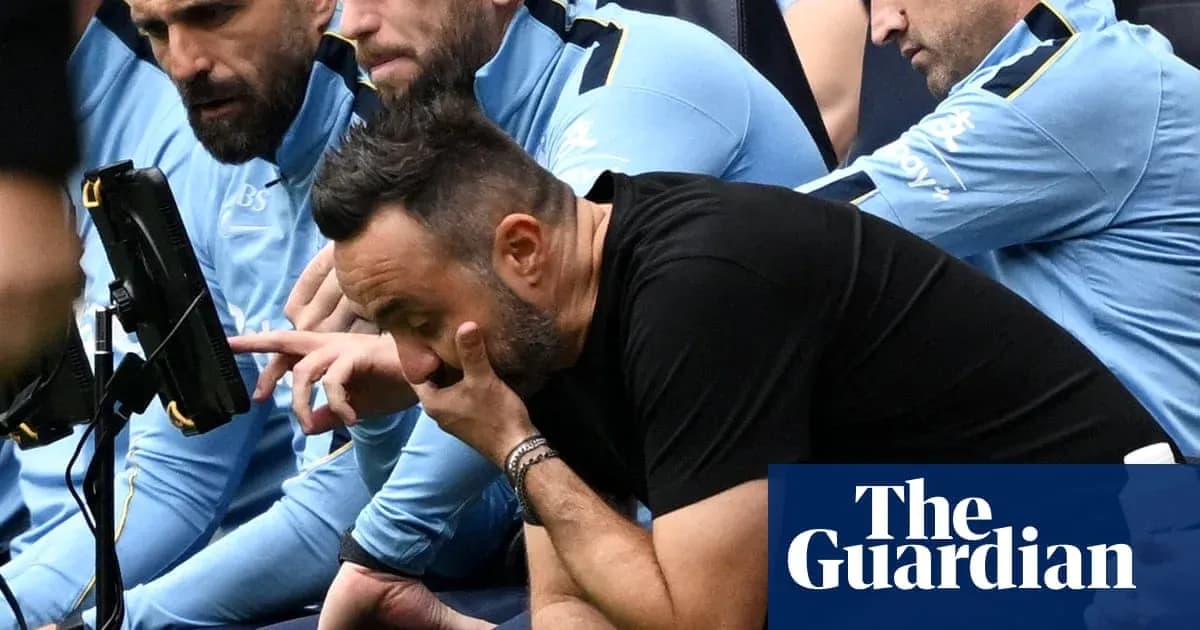
Roberto De Zerbi did not wait for the inquest. At the final whistle of Tottenham’s 3-2 defeat by Aston Villa, the Italian strode straight down the tunnel, the boos following him into the darkness and into a three-week international break that already feels suffocating for his side.
No Premier League win. Just two points. And a head coach who sounded close to exasperated.
“I am very disappointed, sad and frustrated for the performance,” De Zerbi said afterwards. He didn’t dress it up. “We can’t lose the game in this way, we can’t concede the second goal, we can’t lose balance just because we are losing.”
That second goal became the flashpoint of his anger. Tottenham had been warned. They had worked on it. They still switched off.
Jackson struck in the 67th minute, racing on to a booming kick from Zion Suzuki, the Villa goalkeeper who repeatedly turned defence into attack with one swing of his boot. The move was simple, almost basic. For De Zerbi, that was exactly the problem.
“We knew this season Aston Villa are playing 86% more long balls than last season and we spoke in many meetings about it,” he said. Yet, as Jackson finished, all those meetings looked meaningless.
The Tottenham manager’s frustration ran deeper than one lapse. He turned his fire on his players’ mentality, then their fitness, then the impact of his own substitutions. Mohammed Kudus, introduced from the bench, came in for pointed criticism as De Zerbi argued the change had disturbed his side’s structure.
“We can’t lose balance just because we are losing,” he repeated. He revealed he had tried to head off the chaos. “I spoke with our four attackers in minute 51, I asked them to use their head, all second half I was telling people to be calm. But the second goal was incredible.”
The pattern is beginning to grate. De Zerbi referenced the home defeat against Newcastle as a near-copy of this collapse: strong in the first half, competitive up to around the hour, then unravelled.
“Now we have to explain another game like [the home defeat against] Newcastle where we played the first half well, got to 60 minutes OK, and then we lose.”
The international break offers no emotional reset for him. If anything, it removes his chance to hammer home the message on the training pitch.
“I didn’t speak with the players today because I didn’t want to say anything,” he admitted. Those heading off with their national teams, he said, would have to “play and work”, while those left behind would be pushed harder. “For sure we have to work more because I didn’t like the finish to this game. We can’t say everything is bad, but it is not enough.”
While De Zerbi wrestled with what Tottenham are not, Unai Emery used the same 90 minutes to remind Aston Villa what they are supposed to be.
This was Villa’s first Premier League victory of the season, and Emery treated it as a reference point, a return to the identity that has driven their progress under him: organised, resilient, committed, then expressive.
“The players did well because they believed,” he said. Belief, in his view, started without the ball. “We needed to build a team that could play in this way, could defend with resilience and playing with passion when our opponents were attacking. We needed defenders, we needed the keeper, we needed everyone committed in that direction.”
Suzuki embodied that idea, his long clearances not just relieving pressure but turning it back on Tottenham. Behind him, Emery saw a collective finally snapping into shape.
“We needed to feel strong first, then we could try to play with our structure and our ability. This is the competitive way.”
For Villa, that “competitive way” has delivered a vital first win and a clear template to follow. For Tottenham, the break arrives not as relief but as a long, uncomfortable pause. When they emerge on the other side, De Zerbi will expect his players to have found the composure and resilience that deserted them here — or he will ask, with even more force, why they haven’t.