Crystal Palace vs Everton: Tactical Breakdown of 2-2 Draw
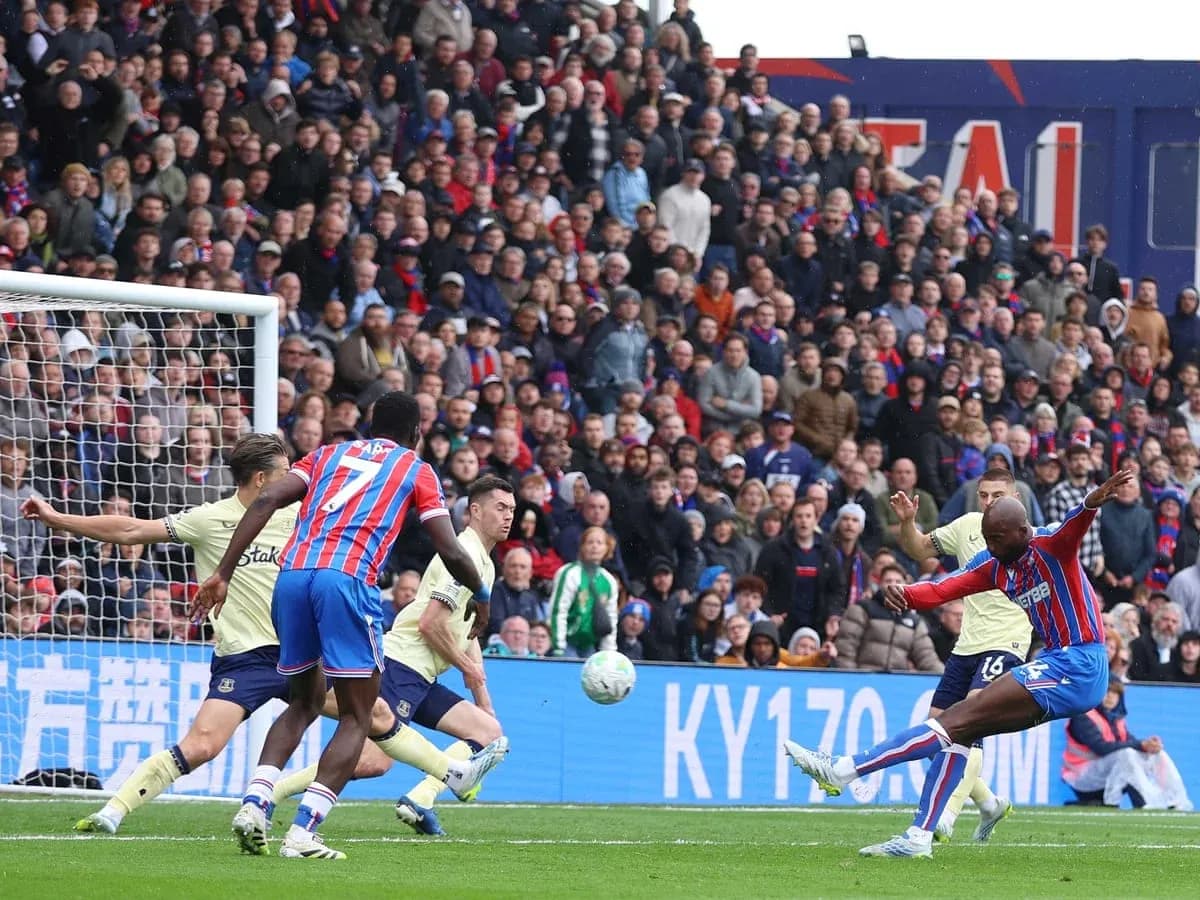
Crystal Palace and Everton shared a 2-2 draw at Selhurst Park in Premier League Regular Season - 36, a match defined by contrasting structures and a clear clash of game plans. Palace, in Oliver Glasner’s 3-4-2-1, controlled territory and tempo, while Everton’s 4-2-3-1 leaned on set-piece threat, direct play and defensive resilience. The scoreline mirrored the balance between Palace’s sustained pressure and Everton’s efficiency in key moments, rather than a statistical equilibrium.
I. Executive Summary
Card verification: Crystal Palace: 0, Everton: 2, Total: 2.
Everton struck first on 6' through James Tarkowski, immediately signalling their aerial and set-piece danger. Palace responded on 34' via Ismaïla Sarr, bringing the game level before half-time at 1-1, in line with the official half-time score. Everton reasserted their lead right after the interval, Beto scoring on 47' from a Tarkowski assist, a classic centre-forward finish from a direct pattern. Glasner’s changes, especially the introduction of Jean Philippe Mateta, tilted the final phase; Mateta equalised on 77', securing a 2-2 result that matched the underlying chance quality on the day.
II. Scoring Sequence & Disciplinary Log
Scoring (chronological, home score first):
- 6' Crystal Palace 0-1 Everton — James Tarkowski (Everton), Normal Goal.
- 34' Crystal Palace 1-1 Everton — Ismaïla Sarr (Crystal Palace), Normal Goal.
- 47' Crystal Palace 1-2 Everton — Beto (Everton), assist James Tarkowski, Normal Goal.
- 77' Crystal Palace 2-2 Everton — Jean Philippe Mateta (Crystal Palace), Normal Goal.
Disciplinary log (all cards, exact reasons):
- 30' James Garner (Everton) — Foul
- 45' Vitaliy Mykolenko (Everton) — Foul
No Crystal Palace player was booked, underlining the asymmetry in how each side applied and absorbed pressure. There were no VAR interventions or cancelled goals in the event log.
Substitutions (vector format, exact timing):
- 65' Jean Philippe Mateta (IN) came on for Jørgen Strand Larsen (OUT) — Crystal Palace.
- 70' Thierno Barry (IN) came on for Beto (OUT) — Everton.
- 80' Jefferson Lerma (IN) came on for Brennan Johnson (OUT) — Crystal Palace.
- 80' Tyrique George (IN) came on for Merlin Röhl (OUT) — Everton.
- 90+4' Carlos Alcaraz (IN) came on for Kiernan Dewsbury-Hall (OUT) — Everton.
III. Tactical Breakdown & Personnel
Crystal Palace’s 3-4-2-1 was built to dominate the ball and compress Everton into their own third. With 59% possession and 459 passes, 382 accurate (83%), Palace constructed patiently from the back three of Chris Richards, Maxence Lacroix and Jaydee Canvot. Adam Wharton and Daichi Kamada operated as central pivots, recycling possession and drawing Everton’s 4-2-3-1 block narrow, allowing Daniel Muñoz and Tyrick Mitchell to push high as wing-backs.
The shot profile underlines Palace’s territorial control: 21 total shots, 8 on goal, with 15 from inside the box. Their expected goals of 2.66 reflect the volume and quality of chances created, particularly after going behind twice. Ismaïla Sarr and Brennan Johnson, nominally the two behind Jørgen Strand Larsen, frequently attacked the half-spaces, pinning Everton’s full-backs and forcing the visitors’ double pivot of Tim Iroegbunam and James Garner deeper.
The key structural shift came on 65' when Jean Philippe Mateta replaced Jørgen Strand Larsen. Mateta’s presence turned Palace’s front line into more of a penalty-box pairing, improving occupation of central spaces and providing a more aggressive target for crosses and cut-backs. This adjustment is consistent with Palace’s late surge in shot volume and culminated in Mateta’s 77' equaliser, a direct reward for heavier box presence.
Defensively, Palace were relatively clean: only 5 fouls and no cards. That speaks to an organised press rather than reckless individual duels. Dean Henderson made 5 saves, aligned with Everton’s 6 shots on target, and his goals prevented value of 1.2 indicates he outperformed the xG he faced, keeping Palace alive when Everton broke through their press.
Everton’s 4-2-3-1 was calibrated for compactness and transition. With 41% possession and 313 passes, 232 accurate (74%), they accepted a lower share of the ball but remained purposeful: 13 total shots, 6 on goal, 10 from inside the box. Their expected goals of 1.44, combined with two goals scored, show a side that capitalised well on limited but decent-quality opportunities.
Set pieces and direct play were central to Everton’s threat. James Tarkowski’s 6' opener and his assist for Beto on 47' underline his dual role as aerial weapon and delivery point. Beto’s movement against Palace’s back three exposed the spaces between centre-backs, especially when Palace’s wing-backs were advanced.
The discipline data reveals Everton’s defensive strain: 13 fouls and 2 yellow cards, both explicitly for “Foul” — James Garner on 30' and Vitaliy Mykolenko on 45'. This pattern matches a side frequently forced into last-ditch or recovery tackles as Palace circulated the ball and attacked wide channels.
Jordan Pickford’s 6 saves, combined with a goals prevented figure of 1.2, suggest a high-impact performance. Under sustained pressure — 8 Palace shots on target — his interventions were decisive in preserving the point, particularly after Palace’s tactical shift with Mateta and Jefferson Lerma adding physicality and control in the final third.
IV. The Statistical Verdict
Overall Form (match-level): Palace’s attacking structure and chance creation were superior: more possession (59% vs 41%), more total shots (21 vs 13), more shots on goal (8 vs 6) and a higher xG (2.66 vs 1.44). Their 459 passes, 382 accurate (83%), point to a coherent positional play model under Glasner that consistently advanced them into dangerous zones.
Everton’s Overall Form was more opportunistic but efficient. With 313 passes, 232 accurate (74%), they prioritised verticality over control, and their 10 shots inside the box from only 13 total attempts show a clear focus on high-value areas when they did attack.
Defensive Index: Both goalkeepers posted identical goals prevented (1.2), but the context differs. Henderson faced fewer overall shots yet still had to make 5 saves; Pickford, under heavier bombardment, made 6. Everton’s higher foul count (13 vs 5) and two yellow cards underscore the defensive workload and risk they accepted to protect their box.
In sum, the 2-2 scoreline reflects Palace’s structural superiority against Everton’s set-piece and transition sharpness, with both keepers’ above-average shot-stopping ensuring the points were shared.