Clásico Nacional Ends in Thrilling 2–2 Draw: Club America vs Chivas
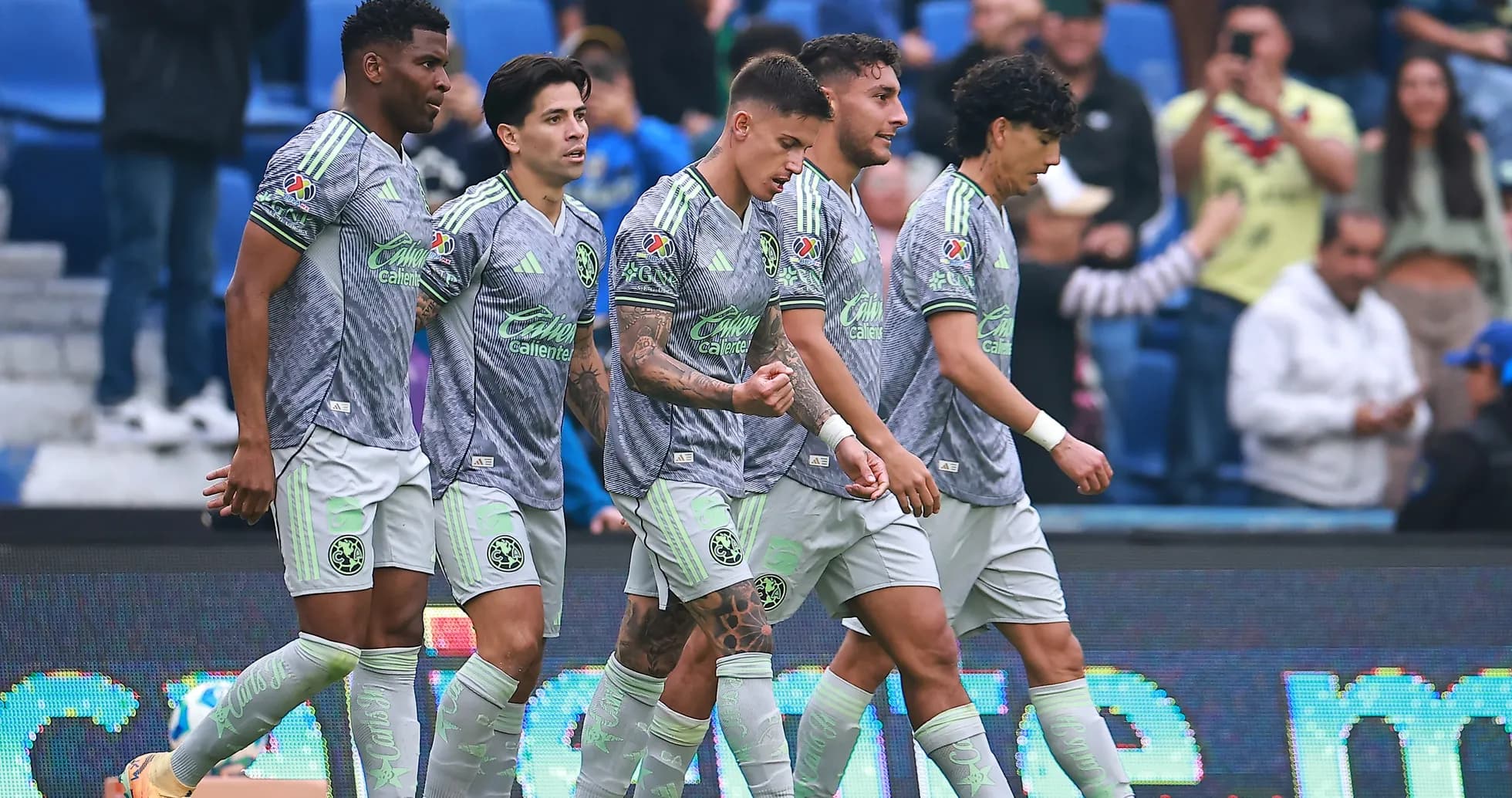
Under the lights of Estadio Banorte in Mexico City, the Clásico Nacional delivered a narrative worthy of its name. In Liga MX’s Apertura - 9, Club America and Guadalajara Chivas, arriving as third and second in the table respectively, played out a 2–2 draw that felt like two separate matches stitched into one: Chivas’ ruthless first-half control, and America’s furious, data-backed resurgence after the break.
Heading into this game, both sides shared an identical overall goal difference of +9, each scoring 17 and conceding 8 in the league. But the way they built those numbers could not have been more different. Club America had been an attacking avalanche at home, averaging 2.5 goals at Estadio Banorte and remaining unbeaten on their own turf with 3 wins and 1 draw. Chivas, for their part, travelled with quiet authority: unbeaten away with 2 wins and 3 draws, conceding just 0.8 goals on their travels.
Tactically, the opening whistle revealed two clear blueprints. G. Almada stayed loyal to Club America’s season-defining 4-2-3-1, the formation they had used in 7 of their 8 league fixtures. R. Cota anchored the back, shielded by a back four of D. Espinoza, E. Lara, M. Vázquez and C. Borja. Ahead of them, the double pivot of I. Reyes and A. Cervantes was tasked with both resisting Chivas’ counters and feeding a creative trio of A. Zendejas, Raphael Veiga and B. Rodríguez, all servicing lone striker H. Martín.
Opposite, G. Milito’s Guadalajara Chivas lined up in a 3-4-2-1, a shape that has become one of their two main identities this season alongside the 3-1-4-2. J. Rangel marshalled a back three of D. Aguirre, D. Campillo and L. Romo. The wing and central lanes were owned by a hard-running quartet: R. Ledezma, O. Govea, R. González and B. González. Between the lines, Santiago Sandoval and R. Alvarado floated behind front man R. Marín.
First Half
The first half belonged to Chivas, and the statistics hinted this might happen. America’s biggest defensive vulnerability this season has been the period from 31 to 45 minutes, where 50.00% of their total goals conceded arrived before this match. Chivas, though lacking a published minute-by-minute scoring profile, have the technical and positional quality to exploit precisely that window, particularly with R. Alvarado’s movement between lines and R. Marín’s ability to pin centre-backs.
That is exactly where the contest’s first act was written: a ruthless Chivas side stormed to a 2–0 lead by half-time. It was the mirror image of America’s usual pattern. Offensively, America are strongest late: 29.41% of their league goals come between 76 and 90 minutes, with another 23.53% between 61 and 75. But in the first half, their pressing lacked cohesion, and the double pivot of Reyes and Cervantes was repeatedly stretched sideways by Chivas’ wingbacks and inside forwards. The 3-4-2-1 allowed Milito’s team to create overloads against America’s full-backs, dragging Espinoza and Borja out of shape and isolating Lara and Vázquez.
In that chaos, R. Alvarado’s broader season profile came to life. He arrived at this fixture with 3 goals, 15 key passes and 87 total duels, winning 47 of them. His blend of work rate and end product made him the natural “Hunter” in this clash, targeting an America defence that, overall, concedes 1.0 goal per match and is particularly vulnerable in those pre-interval minutes. Behind him, O. Govea and R. González provided the “Engine Room” thrust, stepping into spaces that America’s No. 10, Raphael Veiga, would have preferred to occupy.
Second Half
Yet the match was never going to be decided in one half. America’s season-long attacking curve suggested a storm was coming after the break. With an overall average of 2.1 goals per match and zero games in which they failed to score, Almada’s side is structurally built to produce chances across 90 minutes. B. Rodríguez, already with 3 goals and 1 assist this campaign and 19 key passes, became the catalyst. Drifting in from the left, he combined with Veiga between the lines, while H. Martín — himself on 3 goals and 2 assists this season and the club’s penalty taker — occupied all three Chivas centre-backs.
The tactical balance flipped. America’s full-backs pushed higher, effectively pinning Chivas’ wingbacks and turning the visitors’ back three into a deeper, more reactive line. The double pivot stepped up, compressing the pitch and forcing turnovers in Chivas’ half. As the game moved into the 61–75 and 76–90 minute windows — where America have scored 23.53% and 29.41% of their goals respectively — the pressure became almost inevitable. Chivas’ defensive numbers away from home (0.8 goals conceded on average) finally bent under the weight of volume and territory.
Discipline was always going to be a subplot. Across the season, America’s yellow cards are spread, but 23.08% arrive between 61 and 75 minutes and another 15.38% between 76 and 90, a reflection of their aggressive late-game pressing. They also carry a red-card warning late, with 100.00% of their reds coming in the 76–90 interval. Chivas, meanwhile, are most combustible in the final quarter-hour: 40.00% of their yellows land between 76 and 90 minutes, with an additional 30.00% between 46 and 60. That disciplinary profile matched the emotional tenor of the second half, as duels intensified and tactical fouls multiplied with America chasing and Chivas clinging on.
Penalty psychology added another undercurrent. America came into this fixture with 2 penalties overall, scoring 1 and missing 1 — a 50.00% conversion rate that hangs over every decision in the box. H. Martín, who has both scored and missed from the spot this season, embodies that tension. Chivas, by contrast, had converted both of their penalties overall with no misses, a quiet but telling sign of composure under pressure.
In the end, America’s structural strengths reasserted themselves. Their unbeaten home record survived, their late-game scoring trend held true, and their overall attacking averages were reflected in the two goals that clawed back the deficit. Chivas, for all their first-half brilliance, were reminded that even an away side conceding just 0.8 goals on their travels can be overwhelmed by a team that lives in the final quarter-hour.
Following this result, the numbers behind the rivalry feel even more finely balanced. America remain a late-surging, high-volume attacking machine with occasional first-half defensive lapses. Chivas continue to be a compact, tactically flexible unit whose away resilience makes them a constant threat. On this night in Mexico City, the data and the drama converged perfectly: a 2–2 that felt less like a stalemate and more like a promise that the next chapter of this Clásico will be just as finely poised.