Chelsea's Midfield Crisis Exposed in Arsenal Defeat
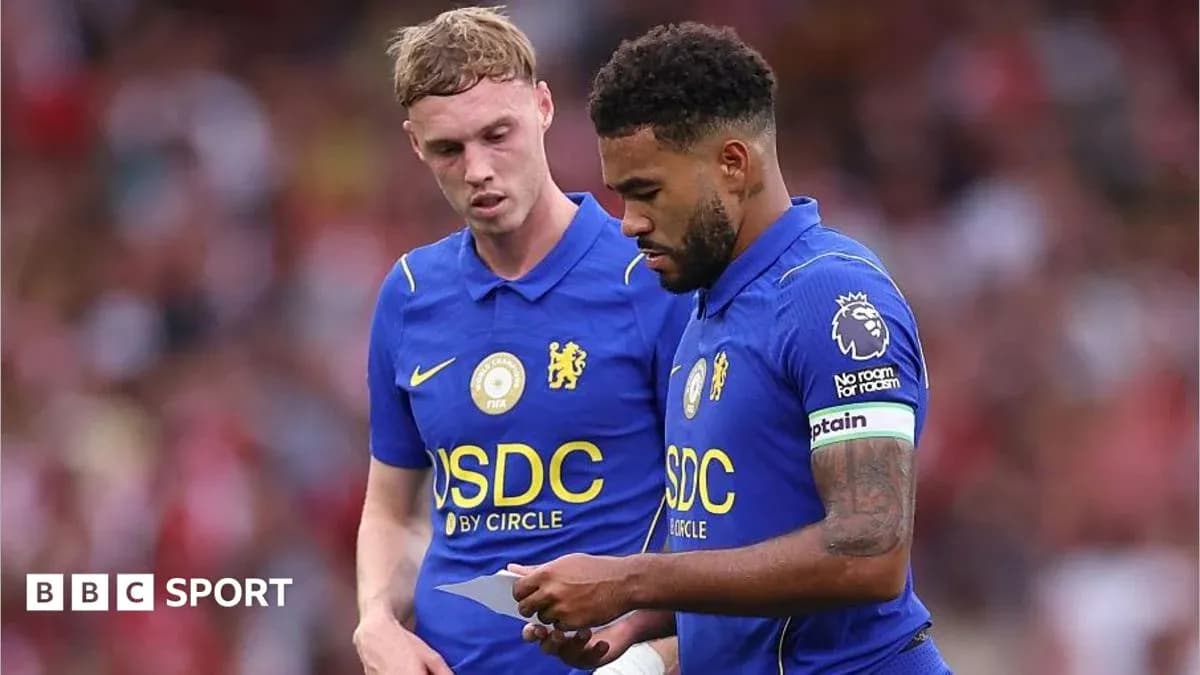
Chelsea spent £349m in the summer and finished a statement game at the Emirates with two converted right-backs side by side in midfield. That image, Reece James and Malo Gusto trying to knit things together in the centre of the pitch as Arsenal closed out a 2-1 win, said more about the state of Xabi Alonso’s squad than any press conference could.
It was James, the player Alonso insists can become one of the best midfielders in the world, who lost Martin Odegaard for the decisive moment. The Arsenal captain drifted, James switched off for a heartbeat, and the champions punished Chelsea again. One lapse, one run not tracked, and a promising away performance unravelled.
A reshaped midfield, an old problem
Alonso had talked up James’ potential in the build-up to his first defeat as Chelsea manager, pointing to the fact his captain spent almost half of last season operating in midfield. James largely backed that faith with a strong display on the ball and out of possession.
But the picture grew more uncomfortable once Romeo Lavia limped off and Gusto came on to replace a central midfielder. Two full-backs, neither schooled in the subtleties of the role, trying to control the heart of the pitch against the champions.
Ashley Young, watching on for BBC Sport, did not bother to sugar-coat it.
“Chelsea don’t have European football this season so they’re playing less games and can concentrate on the Premier League,” he said. “But the worry is you’re finishing a game against the champions, and you’ve got two right-backs in midfield.
“You look at Lavia, who was injured a lot last season. The front line are going to send fear throughout the league but behind that you see the midfield and they’re playing right-backs there.”
Arsenal certainly saw the opportunity. They found spaces between the lines, threaded passes through a blue block that sat deep and surrendered the ball. Chelsea’s game plan leaned heavily on the counter-attack, but Young could recall only one truly dangerous break – Pedro Neto driving down the right, a rare moment when the trap actually sprung.
The pressure told in the end. Mikel Arteta turned to his bench, added energy and control, and Arsenal’s substitutes tilted the contest their way. Alonso, by contrast, looked light on creative solutions behind his expensive forward line.
Life without Caicedo
Strip away the tactical tweaks and the core issue is blunt: Chelsea are missing Moises Caicedo.
The Ecuador international, a metronome and destroyer rolled into one, is out with an unspecified injury after breaking down just 11 minutes into a substitute appearance against Brighton last week. There is no clear timeline on his return.
For Alonso, this is unfamiliar ground. Across the previous three seasons, Caicedo had only missed two matches through a knock and illness, aside from suspensions. Managers build around that sort of reliability. Now Chelsea’s new boss is discovering what happens when the cornerstone is suddenly removed.
“Not longer term, but it is about assessing the risk,” Alonso said when asked about Caicedo. “Probably last week we brought him back too early and I don’t want to make the same mistake again.”
Whether Chelsea foresaw this problem as the window closed is another question. Their deadline-day scramble suggests at least some concern.
Monaco pulled the plug on a £47m move for Lamine Camara at the last minute, infuriating officials at Stamford Bridge. Earlier in the summer, bids of up to £64m for Bournemouth’s Alex Scott went nowhere. A move for France international Manu Kone was blocked by Roma head coach Gian Piero Gasperini.
Chelsea insist the Camara pursuit was a reaction to a market opportunity rather than a sign of panic, and that they remain satisfied with their overall business. They point to the quality they already have and their belief in internal options.
The facts cut a little differently. Enzo Fernandez left for Manchester City on deadline day for a joint British-record £125m fee. No direct replacement arrived.
Thin cover and tactical trade-offs
Caicedo’s injury has exposed that decision. Jordan Henderson is also sidelined, still recovering from a broken arm suffered in a freak incident at the World Cup when he fell over an advertising hoarding as an unused substitute.
Valentin Barco, a natural midfielder signed from Strasbourg in the summer, has not convinced Alonso yet. He has been overlooked in all three Premier League matches, with Gusto preferred in the middle instead.
The numbers underline the trade-off. With Gusto starting in midfield, Chelsea had just 25.6% possession in their 4-3 win over Brighton – their lowest share of the ball in a league game since records began in 2003-04. They won, but they did it by ceding control and leaning on individual brilliance.
Alonso argued before the Arsenal match that, in a season without European football, five fit midfielders should be enough to cope. On paper, that sounds reasonable. In practice, it relies heavily on Caicedo staying healthy and others finding rhythm quickly.
At the moment, Chelsea are asking their forwards to cover the cracks. Morgan Rogers, Cole Palmer and Joao Pedro have carried the attacking load in the opening weeks. Rogers, the club-record signing, struck again inside two minutes at the Emirates and became the first Chelsea player since Eden Hazard in 2018-19 to score or assist in each of the club’s first three Premier League games of a season.
There is plenty to like about that front line. It looks sharp, fearless, capable of shredding most defences in transition.
The problem lies behind it. Chelsea have conceded seven goals in three league matches. “We want to be tighter,” Alonso admitted. Until the structure behind those forwards settles, the games will continue to feel like shootouts.
Arsenal still the bar
For all that, this was arguably one of Chelsea’s better displays against Arsenal in recent times. They are now 10 without a win against their London rivals, yet they did not look miles off at the Emirates. They competed, they threatened, they scored early. They just could not sustain it.
Alonso’s verdict reflected that nuance.
“We came to win. We knew that we were not that far, but it went their way,” he said. “It hurts, [we’re] disappointed for sure. But this is the first defeat, this is going to be a long way and it doesn’t have a big impact in our mood and in our mindset.”
The reality remains stark. Chelsea finished 10th last season. The gap to Arsenal, who set the pace at the top, stands at 33 points. Even after a summer that delivered 10 new first-team signings and a marquee forward in Rogers, Arsenal are still the benchmark in London and across the league.
Chelsea beat them to one signing. They have not yet closed the wider gap.
Alonso has called this summer “phase one”. The blueprint is clearly long-term, the rebuild deliberate. But if Caicedo’s return does not quickly steady the midfield and stop scenes like two right-backs closing out a defining game in the centre of the pitch, the next phase may come with awkward questions.
Why sell Fernandez without a replacement? Why leave the most important part of the team one injury away from improvisation?
January will offer another chance to answer.