Charleston Battery Edges Pittsburgh Riverhounds in Penalty Shootout
Under the lights at Patriots Point Soccer Complex, Charleston Battery and Pittsburgh Riverhounds dragged each other through the full 120 minutes before the home side finally edged it 4-2 on penalties. Following this result, the Group Stage of the USL League One Cup delivered a tie that felt more like a knockout, with Charleston’s season-long control meeting Pittsburgh’s stubborn resistance in a tactical arm wrestle that never quite broke open in normal time.
I. The Big Picture – Charleston’s control, Pittsburgh’s resistance
Charleston arrived as the group’s benchmark. Heading into this game they sat 1st in USL Cup 2026, Group 6, with 8 points and a goal difference of 7, built on an overall return of 10 goals for and 3 against. Across the Cup they had been ruthless: 3 wins, 1 draw, 0 defeats in total, with an attacking profile of 7 goals in 3 fixtures in total and an average of 2.3 goals per game overall. On their travels they had been even more explosive, averaging 3.0 goals for and just 0.5 against, but at home they had been about control and clean sheets: 1 goal for, 0 conceded at Patriots Point, with a home goals-against average of 0.0.
Pittsburgh’s path had been more turbulent. Heading into this fixture they were 3rd in Group 6 with 5 points and a goal difference of -1, having scored 8 and conceded 9 overall in the group table snapshot. Their season statistics painted a slightly different, but still uneven picture: 4 goals for and 3 against in total, averaging 1.3 scored and 1.0 conceded per match overall. At home they were a different animal, with 3 goals scored and none conceded, yet away they had struggled badly: 1 goal for, 3 against, and 0 wins in 2 away fixtures.
That clash of profiles played out exactly as the numbers suggested. Charleston, usually free-scoring, ran into a Riverhounds side built for containment away from home, and the 0-0 after 120 minutes set the stage for a psychological test from the spot that the Battery passed and Pittsburgh failed.
II. Tactical Voids and Discipline – Edges in the margins
With no formal list of absentees, both coaches leaned into their core groups. Ben Pirmann trusted a robust Charleston spine: J. Berner between the posts, a defensive line anchored by D. Martinez, G. Smith, J. Akpunonu and N. Messer, and a midfield platform of K. Pakhomov and S. Suber. Ahead of them, the creative and pressing burden fell on M. Foster, E. Ycaza and L. Blackstock in support of central forward M. Berry.
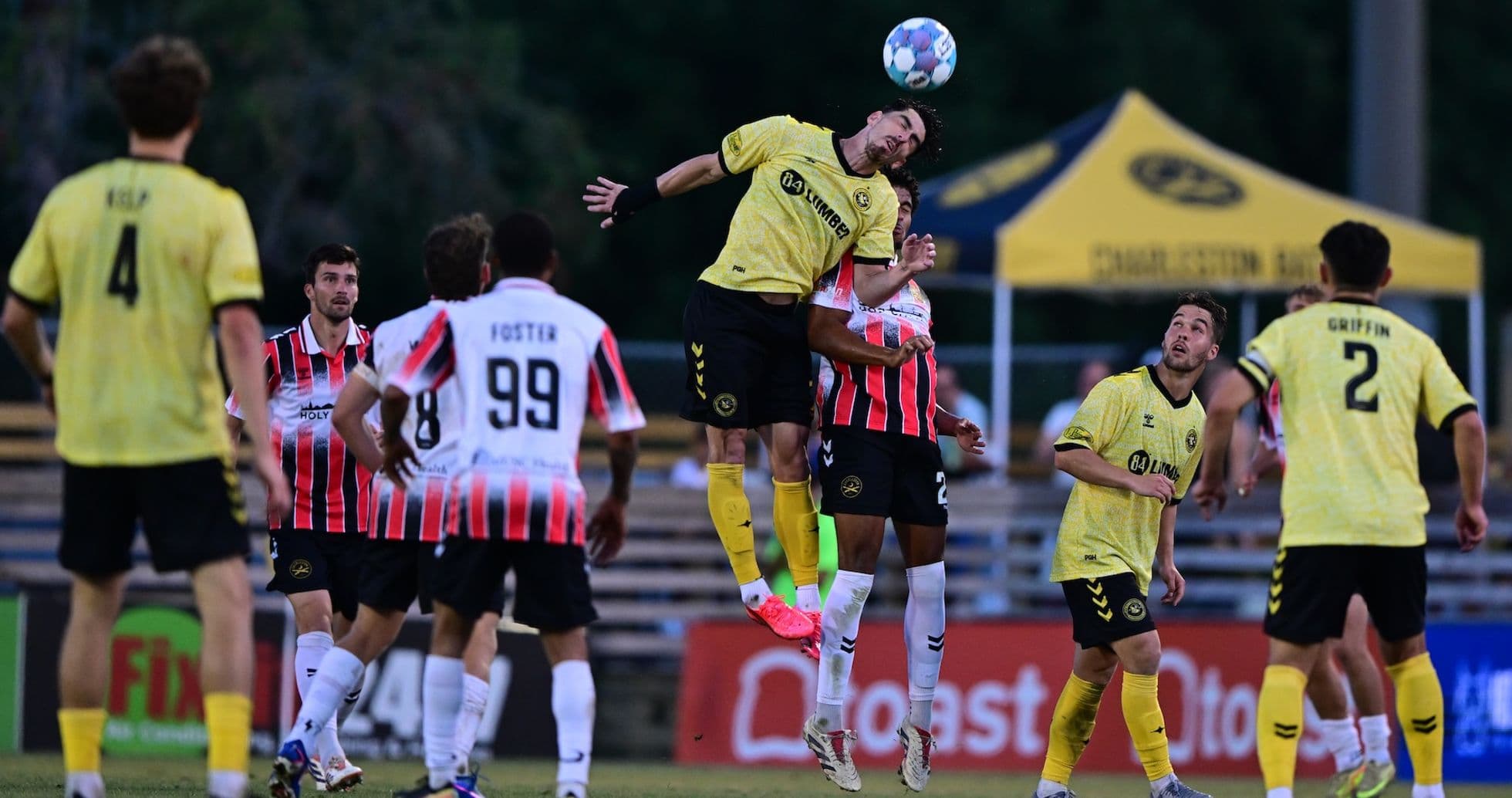
Rob Vincent’s Pittsburgh mirrored that solidity-first mindset. M. Sheridan started in goal behind a back line of P. Barnes, V. Souza, O. Mikoy and L. Kelp. In midfield, the energy and ball progression of E. Goldthorp, R. Mertz and D. Griffin were tasked with linking to a front trio of C. Ahl, S. Bassett and T. Amann.
Discipline had always been a quiet but important subplot for both sides in this Cup. Heading into this game, Charleston’s yellow-card profile showed a clear spike after the interval: 50.00% of their cautions had come between 46-60 minutes, with additional bookings spread between 0-15, 16-30 and 76-90. Pittsburgh’s pattern was eerily similar: 42.86% of their yellows also arrived between 46-60, with further cards sprinkled across the rest of the match and a late-game red-card vulnerability – 100.00% of their reds had come in the 76-90 window.
That mirrored aggression around the restart hinted at a second-half tone: both sides ramping up pressure, tackles tightening, and the game tilting towards chaos without ever breaking the deadlock. The absence of penalties in open play for both teams (0 taken, 0 scored, 0 missed in total heading into this fixture) meant the eventual shootout was uncharted territory rather than a repeatable strength.
III. Key Matchups – Hunter vs Shield, Engine vs Enforcer
Without official top-scorer data, the “Hunter vs Shield” duel was more structural than individual. Charleston’s attack, which had averaged 3.0 goals on their travels and 1.0 at home, was designed to probe and suffocate rather than simply overwhelm. The front four of Foster, Ycaza, Blackstock and Berry were tasked with unlocking a Pittsburgh defence that, in total, had conceded 3 goals in 3 matches, but whose away profile was fragile: 1.5 goals against on their travels.
In that sense, the game became a test of whether Pittsburgh’s back four could replicate their home dominance in a hostile environment. V. Souza and O. Mikoy, central to that defensive block, were asked to manage Berry’s presence between the lines while also tracking the drifting movements of Foster and Blackstock. The fact that the Riverhounds held Charleston to 0 in normal and extra time suggested that Vincent’s “Shield” met the moment, even if the broader Cup numbers had painted them as vulnerable away.
In the “Engine Room”, the confrontation between Charleston’s double pivot of Pakhomov and Suber and Pittsburgh’s trio of Goldthorp, Mertz and Griffin shaped the rhythm. Charleston’s season-long defensive averages – just 0.3 goals conceded overall and 0.0 at home – owed as much to that midfield screen as to the back line. Their ability to break up play, recycle possession and keep the Battery on the front foot was central to pinning Pittsburgh back and limiting the Riverhounds’ capacity to transition through C. Ahl and S. Bassett.
IV. Statistical Prognosis – xG story without the numbers
Even without explicit xG values, the statistical context offers a clear prognosis of what this match likely looked like under the hood. Charleston, with 2.3 goals for and 0.3 against per game overall heading into this fixture, typically generate and suppress chances at a rate consistent with a strong positive xG differential. Pittsburgh, at 1.3 for and 1.0 against overall, sit closer to parity, with their away struggles (0.5 goals for, 1.5 against on their travels) hinting at a negative away xG balance.
Overlay that with Charleston’s clean-sheet record – 2 in 3 total matches, including 1 at home – and Pittsburgh’s single clean sheet coming only at home, and the expectation was clear: Charleston to create the better chances, Pittsburgh to hang on and hope for fine margins.
The 0-0 after 120 minutes suggests that while Charleston likely edged the shot and territory metrics, Pittsburgh executed their defensive game plan with rare precision. Yet the Cup’s cruelty is that such discipline can be undone in a handful of kicks. With neither side having taken a penalty in the competition before, the shootout became a pure psychological contest. Charleston’s 4-2 success from the spot was less about historical advantage and more about the composure of individuals like Berry, Ycaza or Blackstock stepping up in the defining moments.
Following this result, the numbers and the narrative converge: Charleston remain the group’s standard-setters, their defensive record intact and their mentality reinforced by surviving a penalty shootout. Pittsburgh leave with proof they can shut down one of the Cup’s most efficient attacks, but also with a reminder that in a competition decided by fine margins, their away frailties and lack of cutting edge can still be fatal.