Champions League 2026/27: A New Era Begins for Premier League Champions
The penalty heartbreak in Budapest already feels like another chapter in a longer story. Having gone the distance with Paris Saint-Germain and fallen in the cruellest fashion, this team steps back into the Champions League with something more than qualification secured. It returns as Premier League champions for the first time since 2004, and as a side now firmly embedded among Europe’s elite.
For the fourth straight season, a place at the top table is guaranteed. This time, though, the competition around that table looks a little different – and the stakes, somehow, feel even higher.
A New Era, Now Familiar
The 2026/27 campaign will again use UEFA’s revamped league phase, the format that tore up the old group-stage script and stretched the field from 32 to 36 clubs.
The concept is simple enough on paper. Each team plays eight league-phase matches, each against a different opponent: four at home, four away. No return fixtures, no cosy double-headers. Every night brings a new style, a new stadium, a new tactical problem.
When the dust settles on those eight games, the table decides everything. The top eight march straight into the last 16. Clubs finishing between ninth and 24th are thrown into a two-legged play-off, battling just to reach the knockout bracket. Everyone else goes home.
Two of those 36 places are reserved for the countries whose clubs performed best in Europe the previous season. In 2024/25, England and Spain dominated the coefficient race, so both the Premier League and La Liga earned an extra Champions League berth for 2026/27.
In last season’s league phase, this side didn’t just cope with the new format – it owned it. Eight games, eight wins, top of the pile. No one had ever gone perfect in this system before.
Now the challenge is to do it again, with a target planted firmly on their back.
Europe’s Cast Assembles
With the league phase kicking off on September 8, the grid is almost complete. Twenty-nine of the 36 clubs have already booked their spots.
England will send five. The newly crowned champions are joined by Liverpool, Manchester City, Manchester United and Aston Villa, all finishing inside the Premier League’s top five.
Spain matches that firepower. Real Madrid, Barcelona, Atletico Madrid, Villarreal and Real Betis will carry La Liga’s flag, a quintet that underlines the depth of Spanish football at this level.
Italy and Germany bring four each. From Serie A come Napoli, Inter Milan, AS Roma and Como, the latter a remarkable story in their own right. From the Bundesliga, it’s the heavyweight quartet: Bayern Munich, Borussia Dortmund, RB Leipzig and Stuttgart.
France offers three contenders: defending European champions Paris Saint-Germain, plus Lens and Lille. The Netherlands contributes two in PSV and Feyenoord, champions and runners-up in the Eredivisie.
Portugal’s representation is a familiar pairing in Porto and Sporting Lisbon. Galatasaray arrive from Turkiye, Slavia Prague from Czechia, Shakhtar from Ukraine and Club Brugge from Belgium, all as domestic champions who punched their tickets long before the qualifiers began.
Seven more clubs will fight their way through the qualifying rounds, which began with draws for the first and second rounds on June 16 and 17. Five of those final seven places belong to the “champions path,” reserved for league winners from 42 nations. The last two slots go to sides who finished second, third or fourth in their domestic competitions.
The qualifiers wrap up on August 26. Twenty-four hours later, on August 27, the full cast steps into the spotlight when the league phase draw is made.
The Draw: Who Lies in Wait?
The rules of the draw add a layer of intrigue before a ball is kicked.
Domestic clashes are off the table at this stage, so there will be no all-Premier League meetings in the league phase. That rules out Liverpool, Manchester City, Manchester United and Aston Villa as potential opponents.
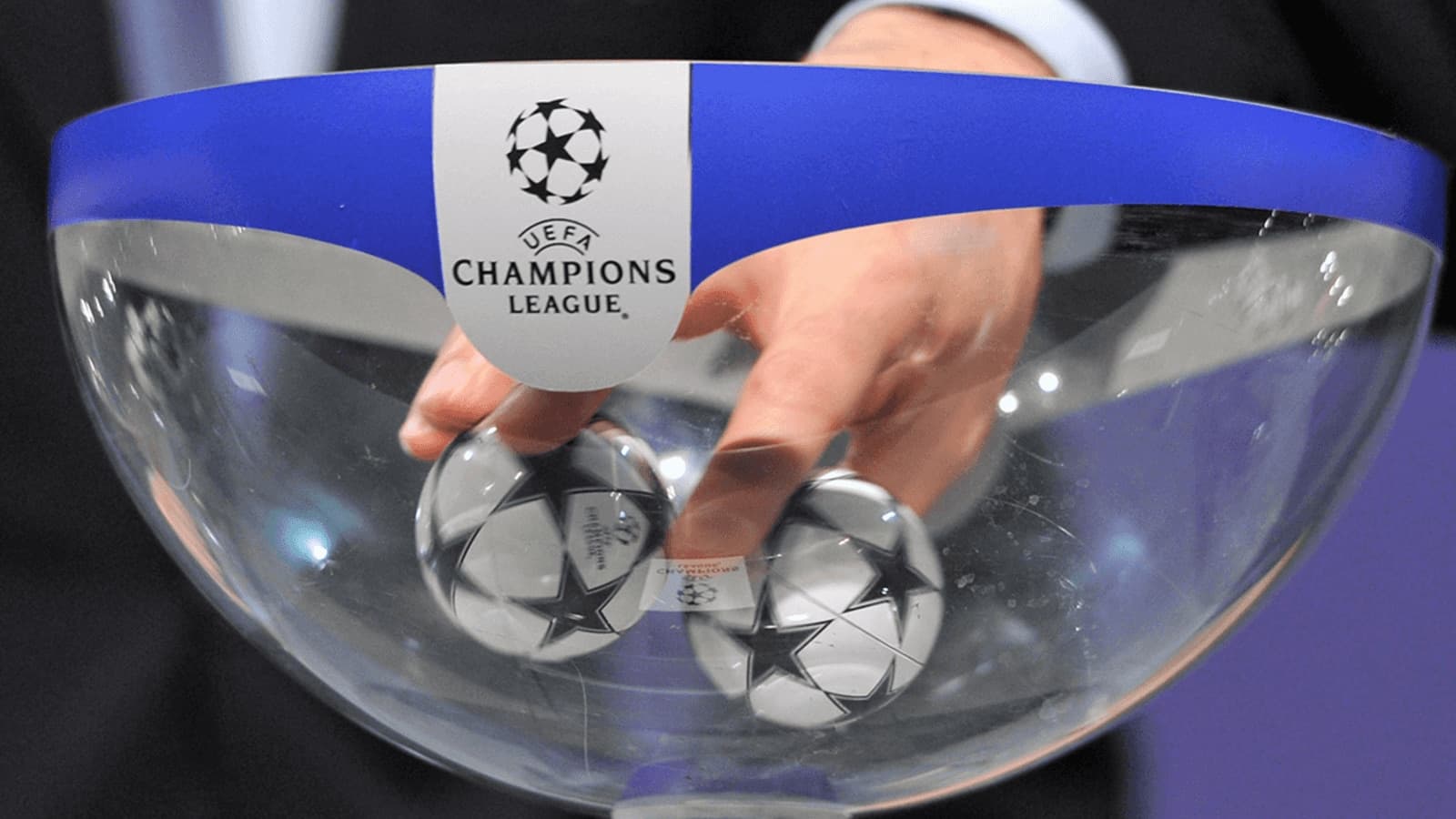
UEFA divides the field into four pots, based on club coefficients. Pot 1 is where the heavyweights gather – and that is where the Premier League champions will sit, already confirmed. Sharing that top shelf: Paris Saint-Germain, Bayern Munich, Real Madrid, Liverpool, Inter Milan, Manchester City, Barcelona and Atletico Madrid.
Pot 2 is stacked with danger of its own. Borussia Dortmund, AS Roma, Sporting CP, Porto, Club Brugge, Real Betis, PSV Eindhoven, Aston Villa and Manchester United all wait there, ready to turn any league-phase campaign into a minefield.
Pot 3 is no gentler. Feyenoord, Lille, Napoli, RB Leipzig, Villarreal, Shakhtar Donetsk and Galatasaray are all confirmed in that bracket.
Pot 4 already includes Como and Lens. Slavia Prague, Stuttgart and the seven qualifiers will be split between pot 3 and pot 4 once their coefficients and results are locked in.
From that structure comes one simple reality: this team will face two clubs from each pot – one home, one away – and cannot be drawn against more than two sides from the same country. Eight games, eight different opponents, no safety net.
The final make-up of the pots will be confirmed on August 26, once the last qualifiers have been played. Then, on Thursday, August 27, 2026, the draw will reveal the eight hurdles standing between the champions and another tilt at the top eight.
The Road to Madrid
Once the draw is done, the calendar takes over.
The league phase unfolds across eight matchdays:
- September 8–10
- October 13–14
- October 20–21
- November 3–4
- November 24–25
- December 8–9
- January 19–20
- January 27
By the end of January, the table will be set. On January 29, 2027, UEFA conducts the draw for the knockout play-offs, which will decide who joins the top eight in the round of 16. Those play-off ties are scheduled for February 16–17 and February 23–24.
Then comes the next turning point. On February 26, 2026, the draw for the round of 16, quarter-finals, semi-finals and final will map out the rest of the journey, all the way to the last whistle of the season.
The round of 16 ties are pencilled in for March 9–10 and March 16–17. The quarter-finals follow on April 6–7 and April 13–14. The semi-finals are set for April 27–28 and May 4–5.
And at the end of it all, on Saturday, June 5, 2027, the Champions League trophy will be lifted at the Wanda Metropolitano in Madrid.
Budapest left a scar. Madrid offers a chance to turn it into a statement.