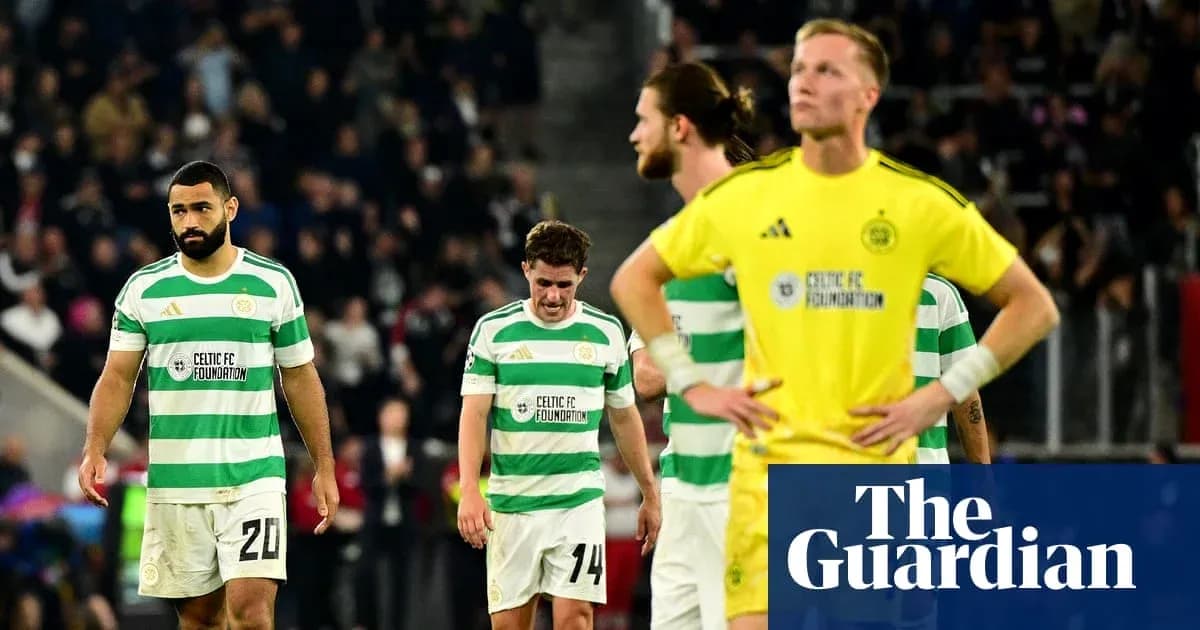
Celtic's Champions League Collapse: From 4-0 to Elimination
Martin O’Neill did not try to dress it up. From 4-0 up on aggregate and strolling, to out of the Champions League in chaos and disbelief, this was a night he placed among the deepest wounds of his long Celtic reign.
Celtic’s collapse against Lask in Austria will live with him. It will live with the club, too.
From cruise control to catastrophe
The script looked straightforward after 21 minutes in Linz. Callum McGregor, the captain, swept Celtic into the lead on the night, adding to the 3-0 advantage from the first leg. Four goals clear on aggregate, Celtic seemed to be easing towards the league phase of the Champions League, the hard part apparently done in Glasgow.
They were not just ahead. They were dominant. O’Neill knew it.
“We should have been out of sight by half-time,” the 74-year-old said. Celtic had their moment to kill the tie. They scored one, then passed up two “great, great opportunities”. Lask were rocking. The away end was already dreaming of the money, the glamour, the sense of belonging at Europe’s top table.
Then Celtic opened the door.
A goal conceded just before half-time. Another just after it. What had been a procession turned into a siege. Lask, given that lifeline O’Neill lamented, came “roaring back”, and Celtic never found a way to stem the tide.
The goals they shipped, in his view, were “not good” from any defensive standpoint. Soft, preventable, the kind that shred confidence and invite panic. The kind that turn a routine night into a nightmare.
“But that’s my team and that’s my responsibility,” O’Neill said, owning the disaster in blunt terms.
Lask forced extra time, then finished the job, running out 5-1 winners on the night and 5-4 on aggregate. From 4-0 up to out. From control to capitulation.
Pain that cuts deeper than Seville
O’Neill has stood on some of the biggest stages with Celtic. He has taken this club to a European final, led them through title races, cup runs, Old Firm storms. More than 300 games in charge, and he knows where this one sits.
“I’d put it down before the disappointment of losing the Uefa Cup final in 2003,” he admitted. That night in Seville left scars. This, he suggested, cut even deeper.
The financial hit alone underlines the scale of the damage. Dropping into the Europa League will cost Celtic at least £20m, a brutal figure for a club built on the economics of regular Champions League participation. The missed revenue is one thing. The manner of the exit is another.
This was not a gallant failure against a European giant. This was a collapse from a position of absolute strength.
Questions for another day – but they’re coming
Asked if his squad was strong enough for this level, O’Neill did not bite fully, but he did not pretend the issue did not exist.
“These are tough games. And it might only be a Champions League qualifying game, but it felt like a Champions League game,” he said. “I thought they were a fine side. But that doesn’t matter. We should have been able to have seen it through. And we didn’t do.”
The broader debate over depth, recruitment and readiness, he parked. “Talking about the squad, that’s for another day.”
That day will come quickly. A result like this drags everything into the light – from the bench options to the mentality of the starting XI. The margin for error, financially and competitively, is shrinking. Celtic know it.
McGregor: ‘We got what we deserved’
If O’Neill was frank, McGregor was ruthless. No spin. No escape.
“We got what we deserved,” the captain told Amazon Prime. “I thought we were so passive. All night. We actually looked scared to go and win the game, and when you are 3-0 up it’s psychological.”
He did not spare the first leg either. “To be honest I didn’t think we were that good in the first leg, either. We scored at good times and kind of got away with it. You go 3-0 and you think you’ve got a real chance but when you play like that you can’t have any excuse whatsoever.”
This was not a hard-luck story in his eyes. It was a warning.
“We have to suck it up, apologise to the supporters and the club because there is no way that we should lose that game … Now you’ll see what kind of characters are in there.”
That is where Celtic stand now. Out of the Champions League, counting the cost, staring at the Europa League and a season suddenly framed by one brutal question: how do you come back from a collapse like this and prove you still belong at the top level of Europe?