Celtic's Champions League Collapse: A Captain's Fury
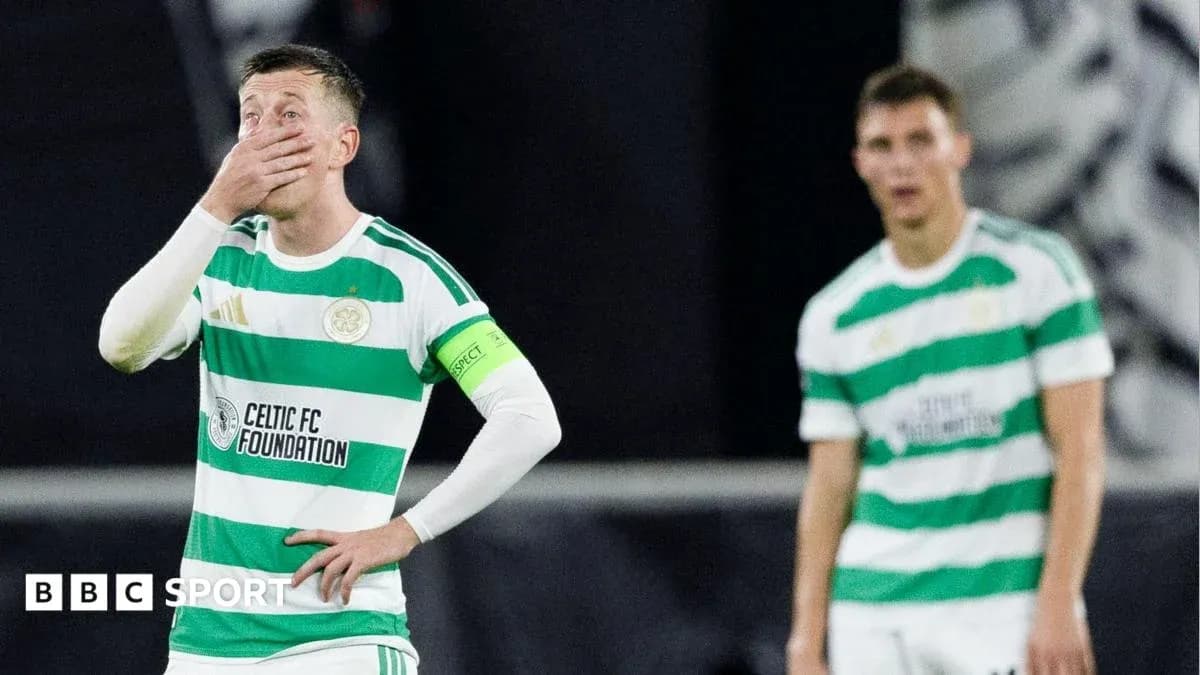
Callum McGregor did not spare anyone. Not this time.
In the wreckage of Celtic’s Champions League collapse to LASK, the captain cut through the noise with a few cold, brutal words. His teammates, he said, had been “passive” and “scared”. Then came the line that hung over everything that followed: “Now we’ll see what people are made of.”
For a player who has lived through almost every European humiliation of the past decade, that was new territory. The anger was familiar. The edge in his voice was not.
A captain who has seen it all – and too much
McGregor has been Celtic’s constant. The medals stack up, but so do the scars.
He was there when Celtic went 210 minutes without scoring against Kairat Almaty and then fluffed three of five penalties in the shootout. He played in the 7-1 against Borussia Dortmund and the 6-0 against Atletico Madrid. He endured the Champions League play-off exit to Midtjylland, the double 4-1 beatings by Sparta Prague, the failures against Ferencvaros, AEK Athens and Cluj.
He lived through the 7-1 against PSG and the 7-0 against Barcelona. He has worn every bruise European football has handed this club.
Yet it is hard to recall him sounding as incensed as he did in Linz.
He did not shout. He did not need to. The calmness made it worse. This was fury delivered in measured tones: anger at another exit, at teammates who froze when the pressure rose, at professional pride tossed aside in full view of Europe.
From cruise control to freefall
It was McGregor who started the night as if he might finally put a different kind of memory in the bank. His deflected strike made it 1-0 on the night, 4-0 on aggregate. LASK had opened aggressively, just as they had in Glasgow, but that goal looked like a punch to the ribs. They had created chances across both legs and yet found themselves four down.
How many blows can a team absorb before they stay down? As it turned out, LASK were nowhere near finished. Celtic helped them back to their feet.
The warning came with Benjamin Nygren’s slack, almost casual pass that invited LASK to score their first of the night. Thirty-two minutes gone, 4-1 on aggregate, and Celtic already looked uneasy. It sounded absurd. It did not look absurd.
Three minutes into the second half, the anxiety turned into something darker. Auston Trusty was bullied off the ball and LASK made it 4-2. Trusty struggled badly, a clear weak point that the Austrians targeted again and again.
Ten minutes later, the third went in. Panic spread. Parts of the Celtic team simply froze. What had felt like a slow, controlled evening turned into a quickening death.
Camilo Duran, the hero of the first leg, vanished as an attacking force. Kasper Hogh chased and harried but left no mark. Passes went astray. Attacks broke down at birth. Celtic lost any sense of shape or authority. They looked like a side trapped in their own headlights, waiting to be hit.
McGregor tried to drag them out of it. He could not. The tension suffocated everything.
O’Neill’s nightmare on the touchline
On the touchline, Martin O’Neill watched it unravel. He looked older by the minute. Later he would call it one of the worst nights of his football life and take responsibility. He could not carry it alone.
He emptied his bench in a frantic burst, five substitutions in 12 confused minutes. Nothing changed. Nothing improved.
Celtic did not register a shot on target in the second half of normal time. They did not manage one in extra-time either. They hung on the tie like a man hanging off a cliff edge. Everyone in the stadium knew how that story ends.
LASK’s fourth goal arrived in the 90th minute. It felt overdue, not dramatic.
By then, the shot count told its own story. Thirty-three efforts on Celtic’s goal on the night, 40 by the end, added to 20 in Glasgow. Sixty attempts across two legs. It was not a smash-and-grab. It was a siege.
Cameron Carter-Vickers hobbled around on one leg. Hogh was barely moving. The defence finished with a back four of Anthony Ralston, Dane Murray, Trusty and Liam Scales trying to repel wave after wave.
The fifth goal felt almost like an act of mercy. Another Celtic mistake, another player – this time Luke McCowan – doing the wrong thing at the worst possible moment in the worst possible area. Nygren, Trusty, McCowan: different names, same calamity. Out of the Champions League in a heap.
Beyond disarray
By the closing minutes, Celtic were barely functioning. LASK even passed up the chance to make it 6-1 from the penalty spot. Then Miguel Freckleton, a recent St Mirren defender starting a new life in Austria, weaved into the Celtic box and, for a fleeting second, looked like he might add another.
Freckleton deserves credit for seizing his moment, but the ease with which he threatened said everything. In flashes, he looked like a serious attacking force. That was not just about him. It was about Celtic falling apart.
Spooked. Outmuscled. Outworked. Outplayed. The slick, ruthless side that sliced LASK open in Glasgow now looks like a mirage, a one-night performance that disguised deeper psychological flaws.
No one foresaw a collapse from 4-0 up. Yet that is exactly what happened.
The squad laid bare
The structural problems were exposed as brutally as the mentality.
Celtic still do not have a reliable back-up to Kieran Tierney at left-back. They clearly lack a dominant, physical midfielder, a player with presence and authority who refuses to be bullied the way they were bullied in Austria. Everyone at the club knows it. Nobody has fixed it.
Some good deals have been done in the market, but not enough. The club sits in net profit on summer transfers. The “A word” – ambition – will echo again now.
When a club chasing Champions League money worth around £40m finishes such a tie with a back four of Ralston, Murray, Trusty and Scales, something has gone badly wrong in the planning. Recruitment, strategy, depth – none of it stood up to examination. Nobody covered themselves in glory, on the pitch or off it.
The financial cost of these European failures is obvious. The damage to the club’s sense of self is just as deep.
They thought they had left the drawing board behind, that the days of Kairat, Midtjylland, Ferencvaros, Cluj and AEK Athens belonged to another era. Instead, they are right back in that same room, staring at the same problems, adding another name to the same grim list.
LASK now sits alongside them. The question for Celtic is simple: how many more names are still to come?