Cagliari's Tactical Masterclass Against Atalanta
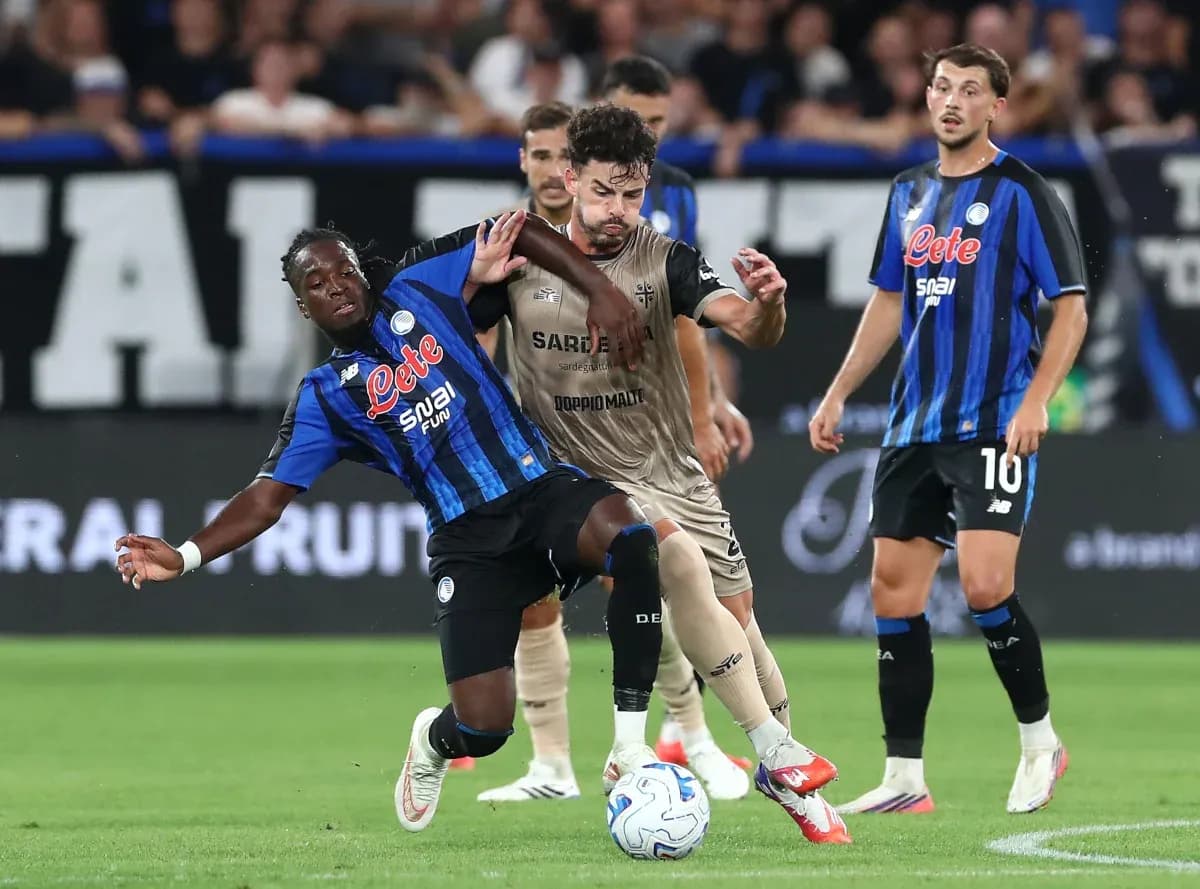
Under the Bergamo lights at New Balance Arena, this was supposed to be a statement night for Atalanta. Instead, it became a tactical ambush. Cagliari arrived with the quiet authority of a side sitting 4th in Serie A on 9 points, and left with a 2–1 away win that underlined why their early-season profile—compact, economical, ruthless—translates so well on their travels.
Heading into this game, the numbers already framed the contrast. Overall, Atalanta had 2 wins and 2 defeats from 4 league matches, with 5 goals scored and 5 conceded: a perfectly balanced goal difference of 0. At home they had been more assertive, winning 2 of 3, scoring 4 and conceding 3. Cagliari, by contrast, were built on control and efficiency: 3 wins and 1 defeat overall, with 4 goals scored and only 2 conceded for a goal difference of +2. On their travels they were flawless—2 away wins from 2, with 3 goals scored and just 1 conceded.
Maurizio Sarri’s Atalanta lined up in a 4-3-3, an aggressive, high-possession shape that pushed both full-backs and the front three onto the last line. M. Carnesecchi anchored the side in goal behind a back four of R. Bellanova, O. Kossounou, G. Scalvini and S. Kolasinac. In midfield, L. Samardzic, F. Kessie and Ederson formed a technically gifted, physically robust triangle, tasked with both dictating tempo and counter-pressing immediately after loss. Ahead of them, C. De Ketelaere and J. Rowe flanked central striker G. Scamacca in a front three designed to pin Cagliari’s defensive line and create inside channels for the midfield runners.
Yet Sarri’s options were not at full strength. G. Gaetano, one of Atalanta’s most influential early-season midfielders and the league’s leading red-card recipient, was suspended after his dismissal; his absence removed a line-breaking passer and aggressive presser between the lines. At the back, I. Hien was out with a muscle injury and K. Sulemana with a knee problem, reducing depth and flexibility in the defensive rotation. The bench still carried quality—E. Elmas, M. Pasalic, N. Zalewski, G. Raspadori and N. Krstovic among others—but the starting XI had already been reshaped by necessity.
Fabio Pisacane’s Cagliari answered with a 4-4-1-1 that looked conservative on paper but was anything but passive in practice. E. Caprile started in goal, shielded by a back four of J. Pedro, A. Deiola, J. Rodriguez and A. Obert. The wide midfield of M. Adopo and J. Fazzini, with A. Romano and H. Winks inside, gave Cagliari density in central zones and the ability to tilt the block toward the ball. Between the lines, D. Maldini operated as a drifting second striker behind P. Mendy, a vertical outlet who stretched Atalanta’s high line.
Pisacane also had to navigate absences of his own. M. Felici and R. Idrissi were sidelined with knee injuries, M. Nzola was lacking match fitness, and Y. Trepy was unavailable through injury. But Cagliari’s strength lay in the clarity of their roles rather than star power, and their depth—Y. Mina, Y. Sugawara, R. Gagliardini, A. Fadera and others—allowed them to adjust game states from the bench.
First Half
The first half, which finished 1–1, was a clash of philosophies. Atalanta tried to impose their home rhythm, building through Kessie and Ederson, with Samardzic stepping high to join the front line. Bellanova’s width on the right was key: his advanced starting position forced Obert and Fazzini deep, pinning Cagliari’s left side. Scamacca’s role was more nuanced than simply finishing—he repeatedly dropped into the pocket between Winks and the centre-backs, trying to drag A. Deiola out of the defensive line and open channels for De Ketelaere’s diagonal runs.
Cagliari’s response was to compress the centre and trust their structure. Heading into this match they had conceded only 2 goals in 4 games overall, and just 1 on their travels, with an away average of 0.5 goals conceded per match. That defensive profile was embodied by A. Deiola, one of the league’s leading card recipients but also a defensive pillar. Across the season he had 8 tackles, 4 interceptions and 4 successful blocks, and that blend of aggression and timing was evident here as he stepped out to challenge Scamacca and cut off central combinations.
The “Hunter vs Shield” duel played out most clearly on Atalanta’s right. De Ketelaere, drifting inside from the flank, repeatedly tried to overload the half-space with Samardzic and Bellanova. But every time Atalanta seemed to find a seam, Cagliari’s shield—Deiola plus the sliding support of Winks—closed it. The away side’s overall defensive numbers supported this approach: on their travels they averaged 1.5 goals scored and 0.5 conceded, a profile of a team that absorbs pressure and then punishes over-commitment.
Engine Room
In the “Engine Room”, the battle between creators and enforcers tilted subtly Cagliari’s way as the match wore on. M. Adopo, already among the league’s top assist providers with 2 overall and 8 key passes, played as a hybrid wide midfielder, tucking in to form a narrow three with Romano and Winks when out of possession, then springing forward on transition. His passing range and composure under pressure allowed Cagliari to escape Atalanta’s press and turn clearances into structured counters rather than hopeful balls.
Atalanta’s disciplinary profile added another layer of risk. Overall this season, 50.00% of their yellow cards had arrived between minutes 61–75 and another 50.00% between 76–90, with a red card shown in the 91–105 window. That late-game volatility contrasted sharply with Cagliari’s more evenly spread bookings, with 20.00% of their yellows in each of 0–15, 76–90 and 91–105, and 40.00% between 46–60. As the match entered its decisive phase, this difference in emotional control became visible: Atalanta chased, Cagliari managed.
Second Half
The second half’s decisive pattern was almost pre-written in the statistics. Atalanta, who had failed to score in none of their league matches so far—0 total games without a goal—continued to commit numbers forward. Overall they averaged 1.3 goals scored per match and 1.3 conceded, a balance that suggests open, high-variance football. Cagliari, by contrast, lived in the margins: 1.0 goal scored and 0.5 conceded on average overall, with 2 clean sheets and only 1 match in which they failed to score.
As Atalanta pushed, spaces opened. Maldini found more room between the lines, Mendy more grass to attack behind Scalvini and Kossounou. With Adopo linking the first and second wave of counters, Cagliari’s 4-4-1-1 morphed into a fast-breaking 4-2-3-1 in transition, and one of those surges produced the decisive second goal. From there, their structure and Caprile’s calm handling under pressure saw them home.
Following this result, the statistical prognosis on both sides hardens. Atalanta remain a side whose home average of 1.3 goals scored and 1.0 conceded promises entertainment but not certainty, especially with key figures like Gaetano suspended and Hien injured. Their 4-3-3 has attacking potential, but without better late-game control—the very phases where their cards cluster—they will continue to live on a knife edge.
Cagliari, meanwhile, look every inch a top-four contender. Their away record—2 wins from 2, with 3 goals scored and 1 conceded—now has a signature scalp in Bergamo. With a disciplined back line marshalled by Deiola, an industrious and creative engine room led by Winks and Adopo, and intelligent movement from Maldini and Mendy, Pisacane’s side have found a formula that travels. In a league where many big clubs still search for balance, Cagliari already know exactly who they are.