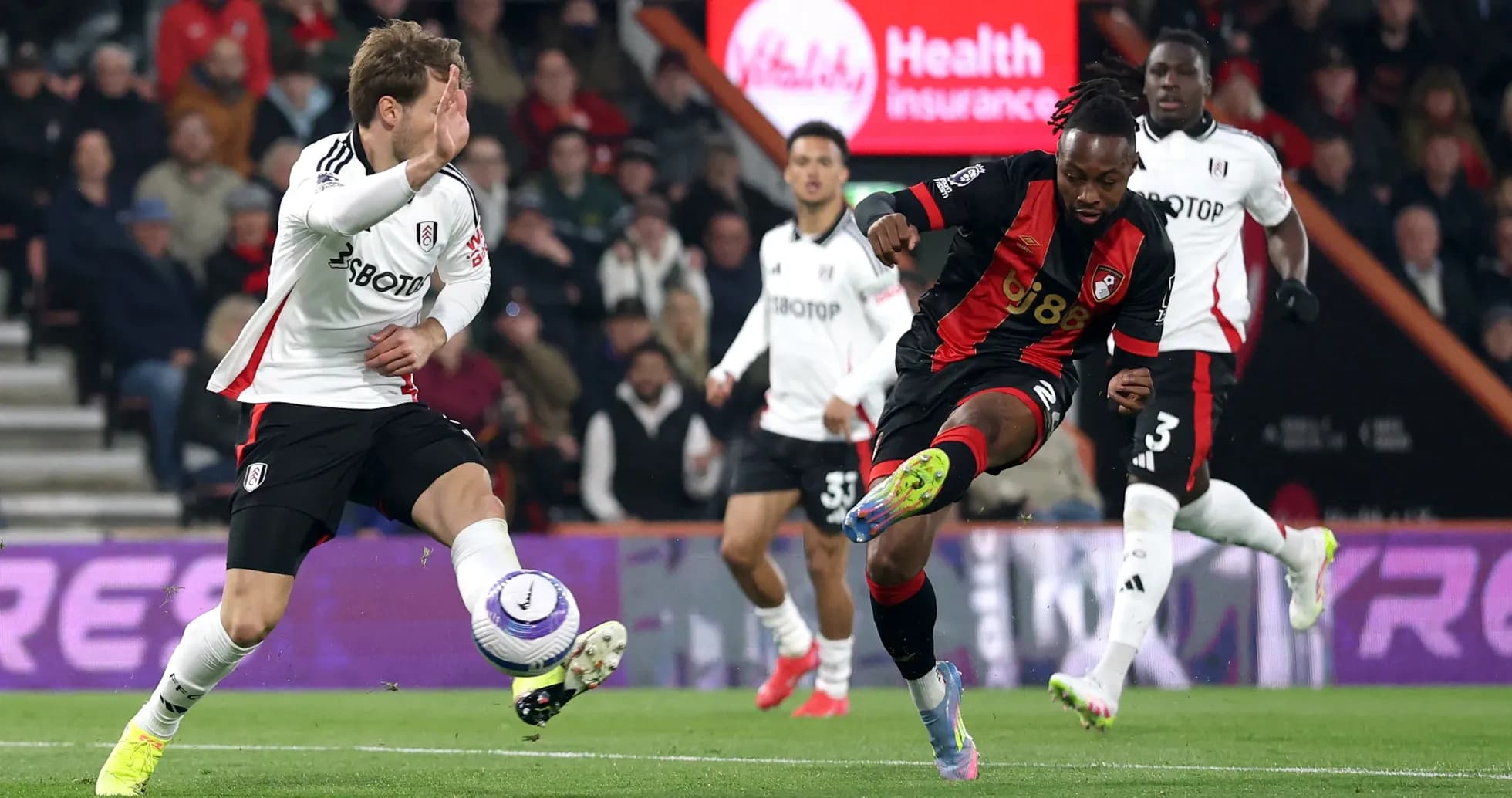
Bournemouth's Tactical Edge Secures 1-0 Victory Against Fulham
Craven Cottage, under a cold May sky, staged a study in contrasts. Fulham, 11th in the Premier League on 48 points with a negative goal difference of -6 (44 scored, 50 conceded overall), met a Bournemouth side quietly assembling a European case, 6th on 55 points with a positive goal difference of 4 (56 scored, 52 conceded overall). Heading into this game in Round 36, it was mid-table security against upward momentum – and by full time, Bournemouth’s 1-0 away win underlined the difference in edge between the two squads.
Fulham’s season-long identity at home has been clear: relatively strong at Craven Cottage, fragile elsewhere. They had won 10 of 18 at home, scoring 28 and conceding 20, a home attacking average of 1.6 goals per match and conceding 1.1. Bournemouth arrived with a more balanced, resilient profile: 13 wins in total, and crucially, a potent attack that travels well – 28 away goals in 18 matches, an away average of 1.6 goals scored, albeit with 33 conceded on their travels at 1.8 per game.
Marco Silva’s lineup reflected a desire to keep that home solidity while adding technical control. Bernd Leno anchored the side, shielded by a back four of Timothy Castagne, Joachim Andersen, Calvin Bassey and Antonee Robinson. In midfield, Saša Lukić and Tom Cairney offered structure and distribution, with Harry Wilson, Emile Smith Rowe and Samuel Chukwueze supporting central striker Rodrigo Muniz.
Andoni Iraola’s Bournemouth, by contrast, leaned into mobility and vertical threat. Đorđe Petrović started in goal behind a back line of Adam Smith, James Hill, Marcos Senesi and Adrien Truffert. The midfield band – Alex Scott, Ryan Christie, Rayan and Eli Junior Kroupi, with Marcus Tavernier drifting between lines – supported lone forward Evanilson. On paper, it was a side built to break lines quickly and punish any looseness in Fulham’s structure.
The tactical voids on both sides were significant. Fulham were again without A. Iwobi and R. Sessegnon, both missing through injury. Iwobi’s absence stripped Silva of a ball-carrying outlet between the lines, pushing more creative burden onto Cairney and Wilson. For Bournemouth, the loss of L. Cook and J. Soler to hamstring injuries removed two potential tempo-setters in midfield, while the suspension of A. Jimenez – a defender with 10 yellow cards this season and 69 tackles plus 11 successful blocks – took away an aggressive, front-foot defender perfectly suited to Iraola’s pressing game. Without him, Bournemouth had to trust Hill and Senesi to manage Fulham’s central threat without that extra dose of chaos and bite.
Discipline loomed in the background of this contest. Heading into this game, Fulham’s yellow card distribution showed a worrying late-game trend: 21.92% of their yellows arrived between 46-60 minutes, 20.55% between 76-90, and a further 23.29% in 91-105 – a pattern of mounting frustration and fatigue as matches wore on. Bournemouth’s profile was even more volatile late: 27.71% of their yellows came in the 76-90 window and 20.48% in 91-105, with red-card flashpoints from Ryan Christie already on the season record. This was a fixture primed to be decided not just by quality, but by who could keep their heads in the decisive phases.
The “Hunter vs Shield” duel tilted subtly in Bournemouth’s favour. Eli Junior Kroupi arrived as one of the league’s most efficient young forwards: 12 goals from 31 appearances, with 20 of 29 shots on target and 2 penalties scored from 2 taken. His movement from the left or between lines promised to test a Fulham defence that, overall, conceded 1.4 goals per match and had shipped 30 on their travels – but at home, Fulham’s back line had been far tighter with only 20 conceded. Andersen, the defensive leader with 19 successful blocks and 36 interceptions, carried the burden of containing Bournemouth’s flexible front four.
On the other side, Fulham’s main attacking hunter was not a pure striker but Harry Wilson. With 10 goals and 6 assists in 34 league appearances, 38 key passes and 48 shots (24 on target), Wilson has been Fulham’s primary source of end product and creativity. Against a Bournemouth defence that concedes 1.8 goals per game away and 33 away goals overall, his ability to exploit half-spaces and deliver from wide areas should have been decisive. Yet Bournemouth’s clean-sheet record – 11 in total, 5 on their travels – spoke to a side that, when compact, can bend without breaking.
The “Engine Room” duel was equally nuanced. For Fulham, Lukić is the quiet enforcer: 44 tackles, 9 successful blocks and 16 interceptions, but also 50 fouls committed and 9 yellow cards. He sets the tone physically, sometimes too eagerly. Across from him, Bournemouth’s Christie represented a different kind of engine – 547 passes at 78% accuracy, 27 tackles, 12 interceptions, 39 dribble attempts with 19 successes, plus the ever-present risk of disciplinary drama with a red card already this season. Their clash determined whether Fulham could build calmly through Cairney and Smith Rowe, or whether Bournemouth would turn midfield into a transition battleground.
In the end, Bournemouth’s 1-0 win felt like the logical extension of their season-long xG and defensive profile rather than an anomaly. A team that scores 1.6 goals per match both at home and on their travels, with 56 in total, will eventually find a way through, especially against a Fulham side whose overall concession rate of 1.4 per game hints at structural vulnerability. Fulham’s home strength – 10 wins, 28 scored, 20 conceded – gave them a platform, but their broader inconsistency and late-game disciplinary spikes always threatened to undercut them.
Following this result, the tactical verdict is clear. Bournemouth’s squad, even with key absences, is built for controlled aggression: a young finisher in Kroupi, a mobile forward in Evanilson, and a layered midfield that can both press and play. Fulham, by contrast, remain heavily dependent on Wilson’s dual role as scorer and creator, with Lukić and Andersen asked to do too much defensive firefighting.
On another day, Fulham’s home attacking averages might have produced more, but here Bournemouth’s defensive solidity on their travels and their sharper edge in the final third turned a tight, tactical contest into three precious away points – and a statement that their European push is rooted in more than just form; it is embedded in the structure and balance of this squad.