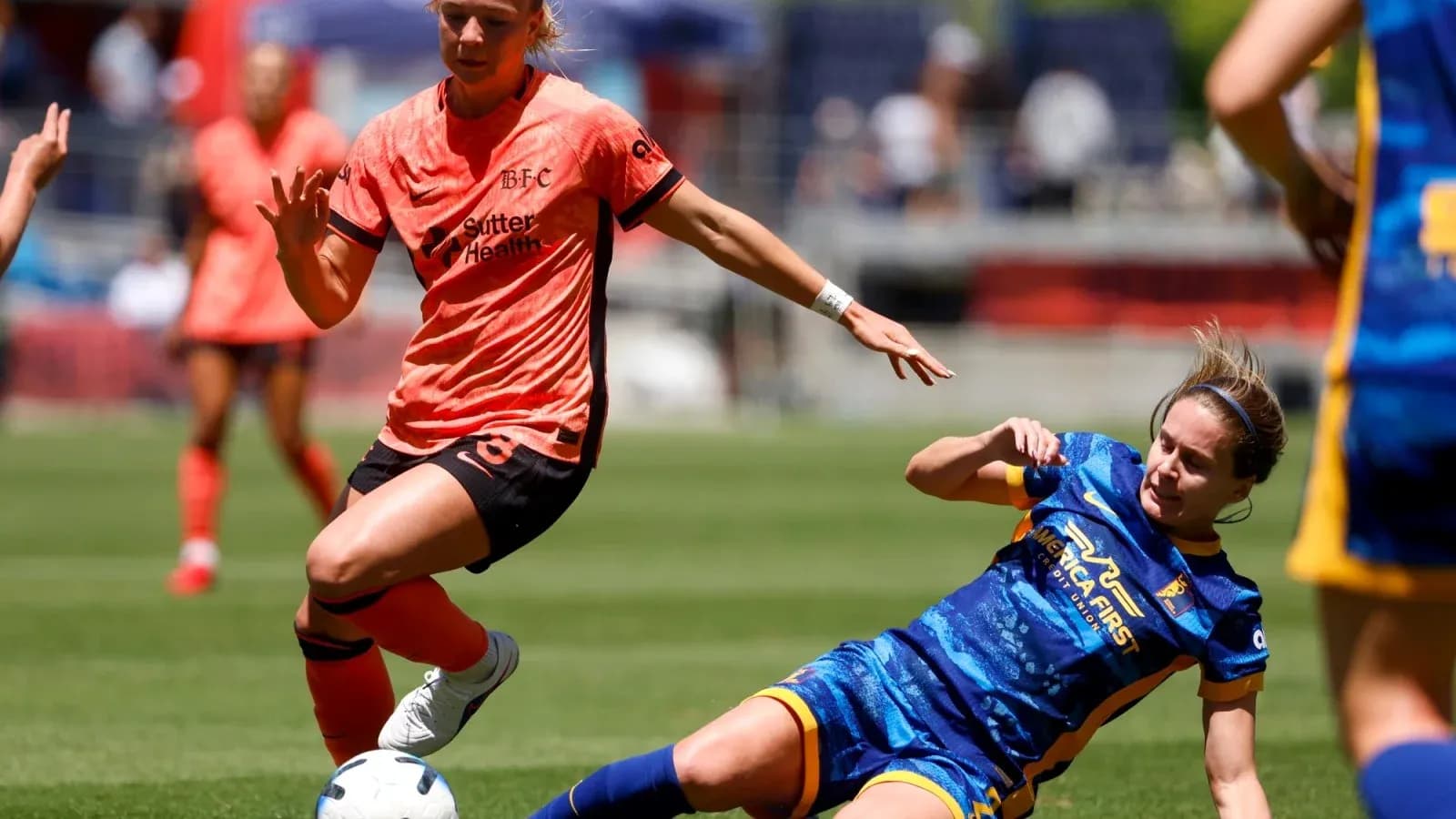
Bay FC vs Utah Royals W: Tactical Arm-Wrestle Ends in 0–0 Stalemate
Under the California dusk at PayPal Park, Bay FC and Utah Royals W played out a 0–0 that felt less like a stalemate and more like a tactical arm-wrestle between two sides at very different stages of their NWSL Women journeys. Following this result, the table still reflects that contrast: Bay FC sit 10th with 10 points and a goal difference of -3 (7 scored, 10 conceded), while Utah remain in the upper tier in 4th on 17 points with a goal difference of 6 (12 scored, 6 conceded). Yet on the night, the gap between them was shaved down to the fine margins of structure, discipline, and missed opportunities in the final third.
I. The big picture – two 4-2-3-1s, two different identities
Both coaches doubled down on their season-long blueprint. Emma Coates again sent Bay FC out in a 4-2-3-1, the same shape they have used in all 7 league fixtures so far. Jimmy Coenraets mirrored that with Utah, who have also leaned heavily on 4-2-3-1 (8 times this season), occasionally flirting with 4-3-3.
Heading into this game, Bay FC’s seasonal DNA was that of a side still learning the league’s rhythms. Overall they averaged 1.0 goals for and 1.4 goals against per match, with their home numbers even starker: just 3 goals at home in 4 games (0.8 on average) and 6 conceded (1.5 on average). The PayPal Park crowd has seen volatility rather than control, with only 1 home win and 1 home clean sheet in the campaign.
Utah arrived as one of the form teams in the competition. Overall they had 5 wins from 9, with 12 goals scored and only 6 conceded – a defensive platform of 0.7 goals against per game both at home and on their travels. They had already banked 5 clean sheets, including 3 away, and failed to score in just 1 away match all season. Their form line of LDWWWWWD spoke of a side that had learned to close out contests.
That context made the 0–0 feel like a moral victory for Bay’s defensive structure and a small frustration for Utah’s usually efficient attack.
II. Tactical voids and the disciplinary undercurrent
With no official list of absentees provided, the most telling “voids” were tactical rather than personnel-driven. Bay FC’s XI placed a heavy creative burden on the line of three behind striker K. Lema: T. Huff centrally, flanked by D. Bailey and R. Kundananji. Without a pure, high-volume creator in the top-assists charts on the pitch, Bay leaned on collective movement rather than a single playmaker.
Utah, by contrast, fielded two of the league’s most productive attackers in C. Lacasse and Minami Tanaka behind striker K. Palacios. Between them, heading into this fixture, Lacasse had 3 goals and 2 assists, while Tanaka had 1 goal and 3 assists. On paper, Utah had the cleaner attacking mechanisms; on grass, Bay’s double pivot and back four worked relentlessly to break those patterns.
Disciplinary tendencies shaped the tone. Bay FC’s season-long yellow-card profile shows a late-game spike: 23.53% of their yellows come in the 76–90 minute window, with another 23.53% in 91–105. They are a side that often finishes on the disciplinary edge, and their only red this season has also arrived in added time (91–105 at 100.00% of their reds). Utah’s yellows are more evenly spread but still peak in the 61–75 range at 27.78%, with a notable red-card risk late on: 100.00% of their reds have come in the 76–90 window.
That shared late-game volatility added tension to every marginal decision as the clock ticked past 70 minutes. Both midfields had to walk a fine line between aggression and overstepping, especially players like C. Hutton for Bay and Ana Tejada for Utah, both prominent in the league’s card rankings.
III. Key matchups – Hunter vs Shield, and the engine room
The headline duel was Utah’s “Hunter” against Bay’s “Shield”: C. Lacasse versus a Bay back line that has been leaky at home. Lacasse’s season numbers are those of a complete wide forward – 3 goals, 2 assists, 8 shots with 6 on target, 20 key passes, and 22 tackles. She is not just a finisher but Utah’s first presser and a secondary playmaker. Against a Bay defence that had allowed 6 goals at home heading into this game, her movement between the lines and into the half-spaces was Utah’s primary weapon.
Bay’s answer was collective: central defenders A. Cometti and J. Anderson staying compact, full-backs S. Collins and A. Denton narrowing to block inside channels, and the double pivot of H. Bebar and Hutton sliding across to deny easy progression into Lacasse’s feet. The fact that Utah, who average 1.3 goals for overall and had scored 8 away, left PayPal Park without a goal underlined how well Bay’s “Shield” held.
In the “Engine Room”, the duel between Utah’s Minami Tanaka and Bay’s Hutton shaped the tempo. Tanaka’s season numbers – 176 passes at 70% accuracy, 7 key passes, 13 dribble attempts, and a penalty won and scored – mark her out as Utah’s connector and foul-drawer. Hutton, meanwhile, is Bay’s midfield metronome and enforcer: 262 passes at 75% accuracy, 18 tackles, 2 blocked shots, and 14 interceptions. Hutton’s 3 yellow cards this season underline how often she operates on the edge, but here that edge was essential to disrupting Utah’s rhythm.
Higher up, Bay’s attacking midfield triangle had to find ways around Utah’s disciplined double pivot, anchored by Tejada. Huff’s season profile – 1 goal, 1 assist, 6 shots, 3 key passes – suggests a player capable of arriving late into the box. Against a Utah side that concedes just 0.7 goals per game overall and on their travels, those late runs were one of Bay’s few viable routes to goal.
IV. Statistical prognosis – xG tilt vs defensive solidity
Even without explicit xG numbers, the season data offers a proxy for how this fixture might tilt if replayed. Utah’s attacking baseline of 1.3 goals per match, combined with Bay’s 1.4 goals conceded overall and 1.5 at home, suggests that in a typical game Utah would generate the higher-quality chances. Their defensive record – 6 goals conceded in 9 (0.7 per match) and 4 conceded in 6 away – reinforces the idea that they usually manage game states with authority.
Bay, however, have shown they can compress games into low-event contests. They have 2 clean sheets overall despite their negative goal difference, and they have failed to score in 3 matches. When they drag opponents into their kind of match – compact, attritional, decided in the middle third – their defensive structure can neutralize even in-form attacks.
Following this result, the underlying prognosis remains nuanced. Over a larger sample, Utah’s superior attacking metrics and defensive solidity would still make them favourites in a rematch. Their penalty record – 2 taken, 2 scored at 100.00% – adds an extra layer of threat in tight contests. But Bay’s ability to hold a high-flying side like Utah scoreless, with a disciplined 4-2-3-1 and a combative midfield spine, hints at a team growing into its identity.
In a group-stage landscape where every point shapes the knockout picture, this 0–0 felt like Utah’s missed opportunity to turn control into separation, and Bay’s quiet statement that, even from 10th place, they have the structure and grit to trouble the league’s elite when the game becomes a tactical chess match rather than a shootout.