Portland Timbers II vs Ventura County: A Thrilling MLS Next Pro Showdown
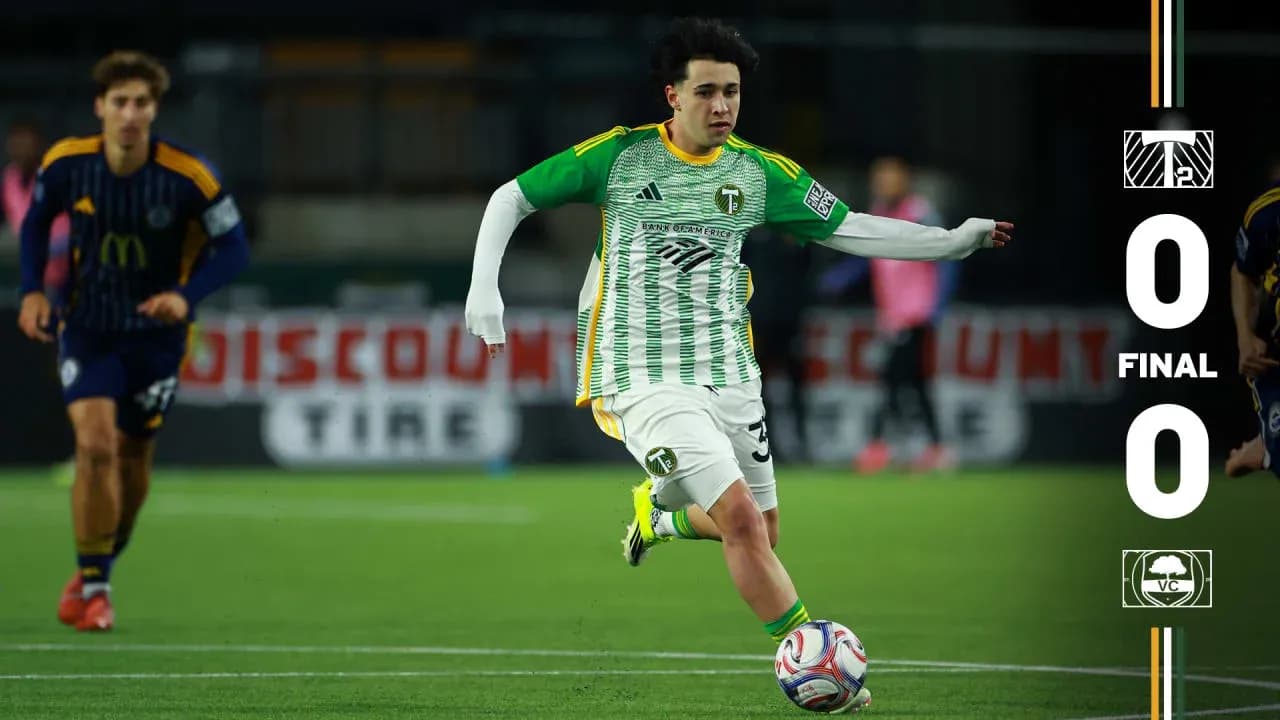
On a cool night at Providence Park, a group-stage tie in MLS Next Pro carried the tension and rhythm of a knockout. Portland Timbers II and Ventura County went the distance – 120 minutes, a 3-3 draw, and finally a 7-6 decision to the visitors in the shootout. For two squads built around development as much as results, this was a revealing stress test of structure, mentality and depth.
Pre-Match Analysis
Heading into this game, the numbers already hinted at a clash of footballing identities. Portland Timbers II arrived as a volatile side in the Pacific Division, sitting 4th with 14 points from 8 matches. Overall they had won 4 and lost 4, with an all‑competition goal difference of 0, scoring 11 and conceding 11 in league play. The season statistics deepen the picture: in total this campaign they had scored 12 and conceded 13, averaging 1.5 goals for and 1.6 against per match. At home they had been open and fragile – 8 goals scored and 8 conceded, an average of 1.6 in both directions.
Ventura County, by contrast, came in as pace-setters. They topped the Pacific Division with 19 points from 11 matches, their overall league goal difference a slender but significant +3 (19 scored, 16 conceded). The broader seasonal dataset underlines their attacking intent: in total this campaign they had 22 goals for and 17 against, averaging 2.0 scored and 1.5 conceded per match. On their travels they had been ruthless: 5 wins and just 1 defeat in 6 away fixtures, with 12 goals scored and 7 conceded, an away average of 2.0 goals for and 1.2 against.
Team Selections
Jack Cassidy’s selection for Portland was heavy on youth but not short on personality. H. Sulte anchored the side from goal, with a back line built around C. Ferguson, A. Bamford and N. Lund, and the powerful presence of C. Ondo. The midfield band – E. Izoita, L. Fernandez‑Kim and V. Enriquez – had the task of knitting together possession and screening transitions, while the attacking trident of C. Griffith, D. Cervantes and N. Santos offered mobility and pressing energy rather than a traditional target man.
The inclusion of Colin Griffith was particularly symbolic. Listed as Portland’s leading figure across the league’s scoring, assists and disciplinary charts – even if his raw numbers remain modest – Griffith represents the club’s belief in his all‑round influence. Deployed from the start here, his role was less about raw output and more about being the reference point for Portland’s vertical surges.
Ventura County, without a named coach in the data but clearly well-drilled, lined up with B. Scott in goal and a back line featuring M. Vanney, E. Martinez and S. Hernandez. The spine was built around Pepe and B. Phan, with A. Vilamitjana, V. Garcia and D. Vanney offering the connective tissue between lines. Up front, E. Preston and J. Placias provided movement and pressing lanes, ideal for a side that thrives in transition and has failed to score in exactly zero matches this campaign.
First Half
Tactically, the first act of this story belonged to Ventura. Their season-long attacking average of 2.0 goals per game, combined with Portland’s tendency to concede 1.6 in total, foreshadowed their ability to punch early and often. The half-time scoreline of 2-1 to the visitors reflected that balance: Ventura’s directness and confidence on their travels up against a Portland side still trying to find defensive stability at home.
But Portland’s DNA is that of a team that refuses to die quietly. Their biggest home results this season include a 2-1 win and a chaotic 2-3 defeat, and that volatility surfaced again. The match stretched, and Portland’s midfield began to bite. The club’s card profile tells its own tale: in total this campaign, 26.32% of their yellow cards have come between 61-75 minutes, with another 21.05% between 76-90 and 10.53% between 91-105. This is a side that grows more combative as the match wears on, and that edge helped drag the game back to 3-3 by full time.
Second Half
Ventura’s own disciplinary pattern is more concentrated. Fully 93.75% of their yellow cards arrive after the interval, split evenly across 46-60, 61-75 and 76-90 minutes at 31.25% each. That late-game aggression mirrored the narrative on the pitch: two teams leaning into duels, tackles and tactical fouls as the stakes rose and the legs tired.
In the “Hunter vs Shield” matchup, Ventura’s attack was always likely to ask questions of Sulte and his back four. On their travels this season, Ventura had scored 12 times and conceded 7, while Portland at home had an identical 8 for and 8 against. The visitors’ relentless scoring record – never once failing to hit the net in any fixture – met a Portland defence still searching for clean-sheet consistency, with just 1 shutout at home and 3 overall. Over 120 minutes, that dynamic played out as expected: Ventura repeatedly found ways to create chances, while Portland were forced to chase and respond.
The “Engine Room” battle was subtler but just as decisive. Portland’s central trio of E. Izoita, L. Fernandez‑Kim and V. Enriquez had to manage the tempo against Ventura’s Pepe, B. Phan and A. Vilamitjana. Portland’s season-long form line of WWLLWLWD speaks of a team oscillating between control and chaos, and in this match the pendulum swung both ways. When Portland compressed the middle, they could pin Ventura back and bring Griffith and Cervantes into promising positions. When they lost that grip, Ventura’s vertical passing lanes opened for Preston and Placias.
Psychological Factors
Set pieces and penalties added an extra layer of psychology. Heading into this game, Portland had earned 9 penalties in total, scoring 8 and missing 1 – an 88.89% conversion rate that is impressive but not flawless. That single miss hangs in the background of any shootout narrative. Ventura, by contrast, had taken just 1 penalty and scored it, a clean 100.00% record from the spot. When the match finally tipped into a shootout, those micro-histories of success and doubt became part of the psychological landscape.
Post-Match Reflection
Following this result, Ventura’s identity as an away specialist is only reinforced. Their away record of 5 wins and 1 loss in league play, with an away average of 2.0 goals for and 1.2 against, now has the added aura of a high-pressure shootout triumph in a hostile setting. Portland, meanwhile, will see both promise and concern. They can go toe-to-toe with the division leaders, scoring three times and surviving 120 minutes, but their broader season numbers – 1.6 goals conceded per match in total, and only 3 clean sheets – underline the structural work still to be done.
From a statistical prognosis perspective, the outcome broadly aligns with the underlying trends. A high-scoring draw between a free-scoring, road‑strong Ventura and a high-variance Portland was always plausible. The shootout, inherently volatile, tilted toward the side with the cleaner penalty record and the more ingrained winning habit. Yet for both squads, this night will be remembered less for the final kick and more for the way their tactical identities were exposed, tested and, in Ventura’s case, vindicated under the floodlights of Providence Park.