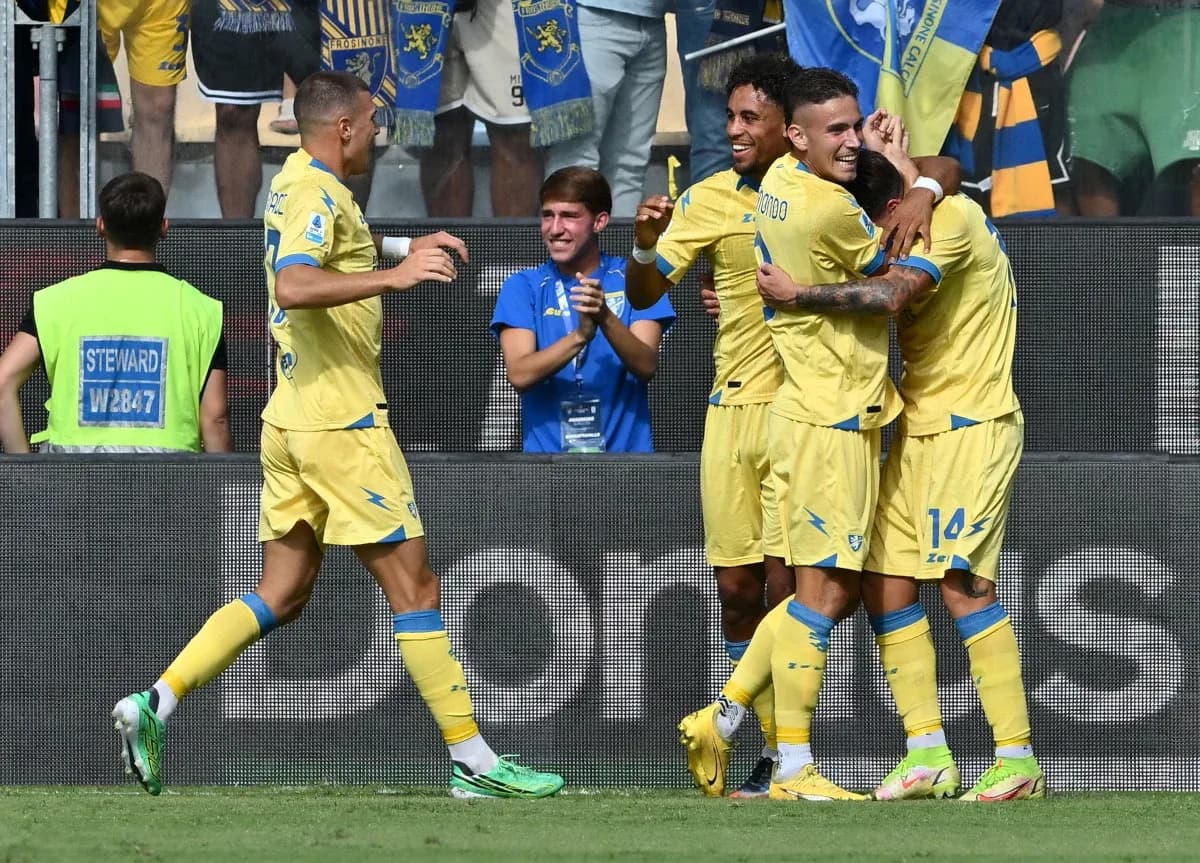
AS Roma's Tactical Masterclass in 4–0 Victory Over Fiorentina
Under the late-summer lights of the Stadio Olimpico, AS Roma announced their new Serie A campaign with a statement: a 4–0 dismantling of Fiorentina that felt as much like a tactical manifesto as a scoreline. Following this result, Roma sit 1st with 3 points and a goal difference of +4 (4 goals for, 0 against), while Fiorentina are 20th with 0 points and a goal difference of -4 (0 for, 4 against). One match is a snapshot, not a season, but the patterns on display in Rome were loud and clear.
I. The Big Picture: Structures and Intent
Roma lined up in a 3-4-2-1 under Piero Gasperini Gian, and it looked instantly bedded in. The back three of G. Mancini, E. Ndicka and M. Hermoso gave a solid, aggressive base, allowing the wing-oriented midfield line of E. Lulli, B. Cristante, M. Kone and Wesley Franca to push high and compress the pitch. Ahead of them, P. Dybala and R. Mora floated behind lone striker D. Malen, forming a fluid triangle that Fiorentina never really solved.
The numbers back the eye test. At home this season, Roma have played 1 match, scored 4 goals and conceded none. Their average at home is 4.0 goals scored and 0.0 conceded, with a clean sheet in their only outing and no failure to score. It is early, but as an opening thesis it is emphatic: vertical, ruthless, and structurally sound.
Fiorentina, under Fabio Grosso, responded with a 4-3-2-1. D. de Gea was shielded by a back four of Dodo, R. Dragusin, L. Ranieri and Joao Mario, with a midfield trio of C. Ndour, N. Fagioli and M. Brescianini behind advanced midfielders F. Mastantuono and A. Atta, supporting M. Pellegrino up front. On their travels, they have played 1 match, conceded 4, and scored none, averaging 0.0 goals for and 4.0 against. The shape promised compactness but delivered fragility whenever Roma accelerated through the middle and half-spaces.
II. Tactical Voids: Absences and Discipline
Both squads were missing important pieces. Roma had to do without M. Bah (knee injury) and creative heartbeat L. Pellegrini (thigh injury). That absence forced responsibility onto others in the half-spaces—and they responded. Dybala became the primary playmaker, while Malen and Mora attacked the box with relentless timing.
Fiorentina’s flanks were weakened by the absence of F. Parisi (knee injury) and R. Sottil (back injury). Without Parisi’s balance on the left and Sottil’s vertical threat, Grosso’s side lacked both secure build-up on one side and the ability to stretch Roma’s back three in transition. The result was a team stuck between pressing and retreating, too slow to do either convincingly.
Disciplinary trends also hinted at the game’s tone. Roma’s season card profile so far shows yellow cards concentrated in the 31–45 and 46–60 minute windows, each accounting for 50.00% of their yellows. That suggests a side that tackles aggressively around half-time, often as they raise the press or manage transitions. Fiorentina’s yellows are similarly split, 50.00% between 16–30 and 61–75 minutes, reflecting frustration both as Roma seized early control and then killed the game after the break.
Individually, M. Hermoso’s booking for Roma is telling. He has already made 2 tackles and 3 interceptions this season, plus 11 duels with 6 won, embodying a proactive defender who steps out of the line. For Fiorentina, N. Fagioli carries a yellow card from this match, but also 2 tackles and 1 interception—an enforcer forced into firefighting rather than orchestrating.
III. Key Matchups: Hunter vs Shield, Engine Room Battles
The headline duel was D. Malen versus Fiorentina’s defensive block. Malen’s opening salvo in Serie A is devastating: 3 goals from 4 shots (3 on target), a rating of 10, plus 1 key pass and 4 dribble attempts with 3 successful. His movement in the channels between Dragusin and the full-backs repeatedly pulled Fiorentina’s line out of shape, opening corridors for Dybala and Mora.
Roma’s “hunter” was fed by an elite creator. Dybala, currently the top assist provider in the league, delivered 3 assists, 4 key passes and 41 total passes at 80% accuracy. Operating as a right-sided playmaker behind Malen, he constantly found pockets between Fiorentina’s midfield three and back four. Every time Fiorentina tried to compress centrally, he drifted into the half-space, receiving on the half-turn and threading runs in behind.
On the other side, Fiorentina’s shield simply could not hold. Their season defensive numbers on their travels—4 goals conceded in 1 match, no clean sheets, and an away goal average conceded of 4.0—are brutally exposed by Roma’s verticality. Dragusin and Ranieri were left repeatedly defending large spaces, with Dodo and Joao Mario pinned back by Roma’s wing-backs and wide midfielders.
In the engine room, Roma’s double pivot of Cristante and Kone quietly dictated the tempo. Cristante’s positional intelligence allowed Ndicka and Hermoso to step into midfield, while Kone’s energy closed Fiorentina’s passing lanes into Fagioli and Brescianini. Fiorentina’s midfield trio, on paper balanced, spent more time chasing shadows than constructing attacks.
Off the bench, N. Pisilli added another layer to Roma’s threat. In just 11 minutes, he scored 1 goal from his only shot on target, completed 10 passes at 90% accuracy and added 1 key pass. His cameo underlined the depth of Roma’s attacking options even without L. Pellegrini.
IV. Statistical Prognosis: What This Performance Projects
Overall this campaign, Roma have 1 win from 1, 4 goals scored and 0 conceded. Fiorentina have 1 defeat from 1, 0 scored and 4 conceded, and have already failed to score once. Neither side has taken or missed a penalty, so the story is purely about open-play patterns.
If we map style to likely underlying xG, Roma’s chance creation—4 goals, multiple shots for Malen and Dybala, and key passes from Dybala and Pisilli—suggests a high expected goals figure backed by quality finishing rather than fluke. Defensively, zero goals conceded and a back three led by active defenders like Hermoso indicate a low xG against in this match.
Fiorentina’s numbers point the other way. With no goals, no clear attacking standout, and a defensive line that has already allowed 4 on their travels, their early-season xG against profile is likely poor, especially against teams that can overload the half-spaces as Roma did.
Following this result, the prognosis is clear: Roma look built for a Champions League chase, with a coherent 3-4-2-1, a lethal hunter in Malen, and a conductor in Dybala. Fiorentina, rooted at the bottom after one match, must repair their defensive structure away from home and find a way to get more from creative hubs like Fagioli and Mastantuono. The tactical gulf at the Olimpico may not define the entire season—but it has set the tone.