Arsenal Dominates Coventry in Title Defense Opener
The Premier League is back and Arsenal slipped into it like they’d never been away, brushing Coventry aside 3-0 in a game that felt less like an opener and more like a systems check.
No drama. No late scramble. Just a champion side idling through the gears.
For a fanbase that spent last season living on its nerves, this was something new: routine. The kind of afternoon where the tension drains out of the stadium early and never comes back. If this is what “retaining” looks like, Arsenal’s supporters will take it.
The challenge this year is different. Last season was about ending a wait. This one is about living with the weight. Do you snarl your way through it in Roy Keane fashion, turning every win into an act of self-flagellation? Or do you do what Arsenal seemed intent on here – win the league, but win it cleaner, calmer, better?
On this evidence, they’ve chosen the second path.
Arsenal in demo mode
From the first whistle, Mikel Arteta’s team played like a side testing out new software. Shapes, rotations, patterns. Coventry chased, but they were always half a beat behind something quicker and more finely tuned than they are used to facing.
Arteta and Frank Lampard cut almost comic mirror images on the touchline: black slacks, black mock-turtlenecks, black trainers with white soles. Two managers dressed for a tech conference, watching a game that, for long stretches, looked like a high-end training drill.
The first goal, on 15 minutes, was pure polish. Christos Tzolis snapped into a tackle on Milan van Ewijk by the right touchline, won the ball and immediately fed Riccardo Calafiori. The Italian swept a low pass across the front of the box, threading it through a tight channel to Kai Havertz.
Havertz didn’t bother with a touch. Left foot, first time, the ball kissed into the net with such lazy assurance you could almost imagine him doing it in slippers. One chance, one goal, Coventry sliced open in three passes.
The second came quickly and underlined the gap in class. Declan Rice drove forward, punching a hole through midfield, but the real incision belonged to Martin Ødegaard. A short, nudged pass from the Norwegian shifted the whole move wide, opening the angle for the cross that finished Coventry off. It was classic Ødegaard: the pass before the pass, the tiny adjustment that makes everything else possible. Footballing WD‑40.
Coventry never really recovered. They weren’t terrible. They were just outpaced, out-thought and out-manoeuvred by a side operating on a different speed setting.
Ødegaard finds his old rhythm
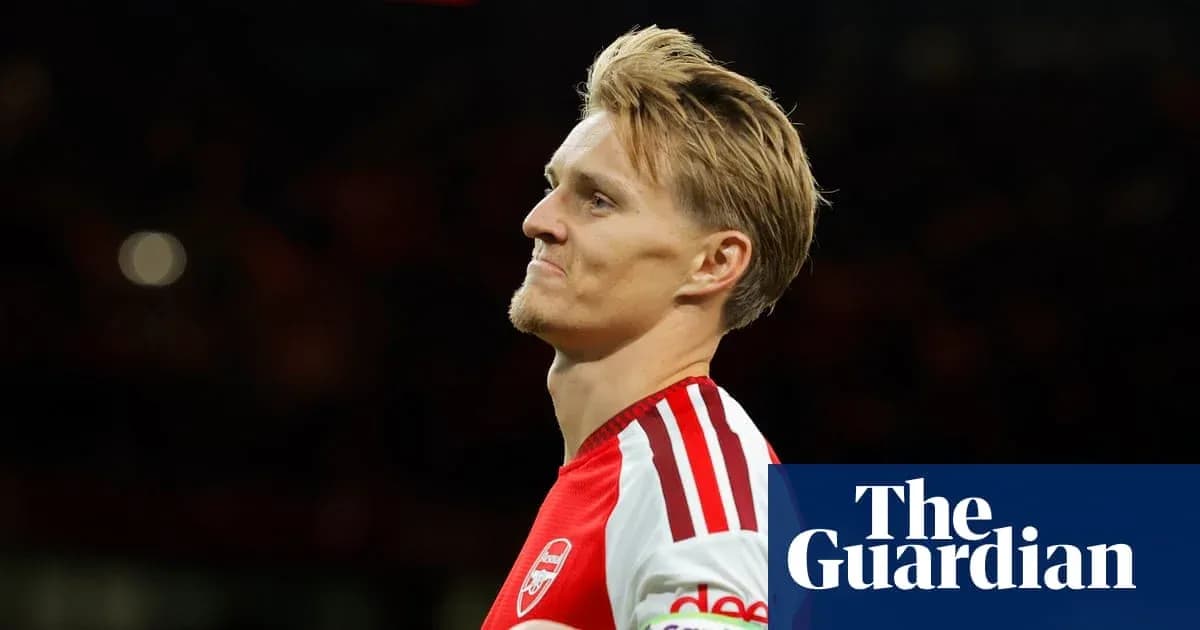
Arsenal’s third, early in the second half, carried the headline: Ødegaard scores. The story ran deeper than that.
Last season, the captain played through knocks and niggles, never quite hitting the sharp, scampering levels that once made him the team’s metronome. With no new superstar forward arriving this summer, attention has swung back to him. If Arsenal are going to defend this title, they need their conductor back in full flow.
Here, for 75 minutes, he looked more like the half-remembered version that once ran games for fun. Seventy-two touches, 55 short, clipped passes, endless little angles. Always on the move. Always showing. A ferret in human form, harrying and probing, with the look of a young corporate analyst and the feet of a street footballer.
His goal on 48 minutes was at once ridiculous and important. Ødegaard had already knitted the move together from his usual pocket just behind the front line, tugging at the threads, drifting into space. When the ball broke to him in front of goal, the technique deserted him for a second.
He has a curious way of striking a ball at times, almost sidling up to it and catching it at an odd angle. This one was a mishit, a sort of power-stub that floated off to Carl Rushworth’s left. The Coventry goalkeeper clawed at it, pawing the air like a cat chasing a shadow. The ball dropped in anyway.
Ødegaard burst out laughing as he turned away, but the joy underneath it was real enough. This was his first goal at the Emirates since December. Scruffy or not, it landed like a small marker: he’s back on the scoresheet, back in the rhythm.
Old partnerships, old pleasures
The most encouraging moments for Arsenal came either side of that finish. Not the goals themselves, but the patterns that led up to them. The old partnerships were sparking again.
Late in the first half, Ødegaard and Bukayo Saka started to play their private game down the right. One-touch, two-touch, six or seven passes fizzed between them in a tight space, Coventry defenders spinning in circles, until the ball was rolled into Rice, who shot just wide.
It felt like a throwback. Those little combinations, the sense of playfulness between them – that’s rare at the very top level, where so much is drilled and rehearsed. Arsenal’s right side has always had a touch of improvisation, a sense that these are players who actually enjoy the connection as much as the outcome.
If that chemistry is returning, it changes the whole feel of this team.
A gentler kind of pressure
By the time the final whistle went, North London’s early-evening chill had settled in and the tension had long since left the building. Arsenal had won as comfortably as they have at any point in the last two seasons.
This was not a statement win in the chest-beating sense. It was something more ominous for the rest of the league: a title holder barely breaking sweat, yet still three goals clear.
The season will not stay this simple. It never does. But if Arsenal can make more games look like this – less chaos, less pain, more control – then the question shifts.
It’s no longer whether they can win the league again.
It’s how much better they can be while doing it.