Argentina's Golden Generation Faces New Challenges in World Cup
Argentina arrive in Kansas with the same old faces and a brand new question: can this golden generation squeeze one more World Cup out of ageing legs?
Lionel Scaloni has barely touched his winning formula. Seventeen of the 26 players who conquered Qatar are here again. From the XI that started the final against France in Lusail, only Ángel Di María is missing, retired on a high after being named Player of the Match in the 2024 Copa America final.
Continuity has been the backbone of Scaloni’s reign. Sixteen members of this squad were there for his first trophy, the 2021 Copa America. While Argentina have stayed loyal, their rivals have churned. Only 11 players from Brazil’s 2019 Copa America squad have made it to North America, three of them goalkeepers. England, from their Euro 2020 finalists, have kept just nine.
Argentina, by contrast, have kept a family together. The bond is obvious: a group that has travelled, suffered and won almost everything side by side over the past five years. That unity has carried them through storms.
Now it collides with the clock.
A champion’s core, an ageing spine
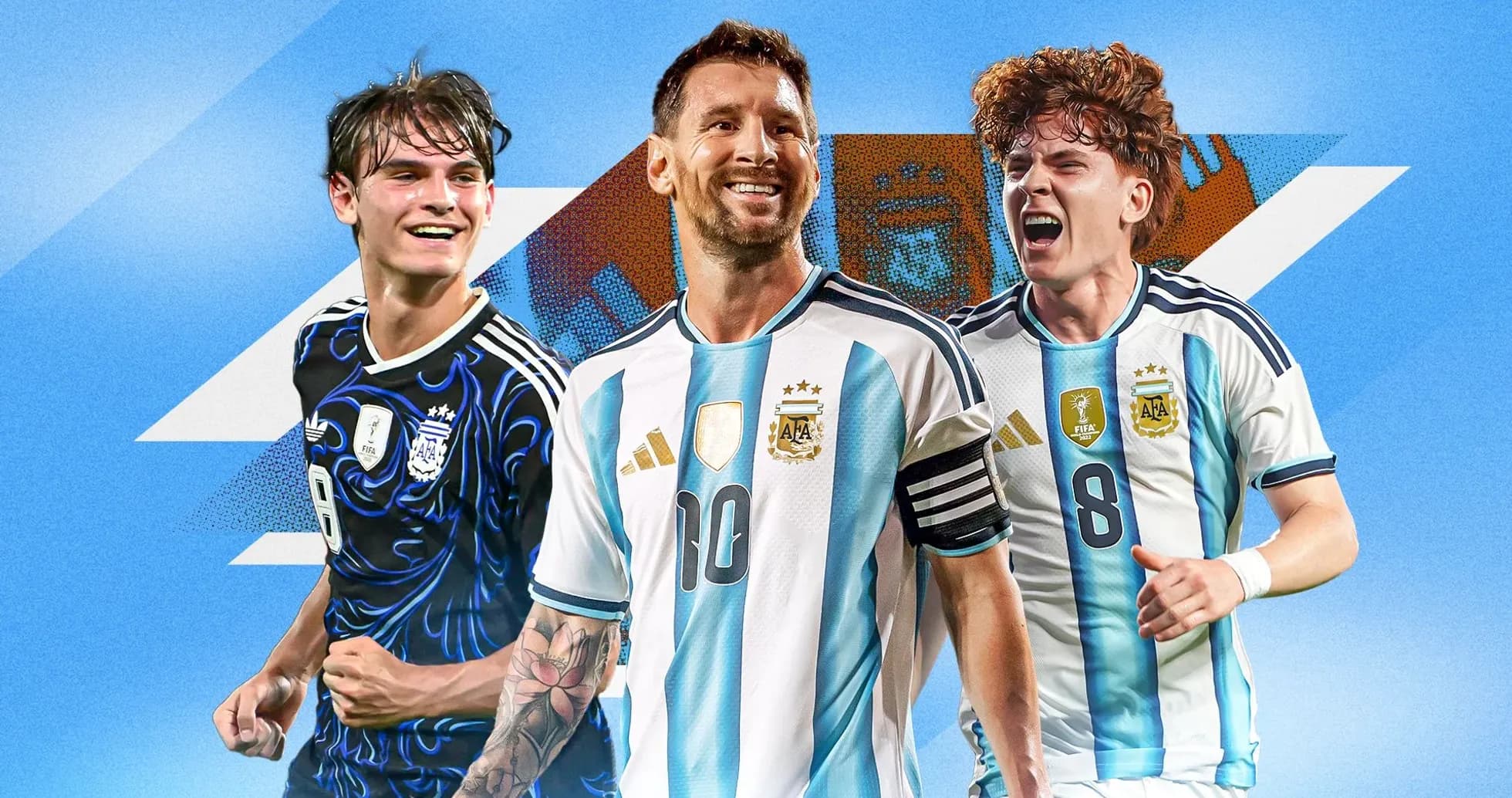
Nine players in Scaloni’s group are the wrong side of 30. Not fringe figures, either. Emiliano Martínez, Rodrigo De Paul and, of course, Lionel Messi – who will turn 39 during what will be his record sixth World Cup – remain central to the plan.
At the other end, the future is barely represented. Only three players are under 25: Giuliano Simeone, Valentín Barco and Nico Paz. Talents such as Franco Mastantuono and Alejandro Garnacho have been left to watch this tournament from afar.
The numbers are stark. The squad’s average age sits north of 29. The concern is not just age, but mileage. The past three seasons have been a blur of flights, finals and must-win nights. Eleven players followed up the 2024 Copa America by heading straight into last summer’s Club World Cup. For some, football simply hasn’t stopped.
Since the start of the 2024-25 season, Enzo Fernández and Julián Álvarez have each played 121 games for club and country. One hundred and twenty-one. It is little wonder Álvarez had to be carefully managed through the closing weeks of Atlético Madrid’s season with an ankle problem. Fernández, still only 25 and in outstanding physical condition, has covered so much ground that it feels inevitable the toll will show at some point.
Alexis Mac Allister offers a warning. His legs have been heavy, his form dipping dramatically after a brutal workload. He skipped the Club World Cup, yet still amassed 119 appearances over the past two seasons for Liverpool and Argentina. He is expected to start the opening game against Algeria at Arrowhead Stadium on Tuesday, but his Premier League performances over the last nine months suggest he may not get unlimited patience.
Former Liverpool winger Jermaine Pennant voiced what many fans were thinking during a TalkSport appearance after criticising Mac Allister on social media during Liverpool’s defeat to Manchester City in February.
“I was watching the game and I was frustrated and I tweeted… I was angry. It was constructive angry… I touched on that, ‘after your injury in pre-season, you’ve come back a shadow of what you are; it seems like your legs have gone’. In that [City] game, he was literally a bystander, he didn’t really get into it at all and that’s what I touched on, it was an observation,” Pennant said.
Scaloni has heard all of this. And still, unfazed, he is ready to double down on his core.
Loyalty under the lights
Seven of the starters from the 2022 World Cup final are expected to be in the XI again against Algeria. That number might have reached 10 had Álvarez, Nicolás Tagliafico and Nahuel Molina not arrived with minor injuries.
Cristian Romero, Nicolás Otamendi, Fernández, De Paul, Mac Allister and Messi are all set to reprise their roles. Lautaro Martínez, Golden Boot winner at the 2024 Copa America, will step in for Álvarez up front. This is a team that knows how to navigate tournaments, how to suffer in games, how to close out finals.
But does that knowledge justify shutting the door on the next wave?
The tension between loyalty and evolution is clearest at left-back. With Tagliafico ruled out of the opener, the obvious move would be to unleash Barco. The left-sided Strasbourg player, widely tipped to join Chelsea this summer, has scored in two of Argentina’s last three matches, often operating slightly higher up the pitch. By trade he is a left-back. At 21, he offers speed, stamina and a burst of energy this side badly needs down one flank.
Scaloni sees it differently. He is expected to hand the role to Manchester United’s Lisandro Martínez, tasking him with shackling Algeria’s veteran talisman Riyad Mahrez. Lisandro is a more secure defender than Barco, but a centre-back by instinct. His presence will steady the back line, yet it will also blunt Argentina’s attacking thrust on that side.
On the opposite flank, youth is being used, but not quite in the way many imagined. Giuliano Simeone is set to start at right-back, a role he does not know intimately. With Molina and Gonzalo Montiel still building fitness after recent injuries, Simeone will be asked to improvise until at least one of the regular full-backs can handle more than a cameo.
This is not a revolution. It is patchwork.
Nico Paz and the temptation to turn the page
The real fault line in this squad runs through midfield and a 21-year-old who has just lit up Serie A.
Nico Paz has been one of the stories of Italian football over the past two seasons with Como. Under the guidance of Cesc Fàbregas, he scored 13 goals and added seven assists this past campaign, driving a newly promoted side to a fourth-placed finish and Champions League qualification. He walked away with Serie A’s Best Midfielder award. Real Madrid are widely expected to trigger the buy-back clause in his contract this summer.
Paz plays with a freedom that jumps off the screen. He sees passes others ignore, accepts risk in possession, and brings a youthful swagger that contrasts sharply with the more laboured recent displays of someone like Mac Allister. He is not fully fit – a minor knee issue has limited him – and he is likely to begin this World Cup on the bench.
Even so, his presence changes the conversation. If Argentina labour in midfield, how long can Scaloni resist that kind of spark?
He has made this kind of call before. In Qatar, he threw a then-21-year-old Enzo Fernández into the starting line-up midway through the group stage. It changed Argentina’s tournament and, in many ways, Messi’s legacy. Scaloni’s loyalty has always been laced with a ruthless streak when the moment demands it.
This time, the stakes are even higher. He is chasing a fourth straight major title and potentially the perfect farewell for Messi. Sentiment will not be enough. Tough decisions are coming.
A path lined with giants
The route itself offers no comfort. Win Group J – where Algeria, Austria and Jordan await – and Argentina will face the runners-up from Group H in the round of 32. That could be Spain, though Uruguay look the more likely opponent on current form.
Get through that, and a last-16 tie against the runners-up from Group D (currently Australia) or Group G (likely one of Belgium, Egypt or Iran) would follow. Manageable, on paper.
Then the temperature rises.
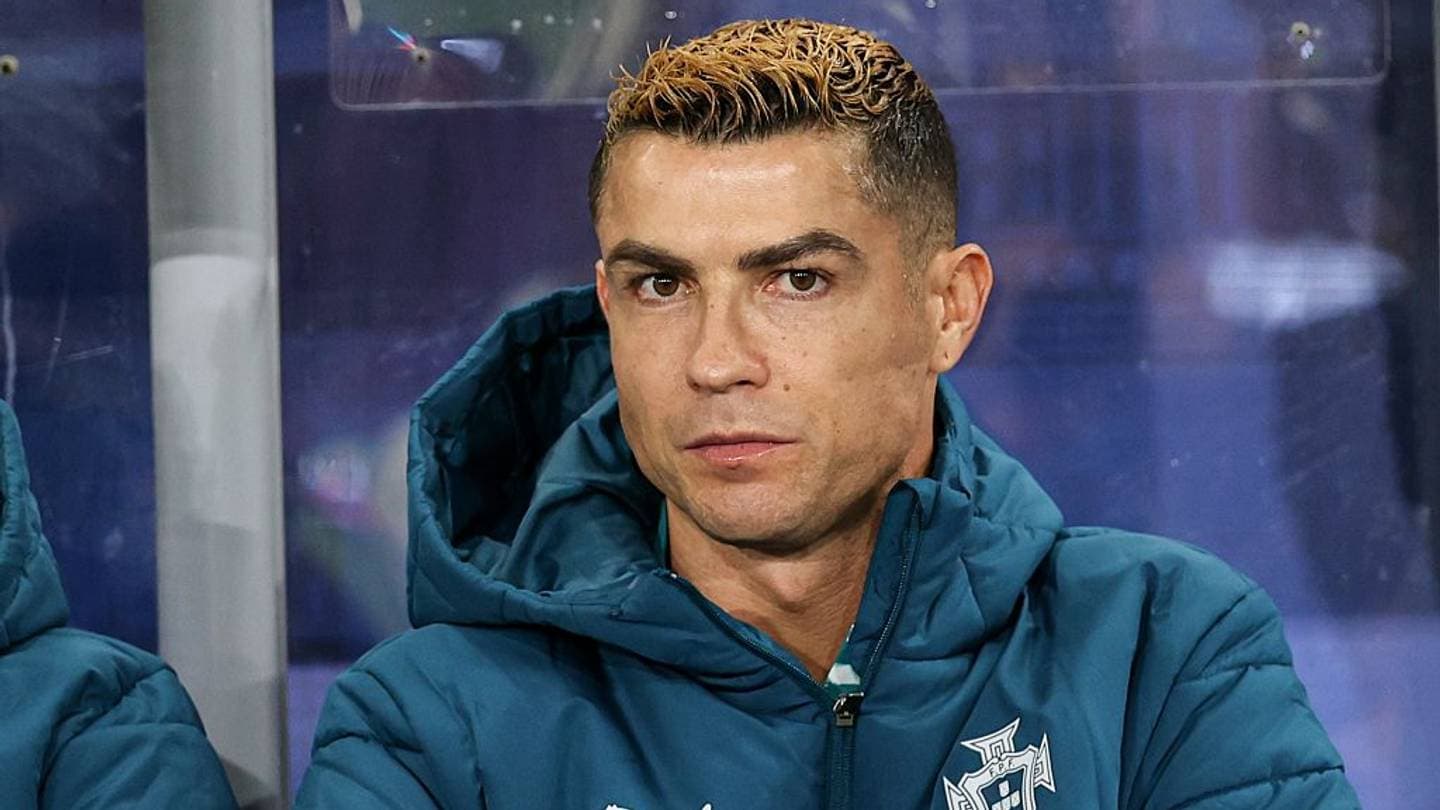
If the seedings hold, Portugal loom in the quarter-finals. Messi against Cristiano Ronaldo. One last time, at one last World Cup, with everything on the line.
By then, Scaloni will have his answers. Either this trusted core will have proved it can defy time once more, or Argentina will have been forced to lean into a new generation, with Paz, Barco, Simeone and others nudging their way into the story.
The old guard has earned the right to go again. The World Cup will reveal whether they still have the legs to finish.